The Design Technology Blog

Blog

  • Bass Guitars

    Summary

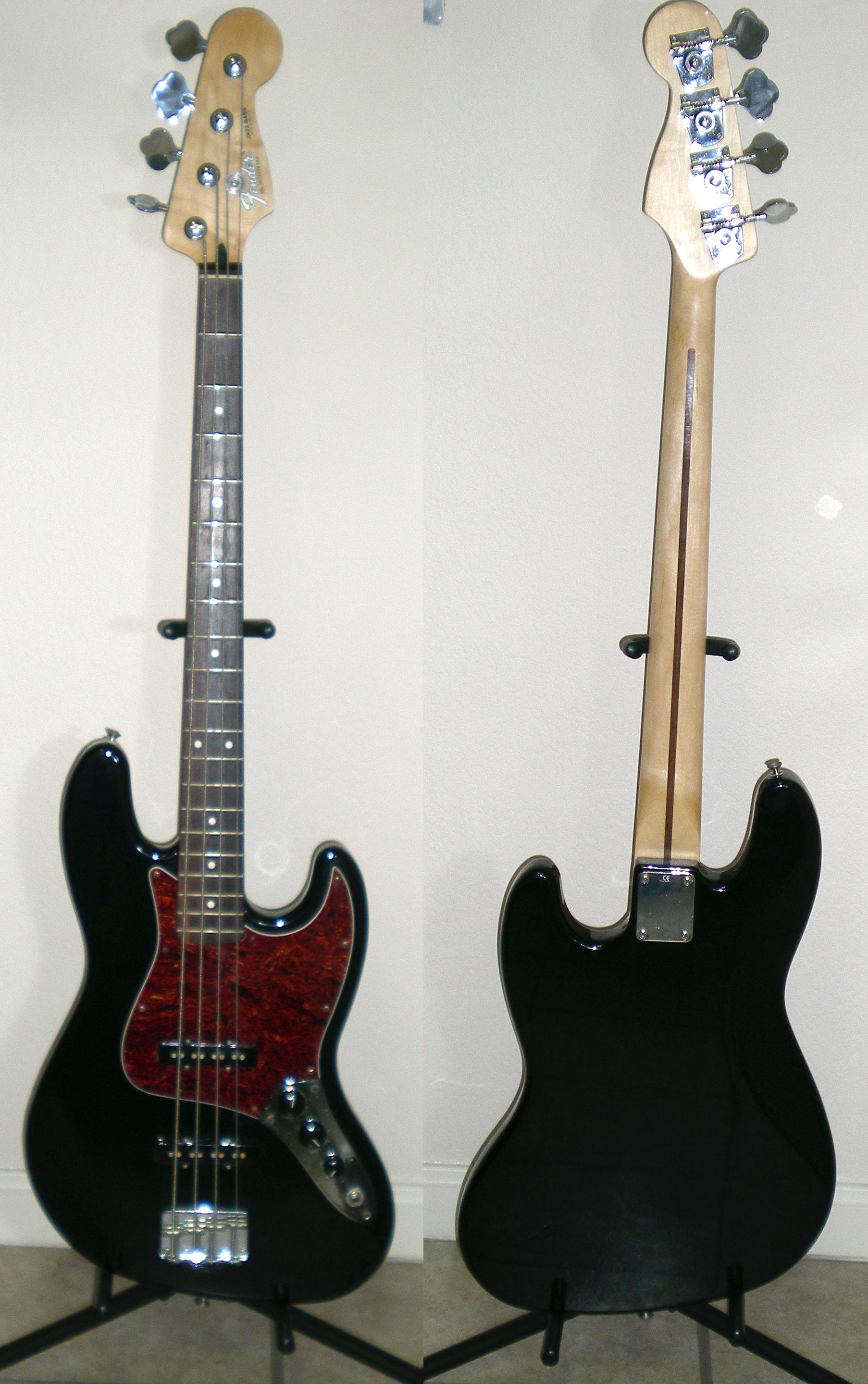
    The bass guitar, or electric bass or bass, is a stringed instrument that is primarily played with the fingers, thumbs, or using a pick. The thumb is used by plucking, slapping, popping, tapping, or thumping. The bass guitar has a similar design to that of the electric guitar. The bass has a longer neck and scale length (length of the strings). Also, basses can come with four, five, or six strings, the four-string bass being the most commonly used. The four string bass is tuned the same as the double bass. The bass is commonly used for keeping the beat of a song and is used in most styles of music.

    Design Consideration

    The body of a bass is usually made out of wood, but other materials including graphite have been used before. Many different types of wood may be used to make the body, neck, and fretboard of a bass. However, the most common type of wood used for the body of a bass is alder. For the neck, maple wood is commonly used and for the fretboard, rosewood is preferred. Mahogany, maple, ash, and poplar are other commonly used woods for the body of the bass. Mahogany for the neck is also used and maple or ebony for the fretboard.

    Handmade instruments by highly skilled luthiers (stringed instrument makers) are becoming more and more available. These lutheirs use exotic materials when making basses, such as the woods bubinga, wenge, ovangkol, ebony, and goncalo alves. Graphite composites are used to make lightweight necks, in some cases. Exotic woods are used in more expensive instruments. For example, Alembic (a bass and guitar making company) uses cocobolo as a body or top layer material because of its attractive grain. Warwick bass guitars are also known for having exotic hardwoods. Most of the necks are made of ovankol and the fingerboards are made of wenge or ebony. Solid bubinga bodies are used for tonal and aesthetic qualities.
    Strings

    The standard design for the bass guitar has four strings, tuned to E, A, D, and G. These are in fourths meaning that the open highest string, G, is an eleventh (an octave and a fourth) below middle C. This makes the tuning of all four strings the same as that of the double bass. Tuning is the same on the lower strings of a five or six stringed guitar.

    Strings types include all-metal strings and strings with different coverings. All-metal strings include roundwound, flatwound, halfwound, found wound, and pressure wound. Two examples of different string coverings include tapewound and plastic-coatings. This variety of materials used in strings allows bass players to have a range of tonal options. In the 1950s and early 1960s, the most commonly used string used by bassists was flatwound strings with a smooth surface. These strings had a smooth, damped sound similar to that of a double bass. In the late 1960s and 1970s, roundwound bass strings became popular, but flatwounds continued to stay popular as well. These roundwound strings were similar to those of guitar strings at the time. Comparing the two string types, roundwounds have a brighter timber (quality of a musical note) with greater sustain (amount of time it takes for the sound of the string to become silent) than that of flatwounds.

    The following is a video of a bass solo:

    http://www.youtube.com/watch?v=5omFFeLEXFE

  • Touchscreen

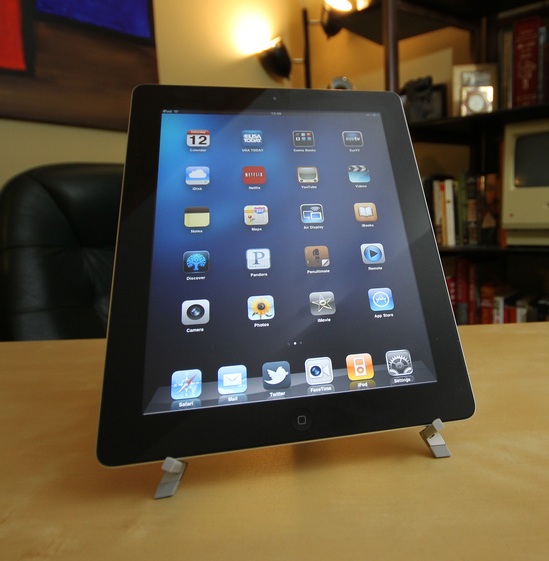
    A touchscreen is an electronic visual display that can detect the presence and location of a touch within the display area. The term generally refers to touching the display of the device with a finger or hand. Touchscreens can also sense other passive objects, such as a stylus. Touchscreen is common in devices such as all-in-one computers, tablet computers, and smartphones.

    The touchscreen has two main attributes. First, it enables one to interact directly with what is displayed, rather than indirectly with a cursor controlled by a mouse or touchpad. Secondly, it lets one do so without requiring any intermediate device that would need to be held in the hand. Such displays can be attached to computers, or to networks as terminals. They also play a prominent role in the design of digital appliances such as the personal digital assistant (PDA), satellite navigation devices, mobile phones, and video games.

    The first touch screen was a capacitive touch screen developed by E.A. Johnson at the Royal Radar Establishment, Malvern, UK. The inventor briefly described his work in a short article published in 1965 and then more fully – along with photographs and diagrams – in an article published in 1967. A description of the applicability of the touch technology for air traffic control was described in an article published in 1968.

    Technologies

    Resistive

    A resistive touchscreen panel is composed of several layers, the most important of which are two thin, electrically conductive layers separated by a narrow gap. When an object, such as a finger, presses down on a point on the panel’s outer surface the two metallic layers become connected at that point: the panel then behaves as a pair of voltage dividers with connected outputs. This causes a change in the electrical current, which is registered as a touch event and sent to the controller for processing.

    Surface acoustic wave

    Surface acoustic wave (SAW) technology uses ultrasonic waves that pass over the touchscreen panel. When the panel is touched, a portion of the wave is absorbed. This change in the ultrasonic waves registers the position of the touch event and sends this information to the controller for processing. Surface wave touchscreen panels can be damaged by outside elements. Contaminants on the surface can also interfere with the functionality of the touchscreen.

    Infrared

    An infrared touchscreen uses an array of X-Y infrared LED and photodetector pairs around the edges of the screen to detect a disruption in the pattern of LED beams. These LED beams cross each other in vertical and horizontal patterns. This helps the sensors pick up the exact location of the touch. A major benefit of such a system is that it can detect essentially any input including a finger, gloved finger, stylus or pen. It is generally used in outdoor applications and point of sale systems which can’t rely on a conductor (such as a bare finger) to activate the touchscreen. Unlike capacitive touchscreens, infrared touchscreens do not require any patterning on the glass which increases durability and optical clarity of the overall system.

    Acoustic pulse recognition

    This system, introduced by Tyco International’s Elo division in 2006, uses piezoelectric transducers located at various positions around the screen to turn the mechanical energy of a touch (vibration) into an electronic signal. The screen hardware then uses an algorithm to determine the location of the touch based on the transducer signals. The touchscreen itself is made of ordinary glass, giving it good durability and optical clarity. It is usually able to function with scratches and dust on the screen with good accuracy. The technology is also well suited to displays that are physically larger. As with the Dispersive Signal Technology system, after the initial touch, a motionless finger cannot be detected. However, for the same reason, the touch recognition is not disrupted by any resting objects.

    Construction

    There are several principal ways to build a touchscreen. The key goals are to recognize one or more fingers touching a display, to interpret the command that this represents, and to communicate the command to the appropriate application.

    In the most popular techniques, the capacitive or resistive approach, there are typically four layers;

    1. Top polyester coated with a transparent metallic conductive coating on the bottom
    2. Adhesive spacer
    3. Glass layer coated with a transparent metallic conductive coating on the top
    4. Adhesive layer on the backside of the glass for mounting.

    When a user touches the surface, the system records the change in the electrical current that flows through the display.

    http://computer.howstuffworks.com/question716.htm

    http://electronics.howstuffworks.com/iphone1.htm

    http://www.scholarshipsinindia.com/answer/touch_screens.html

  • Bugatti Veyron

    Bugatti Veyron

    Introduction to the Bugatti Veyron:

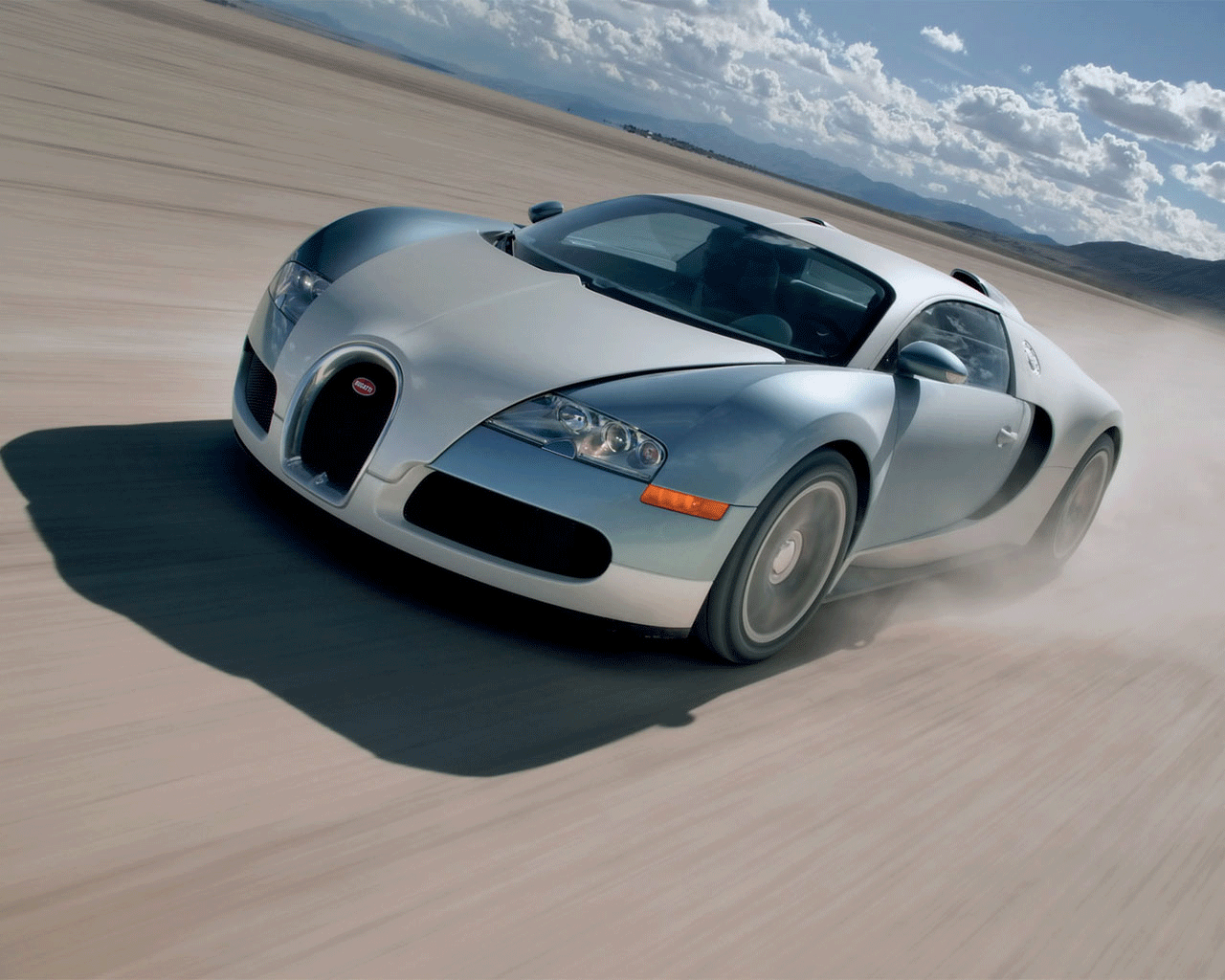
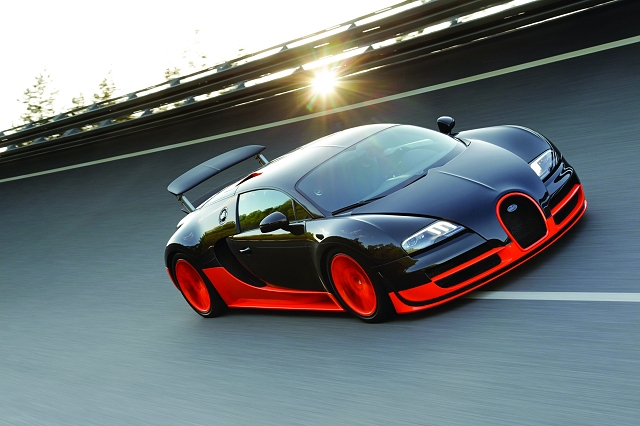
    The Bugatti Veyron EB 16.4 is a mid engined grand touring car. It is the most expensive modern car in the world at USD $2,600,000. The Super Sport version is the fastest road-legal car in the world, with a top speed of 431.07 km/h (267.85 mph). The original version has a top speed of 408.00 km/h (253.52 mph). Designed and developed by the German Volkswagen Group and produced by Bugatti Automobiles SAS at their headquarters in Château St. Jean in Molsheim (Alsace, France), the Veyron’s chief designer was Hartmut Warkuss, and the exterior was designed by Jozef Kabaň of Volkswagen, with much of the engineering work being conducted under the guidance of former Peterbilt engineer and now Bugatti Engineering chief Wolfgang Schreiber.

    Specifications and Statistics:

    • 1,200 metric horsepower engine output
    • Top speed:  431.072 km/h
    • It can break from max speed to rest in 10 seconds
    • It can reach top speed in 50 seconds
    • Also clocking 0-100 km/h in under 2.5 seconds
    • It takes on average 10 miles to the gallon
    • Only 291 have been delivered but more ordered
    • Customization has been offered since 2010
    • 4.462 m long
    • 2.710 m wheel base (distance from one wheel to the start of the other)
    • 1.998 m wide
    • 1.159 m tall
    • 1,888 kg heavy
    • 4 wheel drive
    • Transmission is a 7 speed DSG sequential
    • Bugatti has 10 radiators; 3 heat exchangers, 3 engine radiators, 1 for the AC, 1 transmission oil radiator, 1 differential oil radiator, 1 engine oil radiator.
    • At top speed it consumes 45,000 litres of air a minute (the equivalent to 5760 humans)
    • The Veyron’s brakes use cross drilled, radially vented carbon fibre reinforced silicon carbide composite discs, manufactured by SGL Carbon, which have a much greater resistance to brake fade

    Why is it a super car?

     All the above statistics makes this the ultimate car, as the combination of such a powerful engine, cleverly placed along with the finest new technology of radiators, transmission, brakes, tires, materials (such as aluminium and carbon fibre to minimize the weight), clutch, gearbox, spoiler and suspension systems, the car achieves an optimum performance and smooth drive. James May on the famous british Top Gear is quoted in saying that he “nearly got out the car but he realized it was still travelling at 100 km/h.”

    Aesthetics

    The catchy design for the Veyron is a major contributor to its popularity, because its paved the way for a futuristic design for further cars. The design of the Veyron honors a great heritage without drifting off into retro style. Every detail of the classic two-tone color scheme, a quote from the 1920s and 1930s, has been carefully thought out, resulting in the typical Bugatti profile with the classic, contrasting ellipsis – the stylistic element used by Ettore Bugatti himself. The “crest line”, which runs uninterrupted from the hood to the only 1.21-m-high roof, is a proud homage to the Veyron’s forebears. Thus, the Veyron’s classic paintwork and harmonious design connect this state-of-the-art super sports car to the glorious heritage of Bugatti automobiles. With its classic look, the large radiator grill – adorned with the hand-enameled Bugatti emblem – represents the grandness of the Veyron. The sports car’s distinctive front is defined by the harmonious contrast of its broad headlights and majestic grill. The rear end, 1.99 m wide, features the formidable retractable spoiler and generously designed fenders. The Veyron perfectly fulfills the main design objective governing the development of the new Bugatti: an uncompromising combination of highest elegance and state-of-the-art technology.

    Websites:

  • The Cubic Houses

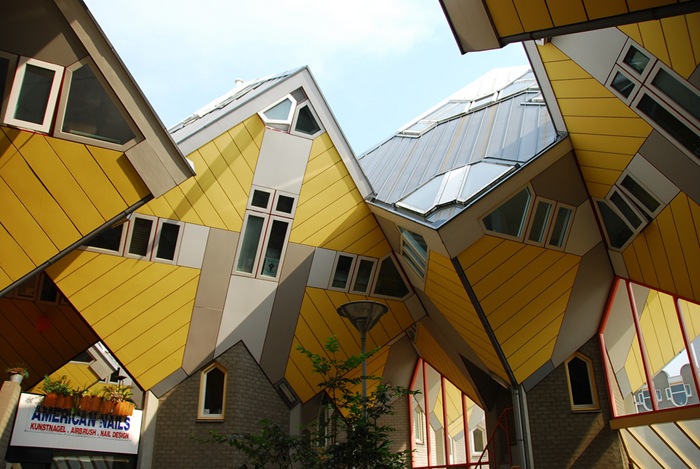
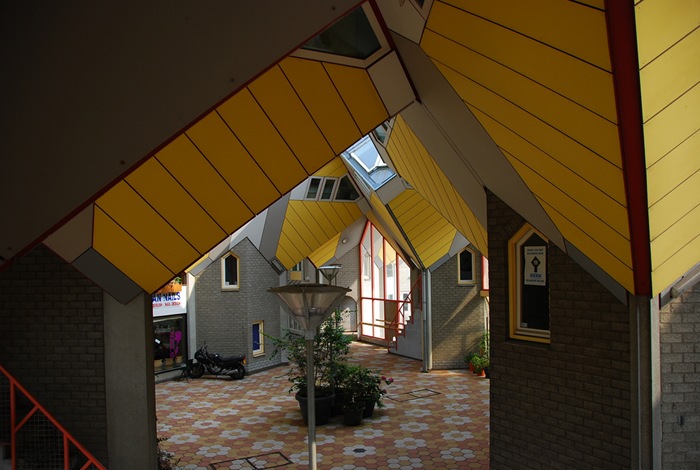
    How would you feel to live on a tilted house that is basically a cube? and to live in a forest of these tilted cubic houses?. Well someone thought about it, and the original idea came about in the 1970s by Piet Bloom. The city of Rotterdam asked him to design housing on top of a pedestrian bridge and he decided to use the cubic houses idea. The whole concept behind these houses is that Pit tries to create a forest by each cube been an abstract tree.

    The cubes are tilted and sit on hexagon-shaped pole structures. The structure of the pole consists of three concrete pillars that have concrete filling the space in between.

    The cube has a basic structure of a concrete floor with concrete pillars. On top of this structure is something similar to a typical wood frame structure with wood stud framing and rockwool insulation.

    The insulation and the wood panels are covered with cement/wood fiberboards, to protect them from exposure to the elements. And to give the cubes a nice appearance, zinc panels were used and complemented by double-glazed windows.

    Sources:

    http://unusual-architecture.com/cubic-houses-rotterdam-netherlands/

    http://www.galinsky.com/buildings/cubichouses/

  • Factor 10 House, Chicago

    Factor 10 House Chicago

    The Factor 10 House, designed in 2003, gets its name from its philosophy. The designer, Marc L’Italien, claims that the structure consumes one-tenth of the environmental resources. In other words, it minimises the ecological footprint by a “factor of 10.”

    The designer had the following initial goals in mind:
    – The occupant’s health
    – Efficiency of the energy
    – Efficiency of the resources
    – Environmental responsibility
    – Affordability

    Primary four features include:

    – Size reduction
    – Improved efficiency
    – Extended life span
    – Impact reduction
    Using these four strategies, the F10 house is a long awaited solution to the issue of buildings. They consume 42% of all energy, 30% of all raw materials and create 40% of all air pollution. Factor 10 house not only reduces the environmental impact but also decrease living expenses.

    F10 House demonstrates to the general public that sustainable design doesn’t have to look any different than traditional housing. It also motivates surrounding neighbourhood citizens to make improvements to their own homes.
    (more…)

  • Shooting Glass

    The following is a video on shooting different types of glass, including bulletproof glass.

    Bullet Glass Slow Motion

  • Glass

    Laminated  glass is a safe type of glass that manages to hold together when shattered. The material shatters but does not break due to the interlayer, typically PVB, between the sheets of glass. Laminated glass is what is used to make bullet proof glass. When shot at, the layer of PVB in between the sheets of glass holds them together.

    Toughened glass or tempered glass is useful when strength, thermal resistance and safetyare factors to consider. In the event of breaking, this material shatters into hundreds of fragments that are not particularly sharp. Toughened glass is physically and thermally stronger than regular glass. To create this strong glass the internal stresses are balanced.

    Combined Use

    Much thought has gone into the creation of car windows, no one every stops to think what type of glass is used in each one. The windshield of a car is made out of laminated glass for many reasons. Primarily it is made this way to limit breakage. When a stone flicks up at the window, due to the toughness of the material, it cracks instead of shattering. The side windows of a car are made out of toughened glass but it is not a tough material, if an object were to hit them they would shatter into tiny pieces. A sound knowledge of the specific characteristics of each glass could help you in real life situations. If you were to drive your car into a frozen lake and happened to have a hammer in the car, you could break your way out and swim to safety by shattering the side windows. If you were to hit the windshield it would only crack and due to the pressure from the outside pushing in you would not be able to escape.

    References

    Pictures:

    http://ecosmartwindshieldrepair.com/images/laminated_20glass_1__zlnf.jpg

    http://www.upvcwindowsthailand.com/images/toughened_zone_tempered_glass.jpg

    http://2.bp.blogspot.com/_m3_tnoFJG_k/TROy8q5yh0I/AAAAAAAABKE/ZGnd3JThzIc/s1600/DSC_0020.JPG

  • Jabulani Ball

    Jabulani Ball

    History

    Throughout the history of football, people have been searching year after year for the perfect ball. It has been a quest to improve and improve a ball that is used in the most widespread sport in the world. World Cup after World Cup has seen new footballs with incremental changes in material between each one. In 1836, Charles Goodyear patented vulcanized rubber, he spent nearly 20 years in attempting to create a ball for football and finally he invented the first vulcanized rubber football in 1855. In 1862, H.J. Lindon developed one of the first inflatable rubber bladders for balls. “By the 1900’s bladders were made with stronger rubber and could withstand heavier pressure.  Most balls produced by that time used rubber bladders. The balls were made from inner tubes covered with heavy brown leather.  These balls would bounce easier and yet could be kicked. Most balls had a tanned leather cover with eighteen sections stitched together arranged in six panels of three strips each.” (soccerballworld.com). Throughout the next 70 years, leather balls were the only ones in the game and then in the 1970 world cup in Mexico, a revolutionary ball was introduced to the 32-Panel Adidas Telstar ball.

    The 2006 World Cup Ball, Teamgeist Ball

    This football was made from synthetic leather patches sewn together in a design based on the ‘Buckminster Ball’ or known as the Buckyball. For the next 36 years Footballs were made in this style with minimal change. In 2006, the Teamgeist. The introduction of a 14-panel construction method means that the number of three-panel touch points is reduced by 60% (60 to 24) and the total length of the panel lines falls by over 15% (400.5 cm to 339.3 cm). Building on the introduction of thermal bonding technology in 2004.

    Introduction Of Jabulani

    The ball is made from eight spherically molded panels and has a textured surface intended to improve aerodynamics. Nevertheless, the ball received extensive criticism from players and coaches before and during the World Cup who said that the path of the ball through the air was unpredictable.

    “The ball was constructed using a new design, consisting of eight (down from 14 in the last World Cup) thermally bonded, three-dimensional panels.

    The 2010 World Cup Ball, Jabulani

    These then are spherically molded from ethylene-vinyl acetate (EVA) and thermoplastic polyurethanes (TPU). The surface of the ball was textured with grooves, a technology developed by Adidas called “Grip ‘n’ Groove” that is intended to improve the ball’s aerodynamics. The design has received considerable academic input, being developed in partnership with researchers from Loughborough University, United Kingdom.” (Wikipedia). This table shows that the moulding technique means the ball retains its shape, and the lack of seaming means there is essentially zero water retention, which will reduce sluggishness of the ball.

    Personal Experience

    Through personal experiences I have been able to conclude that the unpredictability of the ball is both a good and a bad thing. As the unexpected behavior can trick a goal keeper, whilst at the same time, the speed makes control of the ball quite difficult.

    Resources

    http://www.jabulaniball.com/

    http://en.wikipedia.org/wiki/Adidas_Jabulani

    http://www.soccerballworld.com/Jabulani_2010.htm

    http://www.adidas.com/campaigns/football/content/products.aspx?collection=OMB

    http://en.wikipedia.org/wiki/Adidas_Teamgeist

    http://www.soccerballworld.com/History.htm

  • PVC

    The thermosetting resins include phenolic resin and melamine resin, which are thermally hardened and never become soft again. Thermoplastic resins include PVC, polyethylene (PE), polystyrene (PS) and polypropylene (PP), which can be re-softened by heating.

    Usually, thermoplastics are supplied in the form of pelletised material (compounds) with additives (antioxidants, etc.) already blended in it. However, PVC resin is often supplied in powder form and long term storage is possible since the material is resistant to oxidation and degradation. Various additives and pigments are added to PVC during the processing stage, and the blend is then converted into PVC products.
    PVC is sometimes known as ‘Vinyl’ in Europe and predominantly so in North America. In Europe, ‘Vinyl’ usually refers to certain specific flexible applications, such as flooring, decorative sheets and artificial leather.

    PVC_pellets_(Ineos)WEB

    PVC is a thermoplastic made of 57% chlorine (derived from industrial grade salt) and 43% carbon (derived predominantly from oil / gas via ethylene). It is less dependent than other polymers on crude oil or natural gas, which are nonrenewable, and hence can be regarded as a natural resource saving plastic, in contrast to plastics such as PE, PP, PET and PS, which are totally dependent on oil or gas. This chlorine gives to PVC excellent fire resistance: when PVC is set on fire, the flames go out as the fire source is removed due to the material’s self-extinguishing properties.

    PVC is one of the most used plastic materials in the world. At global level, demand for PVC exceeds 35 million tonnes per annum and it is in constant growth (+5% on global average), with higher growth rates in the developing countries.

    It is the most widely used polymer in building and construction applications and over 60 per cent of Western Europe’s annual PVC production is used in this sector.

    PVC is a more economic material
    PVC products make life safer, more comfortable and more pleasurable. And, because PVC has an excellent ratio of economic cost to performance, it allows people of all income levels access to these important benefits. The diversity of PVC applications challenges the imagination. In everyday life, they are all around us, from construction profiles to medical devices, from roofing membranes to credit cards, from children’s toys to pipes for water and gas. Few other materials are as versatile or able to fulfil such demanding specifications. In this way, PVC facilitates creativity and innovation, making new possibilities.

    PVC underpins safety
    Wire and cables sheathed with PVC prevent potentially fatal electrical accidents. In hospitals around the world PVC medical tubing – which does not break or kink – delivers fluids and medicines to the sick. Car components which use very strong PVC can reduce the risk of any injuries being caused in case of an accident. Most PVC products are long lasting – up to and over 60 years. These applications are reliable throughout their service lives and cut down vastly on maintenance or repair. Modern cars, for example, last many years longer simply because PVC protects the underside from water and corrosion.

    PVC enhances our lives
    Functional performance is by no means the whole story. PVC has a distinguished role in beauty and aesthetics. In fashion, furniture and all types of indoor and outdoor accessories, PVC opens up functional and design opportunities that are both visually striking and fundamentally practical. In short, people everywhere benefit from this material. Sometimes invisible but always reliable, PVC products make the difference when it counts.

    References:

    The European Council of Vinyl Manufacturers

  • Materials Blog- Super Conductors

    Super Conductors

    Have you ever been annoyed by the speed of your internet connection or the processing power of your computer? Did you ever consider what could be done to improve the quality of both? Well, a possibility lies in the development of superconductors.

    The definition of a super conductor comes from the term “superconductivity” which relates to the electrical resistance a material exhibits. In a superconductor, or a material with superconductivity, this resistance is zero ohms or very near zero.  Generally, this involves the cooling of a material to ultra low temperatures, such as below 20°K (-253°C). The cooling temperature varies between materials and is known as the transition temperature.

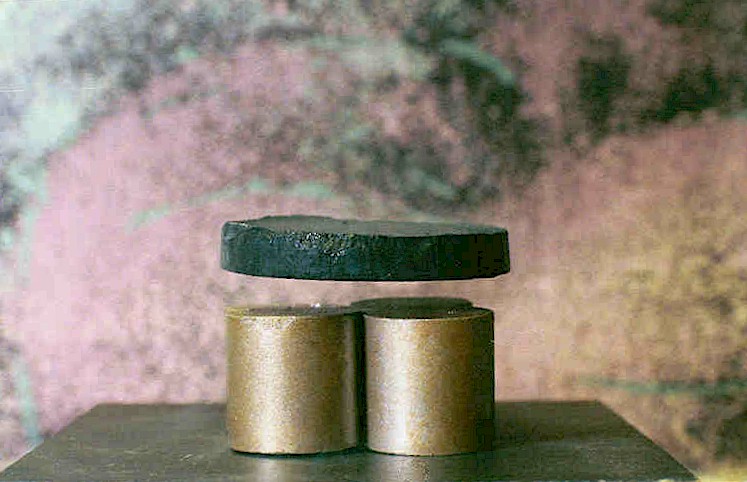
    The extremely low electrical resistance of super conductors allow for several unusual, yet useful, properties unique to or exemplified by the super conductor. Among these are the Meissner effect, or the property of materials, when cooled to become super conductors, to gain influence on a magnetic field and repel the field, the flux trapping effect, or the establishment of attraction between a powerful magnet and a super conductor, and the resulting magnetic levitation/suspension effect. The simultaneous attraction and repulsion of a super conductor and a magnet allow for the magnet and super conductor to maintain a fixed distance away from each other in a very stable manner. In other words, the magnet, or in turn the superconductor, can float above the other while staying in place with very little friction. This is especially useful in the development of transportation; minimal friction levitation allows trains, or other  modes of transportation, to move at maximum speeds in a noiseless manner. See the video below for more information. Other useful applications of the properties of super conductors include extremely efficient electrical wiring. Super conductors quickly and without resistance transport electricity, even if carrying only a minimal voltage. This allows for very sensitive equipment to be manufactured which can measure the most minute of electrical or magnetic discharges, changes, or disruption. Such machines are needed in the field of medicine for uses including brain examination and magnetic imaging. Super conductors, therefore, are useful in the manufacturing of more efficient and powerful motors, transformers, computer parts, and generators. A further suggested use is in a new energy storage medium: the magnetic energy-storage.

    How Superconducting Levitation Works

    The first documented research of super conductors came with the experiments done by in 1911 by the Dutch physicist Keike Kamerlingh Onnes with mercury wires. He discovered that mercury loses its electrical resistivity at below (4°K). Ensuing research made by scientists led to the development of higher and higher temperature super conductors. Super conductors were developed that consisted of multiple elements or were even metallic. The majority of super conductors in existence today are either alloys or ceramics. The highest temperature super conductors are actually ceramics with Hg2Ba2Ca2Cu3O8 at just above 130 degrees Kelvin. Today, multiple universities and companies around the world, work to produce cheaper and higher temperature super conductors. Unfortunately, most superconductors are expensive to produce, utilizing rare elements.

    Sources:

    “superconductivity.” Encyclopædia Britannica. Encyclopædia Britannica Online. Encyclopædia Britannica, 2011. Web. 06 Mar. 2011.

    qwest.net