The Design Technology Blog

Blog

  • Kevlar

    Kevlar is a material developed by DuPont in 1965 but it was only used in 1970 for commercial use. Kevlar is used in body armor and armored vehicles, it is also applied in clothing to protect the user from cuts. Sports equipment such as bicycle tires to stop punctures, it is applied to table tennis paddles, motor cycle clothing, and racing sails. Kevlar has even been used in audio equipment since it has acoustic properties, drumheads, woodwind reeds, rope, cable, brakes, electricity generation, construction of buildings, and expansion hoses and joints.

    Kevlar is strong because of the weave which is very similar to small spider webs. It was invented by Stephanie Kwolek and Herbert Blades. The weave consists of a liquid and a solid also known as an aramid weave. These weaves corrode in exposed to chlorine but is resistant to heat.

    There are different types of Kevlar, they are all numbered and have their own use. Kevlar K-29 for example is used industrially for cables and brakes and armor while Kevlar K-49 is used in tires to replace rubber and bicycle frames but also in the hull of a boat because it is incredibly strong.

    The chemical composition of Kevlar is poly para-phenyleneterephthalamide (composite.about.com). Aramids belong in the nylon family.

    Kevlar is also very light and extremely strong of course and the tensile strength is high. However it does absorb moisture which makes it more sensitive to environments it is also harder to cut because you will need special scissors.

    The material is rather expensive to get and can get to about 33 dollars per yard but you have to buy in great amounts.

    This is a table of the three main Kevlar types 29, 49, and 149. (composite.about.com)

    Grade Density
    g/cm^3
    Tensile
    Modulus
    GPa
    Tensile
    Strength
    GPa
    Tensile
    Elongation
    %
    29 1.44 83 3.6 4.0
    49 1.44 131 3.6–4.1 2.8
    149 1.47 186 3.4 2.0

    Sources:

    http://composite.about.com/od/aboutcompositesplastics/l/aa050597.htm

    http://en.wikipedia.org/wiki/Kevlar#Production

    http://www.wisegeek.com/what-is-kevlar.htm

  • Wood in Furniture Construction

    History of Wood Furniture Construction

    Before 1900, most wood furniture was made with woods like walnut, oak,
    mahogany, rosewood, fruitwoods, and rare wood veneers and inlays were in
    commonly used. American Colonial furniture was dependent on the local
    availability of wood. Their furniture was made with maple, oak, walnut, birch,
    and cherry, as well as pine. The preferred furniture woods were readily
    available, so less attractive or durable woods were used only for hidden parts
    inside a piece.

    Main Categories

    All woods used for making furniture fall into two categories – hardwoods and softwoods, but the designation doesn’t really have anything to do with how hard or how soft the wood is. “Hardwood” identifies the trees that lose their leaves seasonally and “softwood” refers to those that keep their foliage all year.

    HARDWOODS

    Mahogany: Fine grained, reddish brown in color. Very durable and resists swelling shrinking, and warping. Used for quality furniture such as cabinets; boat construction; wood facings and veneers.

    Walnut: Fine textured, strong, easy to work with and resists shrinking and warping and finishes well. Best used for gunstocks, solid and veneered furniture, novelties, cabinetry and wall paneling.

    Oak: Strong with good bending qualities. Is durable and finishes well and resists moisture absorption. Used for furniture, trimming, boat framing, desks and flooring.

    Maple: Fine textured and is fine textures. It is strong and hard. Has moderate shrinkage and machines well. Best used in flooring, fine furniture and woodenware such as bowling alleys

    Cherry: Close-grained and resists warping and shrinking. It will redden when exposed to sunlight and ages well. Used in cabinet making, boat trim, novelties, solid furniture handles and turned projects.

    Rosewood: Very hard and has a dark reddish brown color. It is fragrant and close grained. It is hard to work and takes high polish. Used in musical instruments, piano cases, tool handles, art projects, veneers and furniture.

    Teak: Hard and durable and resistant the moisture and rot. It resists warping, cracking and decay. Best used in fine furniture, paneling, shipbuilding, doors, window framing, flooring and general construction.

    SOFTWOODS

    Pine: It has uniform texture, works easy and finishes well. It resists shrinkage, swelling and warping. Used in house construction, paneling and trim. Also used for furniture, molding and boxes.

    Hemlock: Light in weight, uniformly textured. It machines well and has low resistance to decay and nonresinous. Used for construction lumber, planks, doors, boards, paneling, sub flooring and crates.

    Fir: Works easy and finishes well. Uniform in texture and nonresinous. Has low resistance to decay. Used in furniture, doors, frames, windows, plywood, veneer, general millwork and interior trim.

    Redwood: Light in weight, durable and easy to work. Has a natural resistance to decay. Used in outdoor furniture, fencing, house siding, interior finishing, veneering and paneling.

    Spruce: Strong and hard. Finishes well and has low resistance to decay. Has moderate shrinkage and light in weight. Used for masts and spars for ships, aircraft, crates, boxes, general millwork and ladders.

    Cedar: Fresh sweet odor and reddish in color. Easy to work and uniform in texture and is resistant to decay. Used in chest making, closet lining, shingles, posts, dock planks, novelties and Venetian blinds.

  • Glass

    Glass belongs in the ceramics category of materials. It contains primarily silicon dioxide and sodium dioxide, along with calcium oxide and other chemicals in small quantities.

    Production

    It is produced from sand, limestone and sodium carbonate with the use of large amounts of heat. The glass furnaces reach up to 1675°C for all the above mentioned ingredients to melt together. Usually recycled glass is added to the mixture to reduce the temperature necessary to melt all the materials together. The glass is then set in to shape with the use of molders or blowers.

    Physical Characteristics

    Glass is made in furnaces such as this one, located in a glass studio in New York

    Glass has various different characteristics. It is very hard, since it is a ceramic, yet it is very brittle. It is transparent, which is a very rare characteristic in materials and it allows it to absorb and reflect light. It does not conduct electricity, and can be easily colored.

    Main types of glass

    There are two main types of glass other then the one mentioned above; toughened glass, and laminated glass. Toughened glass can withstand more tensile load and compressive stress on the surface. It also shatters in to little pieces after it is broken, it’s in use in places such as windscreens of cars. Laminated glass contains layers of glass around a plastic transparent sheet (which can be recolored). The plastic prevents cracks from appearing on the glass. They can be seen in use in windscreens or bank teller windows (as they’ve been made bulletproof).

    Uses of Glass

    Glass is used in all kinds of different areas, such as construction, furniture and of course, glassware. It is used a lot in construction due to it thermal conductivity, which reduces the resources necessary to heat the house/room. It is very resistance to tensile and compressive forces, making a good material to place weight upon. Furthermore it is transparent which allows natural light to enter the house/room, again further decreasing the amount of energy required to light the house.

    This building in Denver, has it's outer layer made mostly from glass to let in natural light

    It’s transparency allows for interesting interior designs, which can’t be achieved with non transparent materials. Glass is also used in furniture such as tables, this goes along with the transparency adding to a unique design. Another major use of glass is in glassware, which includes everything from glasses, to plates, to figures, and more.

    There are thousands of different kinds of glassware designs
  • Vetrazzo Furniture & Recycled Glass

    Recycled Glass

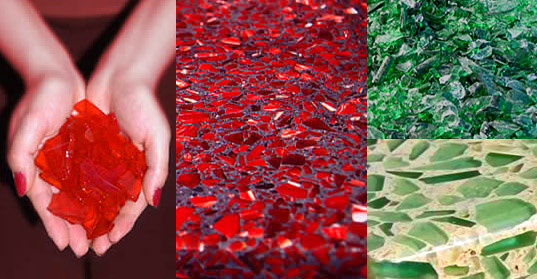
    Glass recycling is the process of transforming glass waste into reusable material and substances. Due to the fact that glass retains its original color even after being recycled, recyclers categorize the glass into groups according to color, resistance, strength, and hardness. Bottles, broken glass objects, light bulbs, etc. are all common waste products from households around the world. Glass products and materials are thrown in the trash every day and in many areas, never used again. Every metric ton of waste glass recycled into new items saves 315 additional kilograms of carbon dioxide from being released into the environment during the production of new glass.

    Process of Recycling Glass

    Glass is mostly composed of three main ingredients- silica sand, limestone, and soda ash. When glass is crushed during the recycling process, it returns back to its natural state. While being in this state, the glass is non-toxic and inert meaning it cannot contaminate the environment. Unlike other materials, glass is 100% recyclable making it one of the most recycled material around the world. The crushed recycled glassed, known as cullet, is then mixed with virgin raw materials (soda ash, limestone etc.)

    Recycled Glass applied into Modern Businesses

    As the green design initiative becomes more and more popular and encouraged, ec0-friendly regulations are implemented into the creation of products in present-day businesses and firms. Vetrazzo Furniture is known for its glass recycled surfaces. 85% of Vetrazzo’s products are manufactured out of recycled glass. Most of the glass comes from curbside recycling programs. Other glass comes from used windows, dinnerware, windshields, stained glass, laboratory glass, reclaimed glass from building demolition, and others. Vetrazzo was awarded a significant grant by California‘s Department of Conservation, Division of Recycling, to help expand the Vetrazzo product line as well as aid them in increasing product capacity.

    Sources Cited:

    http://www.glassworks.org/product_stewardship/how.html

    http://www.vetrazzo.com/index.asp

  • The LCD Screen

    By Evan

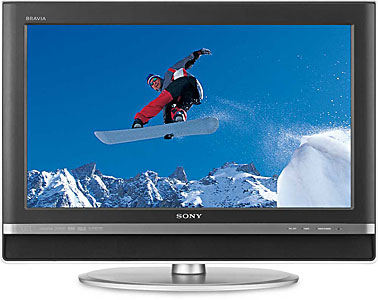
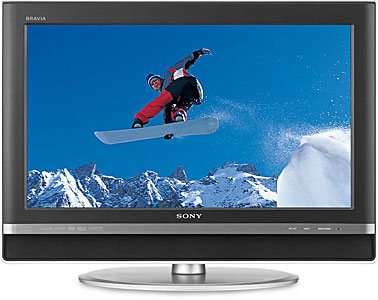
    You may think that a screen can only be just that a screen.  Something made from glass that will reflect as soon as the sun hits it.  This was the case until the remarkable material of liquid crystals was discovered for LCD screens or liquid crystal display.  Until LCD came around most screens were cathode rod tubes that are reflective and not quite as energy efficient as LCD screens.   LCD screens contain molecules that are between two transparent electrodes and also two polarizing filters.  These screens are used in various objects like laptops and TVs and pretty much anything else with a screen.  The break through of the LCD TV made people go to buy that particular TV over a plasma screen in some cases depending on what room they desired their TV to be in.  The material liquid crystal allowed the sun to hit the TV with out causing a reflection that would impair the picture coming from the TV.  The LCD panels don’t actually produce light so they require another light source that usually is behind the display.  In some displays LED lights are used behind the LCD to create a picture with intense bright and dark colors while still remaining unaffected by any light attempting to reflect off the screen.

    The inventor of the LCD is George Heilmeier in the 1960s.  He was a Ph.D student that worked in an RCA laboratory.  In that laboratory he researched liquid crystals and came up with the LCD.

    The LCDs also have a wide variety of viewing angles.  These screens are becoming so advanced that they actually can have a 180-degree viewing angle meaning you can see the screen even if you are all the way to the side of screen. The refresh rates and colors in these screens have also become more advanced over the years.  They have become so fast that they can have a 120hz refresh rate meaning that you can almost realistically see every movement that that is happening in real life on your television.  The color contrast ratios very from screen to screen and from TV to TV, but for the most part are high and contain many colors giving the screen a realistic display.  Liquid crystals have given screens a whole new look through the LCD by making the pictures and videos they show realistic and unaffected by reflective light.

    http://www.lcd-television-repair.com/sony%20lcdtv.jpg

    sources:

    http://www.invent.org/2009induction/1_3_09_induction_heilmeier.asp

    http://en.wikipedia.org/wiki/Liquid_crystal_display

  • Alloys & Their Uses

    Bronze Mask Alloy Used For Jewelry (Image By Martin Lodemore)

    The components of various alloys contain metallic and non-metallic elements. There are a large number of possible combination of different metals and each has its own specific set of properties. The Uses for alloys are limitless depending on the materials involved and the complexity of the alloy. The alloys are used extensively in fields that involve but are not limited to; aircrafts, military, commercial, industrial, medical, residential and manufacturing applications. Alloys like Aluminium, Copper, Nickel, Stainless steel, Titanium all have different uses in various applications.

    Uses of Aluminium Alloys

    Aluminium when combined with other metals gives strength and specific characteristics for a particular use. Aluminium alloys are extensively used in the production of cars and engine parts. The vast range of quality Aluminium is used in various applications like transport, packaging, electrical application, medicine, and construction of homes and furniture. Flight at high altitudes would not be possible without the the strong aluminium alloys used that undergo mass amounts of stress and pressure.

    Uses of Copper Alloys

    Copper alloys have exceptional electrical and thermal performance, good corrosion resistance, high ductility and relatively low cost. Copper alloy is used in airtight seals and copper tin alloys are primarily used for sleeve bearings due to its strength and ductile properties. Copper alloys are also less expensive than gold or platinum. Due to high strength, electrical and thermal conductivity copper alloys are used in the manufacture of all types of electrical equipment.

    Uses of Nickel Alloys

    Nickel materials have made significant contributions to present-day society. Nickel alloys have good corrosion resistance and heat resistance. Nickel alloys are used for a wide variety of applications like aircraft gas turbines, nuclear power systems and widely used in chemical and petrochemical industries. Several nickel alloys are used in control equipments to determine and control electrical characteristics.

    Uses of Stainless steel Alloys

    In order to reduce corrosion losses, there are extensive uses of stainless steels. Stainless steel alloys are used for many commercial applications such as watch straps, cutlery etc. Stainless alloys used for making tubes intended for placement on the bottom of the sea. Stainless Alloys are also widely used in the electronic, agricultural, road and rail industries. Stainless steel grades are used for handling bulk wet materials, tanks, containers, conveyors, chimneys and many others.

    Uses of Titanium Alloys

    Titanium alloys have high melting point than stainless steels. Due to high strength, toughness and stiffness, many titanium alloys are used in aerospace structures and other high-performance applications. Titanium alloys are used for different spacecraft parts, jet engines and airframe to save weight and improve aircraft efficiency. It corrosion resistance allow its uses in chemical, petrochemical and biomaterial applications.

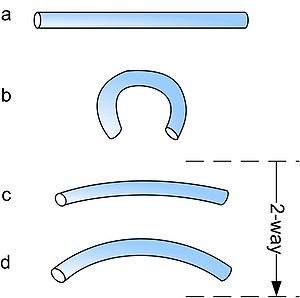
    Shape Memory Alloy

    (SMA, smart metal, memory metal, memory alloy, muscle wire, smart alloy) is an alloy that “remembers” its original, cold-forged shape: returning the pre-deformed shape by heating. This material is a lightweight, solid-state alternative to conventional actuators such as hydraulic, pneumatic, and motor-based systems. Shape memory alloys have applications in industries including medical and aerospace.

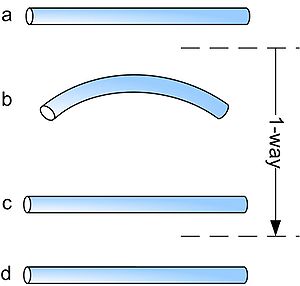
    One-way vs. two-way shape memory

    Shape memory alloys have different shape memory effects. Two common effects are one-way and two-way shape memory

    References:

    http://www.ehow.com/list_6708135_different-types-alloys-use.html

    Educational Electronics USA: Metals and Non-Metals — Part XVI

    Pricescope Diamond Journal: An Overview Of Common Alloys Used In Jewelry

    http://en.wikipedia.org/wiki/Shape_memory_alloy

  • Plastics used to make cars

    Bend New Materials into Futuristic Shapes

    New materials for car bodies may soon transform the auto industry. Auto engineers can mold these carbon-fiber-reinforced plastics into virtually any shape. The materials are both strong and light which increasies fuel efficiency and safety at the same time. Cars built entirely out of plastic could be the wave of the future, making metal a thing of the past when it comes to cars.

    New, innovative cars made almost entirely of plastic are paving the way for what you may be driving in the future.

    A mechanical engineer at Porsche Engineering Services in Troy, Mich., says, “With plastics you can design cars which are very bold, and that gives you an advantage to sell nicer cars.”

    Plastics have gained a lot of ground over traditional metals used in cars, making it possible to build almost an entire vehicle completely of non-metal material.

    Mechanical engineers use a lightweight, high-strength aerospace material called carbon-fiber-reinforced plastic. It’s used in the doors, hoods, fenders, chasis and also in support frames for the engine and transmission. You can mold the plastics into very complicated shapes that maybe you can’t do in steel, plastics help cars lose weight to go farther on fuel.

    New materials, like plastic, are usually tested on high-end vehicles first. Once the materials are proven to be more efficient and cost effective, they eventually filter down to affordable consumer vehicles.

    BACKGROUND:

    Student designers at the College for Creative Studies are creating new plastic polymer materials as alternatives for automobile elements typically made of steel. The designs were part of a semester-long project and the automotive division of the Society of Plastics Engineers.

    ADVANTAGES:

    Among other advantages, plastics can significantly reduce the weight of a vehicle, improving fuel efficiency by reducing drag, and also cutting down on emissions. Because plastic can be more easily molded, components can be tailored for more comfortable human-ergonomic features, as well as more streamlined, aerodynamic shapes. Less material can be used than with steel components and the durability of plastics results in a longer, more reliable vehicle lifetime.

    SOURCES:

    http://en.wikipedia.org/wiki/Carbon_fiber-reinforced_polymer

    http://www.azom.com/Details.asp?ArticleID=1662

    http://www.icis.com/Articles/2008/09/08/9153976/plastics-use-in-cars-rises-as-emissions-laws-get-tough.html

    http://news.softpedia.com/news/New-Materials-Boost-Hydrogen-Cars-039-Efficiency-54358.shtml

  • Race Cars and Carbon Fiber

    Racing cars have been a major sport for many years, and the industry of racing has increased since the appearance of F-1 races. Racing cars used to be made from the same material as road cars, that are steel, aluminum and other metals. But on the early 1980s Formula 1 cars underwent some changes, which have become an important part of the design of the car: the use of carbon composite materials to build the chassis.

    Today most of the racing cars chassis, which includes the monocoque, suspension, wings and engine cover, are built with carbon fiber.  Carbon fiber reinforced plastic, or CFRP, is a strong, light and very expensive composite material which, because of its mechanical properties is used to build racing cars at every level.

    The Ascari Kz1 is a super car made completely from carbon fiber


    The four advantages that this kind of material, that other materials don’t have are:

    • Super lightweight
    • Super strong
    • Super stiff
    • Can easily be molded into all kinds of different shapes


    Also to better understand that carbon fiber is better than steel (commonly used in some parts in road cars) here is a table:

    Material Tensile strength Density Specific strength
    Carbon fibre 3.50 1.75 2.00
    Steel 1.30 7.90

    0.17


    We can see that carbon fiber is almost 3 times stronger and more than 4 times lighter than steel. That is why it is such a good material for racing cars.


    Sources:

    http://formula1.about.com/od/car1/a/carbon_fiber.htm

    http://www.solarnavigator.net/composites/carbon_fibre_and_racing_cars.htm

    Pictures:

    http://pictures.topspeed.com/IMG/crop/200703/2007-ascari-kz-1r-gt3_460x0w.jpg

    http://0.tqn.com/d/formula1/1/G/h/2/-/-/fiber1.jpg


  • Materials Blog

    Mirrors are commonly used products of everyday life, but they are not usual consider a type of material for construction. They aren’t considered very strong or useful for anything, but looking at yourself with. A mirror is an object with at least one reflective surface. Although mirrors are most known for personal use they are also used in telescopes, lasers, cameras, and types of industrial machinery.

    Mirrors are manufactured by applying a reflective coating to a suitable substrate, which is usually glass. A substrate is just the object that is being coated in a coating process. Seeing that the substrate  is usually glass, that is why both mirrors and glass have similar properties in terms of hardness and so forth. The first mirrors were nothing more than pieces of polished stone such as obsidian. Mirrors of polished copper have been found from 4000 and 3000 B.C.

    obsidian-scrying-stone.jpg

    Today, mirrors are made by shaping, polishing, cleaning, and lastly coating the chosen substrate. The substrate is commonly coated with non-toxic aluminum or silver and implemented with a series of coating. Five types of coating have to be done:

    1. Tin(II) Chloride
    2. Silver
    3. A Chemical Activator
    4. Copper
    5. Paint

    The tin(II) chloride is applied because silver will not bond with the glass. The activator causes the tin/silver to harden. Copper is added for long-term durability. The paint protects the coating on the back of the mirror from scratches and other accidental damage.

    never-ending-story-67065.jpg

  • Audiophile Cables

    iPod Line-out-Dock with braided Copper wires

    In the world of audiophiles, wires play a big role in sound quality. Wires are simply used to create an electric connection between two audio equipment, so an average person may think that as long as the wire can transfer an electrical current, all of them are the same. However, wires for audiophiles are essential for audiophiles because they alter the sound quality of their equipment.

    There are three major materials used in wires: copper, silver, and gold. Copper is the cheapest of the three types of wires. Copper also has the second lowest resistance of the three, so it is widely used in interconnects. On the other hand, Silver is more expensive than Copper. Silver also has the lowest resistance of the three, so the electrical signals would be more “pure” than that of copper wires. Due to the high price of silver, there are silver coated copper wires that are cheaper than pure silver wires. Finally, gold has the lowest resistance of the three. However, gold is the most nonreactive of the three; it does not oxidise easily. As a result, a thin layer of gold is used in the ends of interconnects were the metal is exposed to air the most. Copper wires are said to give a “warm” sound whereas silver wires are deemed to be more “transparent” and “brighter”.

    Wires can be either solid core or stranded. Solid core wires tend to be less flexible, but they are known to be better in sound quality. Due to their stiffness, solid core wires tend to be used in short interconnects. Another downside of long solid core wires is that they act as antennas that catch RF (radio frequency) signals, which affects the electrical signals. Stranded wires, on the other hand, are more flexible, so they are used in longer interconnects. Also, because the wires are stranded, they are less affected by RF signals due to its high damping properties.

    Solid silver wire with insulation and sleeves

    Another important aspect in wires is the insulation. Plastics, such as PET and Teflon, are widely used to insulate the wires. In earphones, where the wires are thin, enameled wires are used to insulate the wires from each other. Enameled wires are wires with a thin coat of insulation (usually a plastic). On the other hand, thicker wires use tubes of plastics to insulate from each other. Plastic is used for three main reasons: they are flexible, good insulators, and cheap. Another type of insulation used is cotton. Cotton is mainly used so that the physical vibrations of the wires do not create noise. Also, cotton has a low dielectric constant, meaning that there is be less capacitance between wires. However, cotton cannot prevent oxygen from reacting with the wires, so a tube of plastic or rubber is usually used to enclose the wires. Although not an insulator, a metal sleeve is used to prevent the wires from being affected by RF signals and EMI (electromagnetic induction). This too allows the signals in the wires to be more pure and clean. Similarly, wires are usually braided for the same reasons, lessening the effects of RF signals and EMI.

    There are several more modifications that can be done on wires such as cryo-treatment, which I will not go into. Most people cannot distinguish silver wires from copper wires from simply listening to them. However, there is a minor group of audiophiles who care about these minor details for their music experience and invest large amounts of money for this.

    Images:

    http://www.aloaudio.com/store/images/OCC_TP2.jpg

    http://i48.photobucket.com/albums/f232/hoosterw/audio_cable_single_core_red_on_blac.jpg

    Reference:

    http://www.head-fi.org