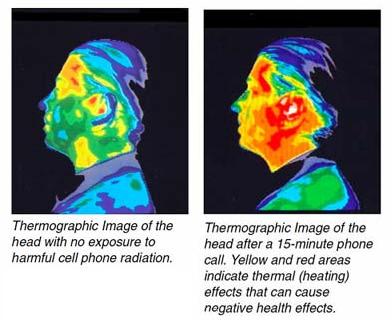
Cellular phones or mobile phones are used today for long periods of time, often with people unaware of the degree and impact mobile phone radiation has. Reports from various sources achieve different conclusions about damage to human health; some stating that no conclusive evidence is available while others establish a direct correlation between brain tumors and health conditions to extended exposure to mobile phone radiation. However, these are the facts about cellular phone radiation.
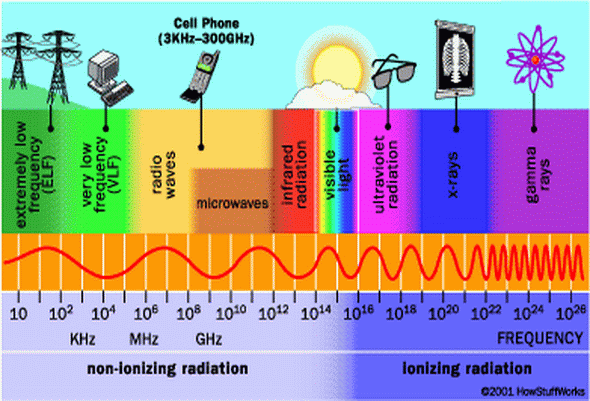
Cellular phones use radiowaves, wavelengths on the longer end of the electromagnetic spectrum, in the band of about 800 to 900 MHz (megahertz, [frequency]). Unfortunately, the human body is known to absorb the output radiation produced by cell phones in a measurement known as the Specific Absorption Rate (SAR). The SAR measures the amount of energy absorbed by the body from handset radiation. The energy absorbed by the body decreases with increases in distance as radiation is dissipated into the environment. The United States government regulates the maximum legal SAR for a handset to be 1.6 watts per kilogram. In the European Union, the maximum SAR is 2.0 watts per kilogram. The Unites States government measurement of SAR involves only testing the absorption of energy from talking on the phone and does not compensate the SAR for other radios waves from such sources as wifi, bluetooth, etc. These add to increased energy output in from the radiowaves. In addition, smart phones in particular produce increased amounts of radiation due to their internal components.
Data exists that directly proves that exposure to radiation causes harm to cells, especially over long periods of time, in greater doses. Mutations, cancer, and even brain tumors have been a result of exposure to radiation with a more adverse or a quicker effect occurring at greater amounts of exposure.
It is important to remember that modern day phones generally produce less radiation than those of the late 1980s and that steps are being taken to attempt to lessen hazards associated with cellular communication.
Sources:
http://reviews.cnet.com/cell-phone-radiation-levels/
<http://www.britannica.com/EBchecked/topic/101609/cell-phone>
http://electronics.howstuffworks.com/cell-phone1.htm
http://transition.fcc.gov/cgb/sar/
http://en.kllproject.lv/wp-content/uploads/2009/02/cell-phone-radiation-spectru.gif




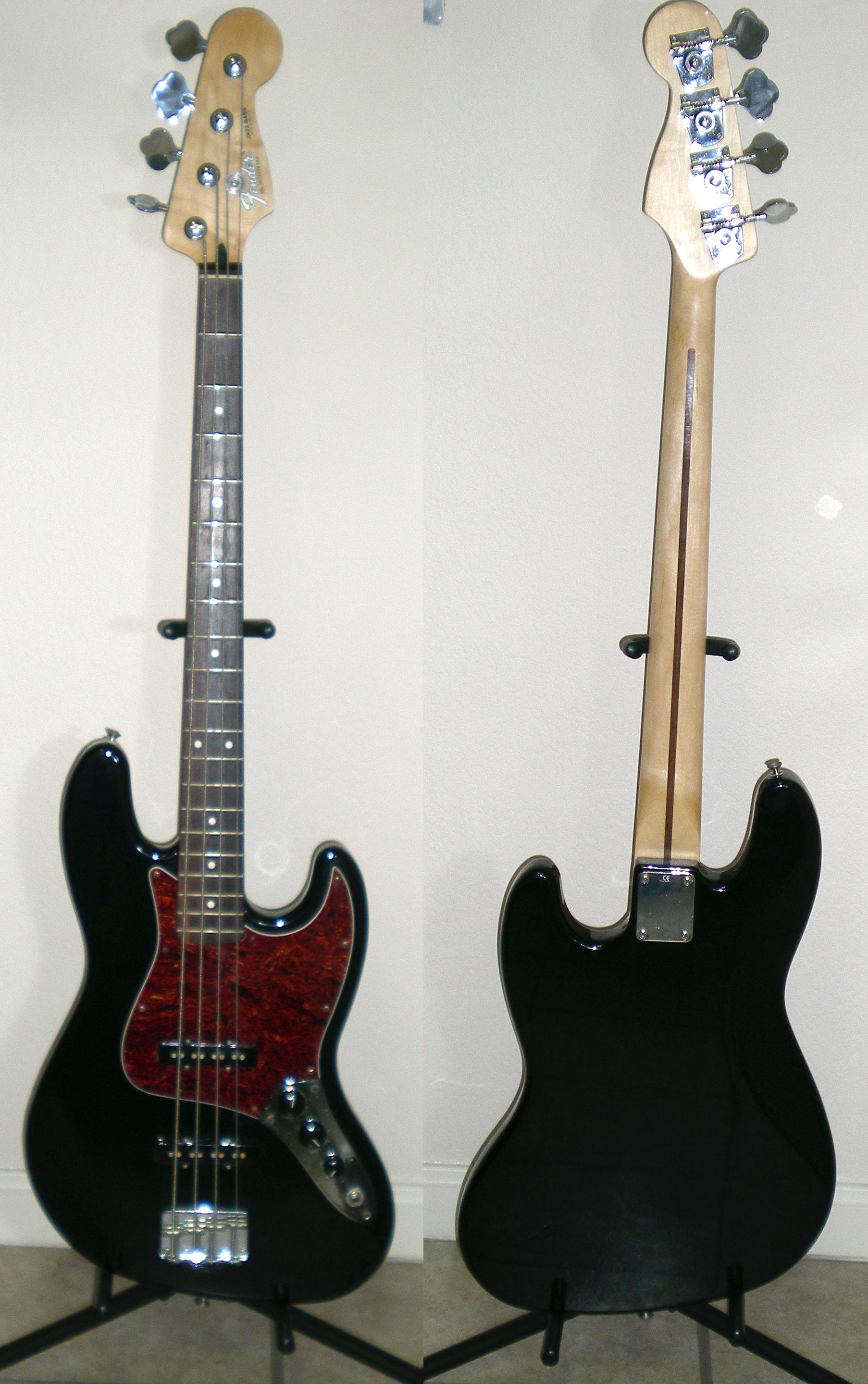
 The body of a bass is usually made out of wood, but other materials including graphite have been used before. Many different types of wood may be used to make the body, neck, and fretboard of a bass. However, the most common type of wood used for the body of a bass is alder. For the neck, maple wood is commonly used and for the fretboard, rosewood is preferred. Mahogany, maple, ash, and poplar are other commonly used woods for the body of the bass. Mahogany for the neck is also used and maple or ebony for the fretboard.
 Strings types include all-metal strings and strings with different coverings. All-metal strings include roundwound, flatwound, halfwound, found wound, and pressure wound. Two examples of different string coverings include tapewound and plastic-coatings. This variety of materials used in strings allows bass players to have a range of tonal options. In the 1950s and early 1960s, the most commonly used string used by bassists was flatwound strings with a smooth surface. These strings had a smooth, damped sound similar to that of a double bass. In the late 1960s and 1970s, roundwound bass strings became popular, but flatwounds continued to stay popular as well. These roundwound strings were similar to those of guitar strings at the time. Comparing the two string types, roundwounds have a brighter timber (quality of a musical note) with greater sustain (amount of time it takes for the sound of the string to become silent) than that of flatwounds.



 one into the creation of car windows, no one every stops to think what type of glass is used in each one. The windshield of a car is made out of laminated glass for many reasons. Primarily it is made this way to limit breakage. When a stone flicks up at the window, due to the toughness of the material, it cracks instead of shattering. The side windows of a car are made out of toughened glass but it is not a tough material, if an object were to hit them they would shatter into tiny pieces. A sound knowledge of the specific characteristics of each glass could help you in real life situations. If you were to drive your car into a frozen lake and happened to have a hammer in the car, you could break your way out and swim to safety by shattering the side windows. If you were to hit the windshield it would only crack and due to the pressure from the outside pushing in you would not be able to escape.