The Design Technology Blog

Category: Uncategorized

  • Wood in Furniture Construction

    History of Wood Furniture Construction

    Before 1900, most wood furniture was made with woods like walnut, oak,
    mahogany, rosewood, fruitwoods, and rare wood veneers and inlays were in
    commonly used. American Colonial furniture was dependent on the local
    availability of wood. Their furniture was made with maple, oak, walnut, birch,
    and cherry, as well as pine. The preferred furniture woods were readily
    available, so less attractive or durable woods were used only for hidden parts
    inside a piece.

    Main Categories

    All woods used for making furniture fall into two categories – hardwoods and softwoods, but the designation doesn’t really have anything to do with how hard or how soft the wood is. “Hardwood” identifies the trees that lose their leaves seasonally and “softwood” refers to those that keep their foliage all year.

    HARDWOODS

    Mahogany: Fine grained, reddish brown in color. Very durable and resists swelling shrinking, and warping. Used for quality furniture such as cabinets; boat construction; wood facings and veneers.

    Walnut: Fine textured, strong, easy to work with and resists shrinking and warping and finishes well. Best used for gunstocks, solid and veneered furniture, novelties, cabinetry and wall paneling.

    Oak: Strong with good bending qualities. Is durable and finishes well and resists moisture absorption. Used for furniture, trimming, boat framing, desks and flooring.

    Maple: Fine textured and is fine textures. It is strong and hard. Has moderate shrinkage and machines well. Best used in flooring, fine furniture and woodenware such as bowling alleys

    Cherry: Close-grained and resists warping and shrinking. It will redden when exposed to sunlight and ages well. Used in cabinet making, boat trim, novelties, solid furniture handles and turned projects.

    Rosewood: Very hard and has a dark reddish brown color. It is fragrant and close grained. It is hard to work and takes high polish. Used in musical instruments, piano cases, tool handles, art projects, veneers and furniture.

    Teak: Hard and durable and resistant the moisture and rot. It resists warping, cracking and decay. Best used in fine furniture, paneling, shipbuilding, doors, window framing, flooring and general construction.

    SOFTWOODS

    Pine: It has uniform texture, works easy and finishes well. It resists shrinkage, swelling and warping. Used in house construction, paneling and trim. Also used for furniture, molding and boxes.

    Hemlock: Light in weight, uniformly textured. It machines well and has low resistance to decay and nonresinous. Used for construction lumber, planks, doors, boards, paneling, sub flooring and crates.

    Fir: Works easy and finishes well. Uniform in texture and nonresinous. Has low resistance to decay. Used in furniture, doors, frames, windows, plywood, veneer, general millwork and interior trim.

    Redwood: Light in weight, durable and easy to work. Has a natural resistance to decay. Used in outdoor furniture, fencing, house siding, interior finishing, veneering and paneling.

    Spruce: Strong and hard. Finishes well and has low resistance to decay. Has moderate shrinkage and light in weight. Used for masts and spars for ships, aircraft, crates, boxes, general millwork and ladders.

    Cedar: Fresh sweet odor and reddish in color. Easy to work and uniform in texture and is resistant to decay. Used in chest making, closet lining, shingles, posts, dock planks, novelties and Venetian blinds.
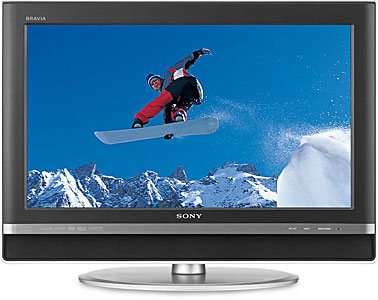
  • The LCD Screen

    By Evan

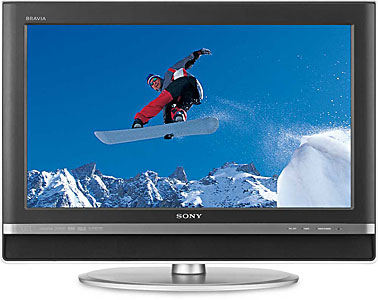
    You may think that a screen can only be just that a screen.  Something made from glass that will reflect as soon as the sun hits it.  This was the case until the remarkable material of liquid crystals was discovered for LCD screens or liquid crystal display.  Until LCD came around most screens were cathode rod tubes that are reflective and not quite as energy efficient as LCD screens.   LCD screens contain molecules that are between two transparent electrodes and also two polarizing filters.  These screens are used in various objects like laptops and TVs and pretty much anything else with a screen.  The break through of the LCD TV made people go to buy that particular TV over a plasma screen in some cases depending on what room they desired their TV to be in.  The material liquid crystal allowed the sun to hit the TV with out causing a reflection that would impair the picture coming from the TV.  The LCD panels don’t actually produce light so they require another light source that usually is behind the display.  In some displays LED lights are used behind the LCD to create a picture with intense bright and dark colors while still remaining unaffected by any light attempting to reflect off the screen.

    The inventor of the LCD is George Heilmeier in the 1960s.  He was a Ph.D student that worked in an RCA laboratory.  In that laboratory he researched liquid crystals and came up with the LCD.

    The LCDs also have a wide variety of viewing angles.  These screens are becoming so advanced that they actually can have a 180-degree viewing angle meaning you can see the screen even if you are all the way to the side of screen. The refresh rates and colors in these screens have also become more advanced over the years.  They have become so fast that they can have a 120hz refresh rate meaning that you can almost realistically see every movement that that is happening in real life on your television.  The color contrast ratios very from screen to screen and from TV to TV, but for the most part are high and contain many colors giving the screen a realistic display.  Liquid crystals have given screens a whole new look through the LCD by making the pictures and videos they show realistic and unaffected by reflective light.

    http://www.lcd-television-repair.com/sony%20lcdtv.jpg

    sources:

    http://www.invent.org/2009induction/1_3_09_induction_heilmeier.asp

    http://en.wikipedia.org/wiki/Liquid_crystal_display

  • Race Cars and Carbon Fiber

    Racing cars have been a major sport for many years, and the industry of racing has increased since the appearance of F-1 races. Racing cars used to be made from the same material as road cars, that are steel, aluminum and other metals. But on the early 1980s Formula 1 cars underwent some changes, which have become an important part of the design of the car: the use of carbon composite materials to build the chassis.

    Today most of the racing cars chassis, which includes the monocoque, suspension, wings and engine cover, are built with carbon fiber.  Carbon fiber reinforced plastic, or CFRP, is a strong, light and very expensive composite material which, because of its mechanical properties is used to build racing cars at every level.

    The Ascari Kz1 is a super car made completely from carbon fiber


    The four advantages that this kind of material, that other materials don’t have are:

    • Super lightweight
    • Super strong
    • Super stiff
    • Can easily be molded into all kinds of different shapes


    Also to better understand that carbon fiber is better than steel (commonly used in some parts in road cars) here is a table:

    Material Tensile strength Density Specific strength
    Carbon fibre 3.50 1.75 2.00
    Steel 1.30 7.90

    0.17


    We can see that carbon fiber is almost 3 times stronger and more than 4 times lighter than steel. That is why it is such a good material for racing cars.


    Sources:

    http://formula1.about.com/od/car1/a/carbon_fiber.htm

    http://www.solarnavigator.net/composites/carbon_fibre_and_racing_cars.htm

    Pictures:

    http://pictures.topspeed.com/IMG/crop/200703/2007-ascari-kz-1r-gt3_460x0w.jpg

    http://0.tqn.com/d/formula1/1/G/h/2/-/-/fiber1.jpg


  • Audiophile Cables

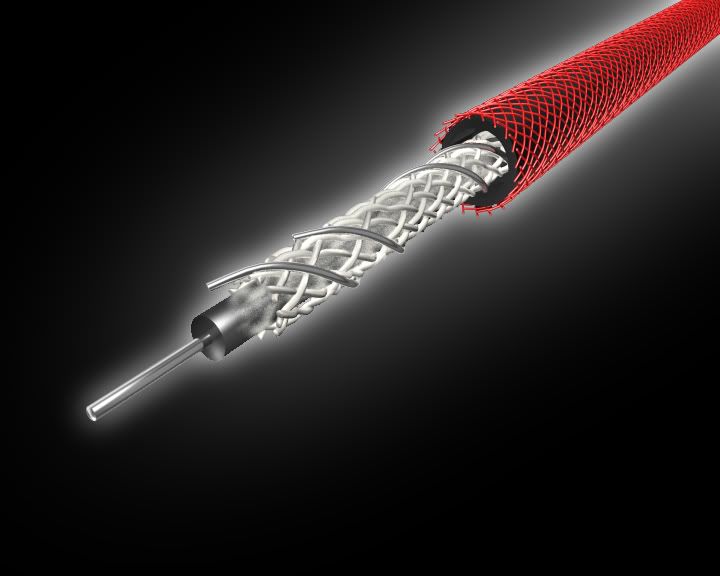
    iPod Line-out-Dock with braided Copper wires

    In the world of audiophiles, wires play a big role in sound quality. Wires are simply used to create an electric connection between two audio equipment, so an average person may think that as long as the wire can transfer an electrical current, all of them are the same. However, wires for audiophiles are essential for audiophiles because they alter the sound quality of their equipment.

    There are three major materials used in wires: copper, silver, and gold. Copper is the cheapest of the three types of wires. Copper also has the second lowest resistance of the three, so it is widely used in interconnects. On the other hand, Silver is more expensive than Copper. Silver also has the lowest resistance of the three, so the electrical signals would be more “pure” than that of copper wires. Due to the high price of silver, there are silver coated copper wires that are cheaper than pure silver wires. Finally, gold has the lowest resistance of the three. However, gold is the most nonreactive of the three; it does not oxidise easily. As a result, a thin layer of gold is used in the ends of interconnects were the metal is exposed to air the most. Copper wires are said to give a “warm” sound whereas silver wires are deemed to be more “transparent” and “brighter”.

    Wires can be either solid core or stranded. Solid core wires tend to be less flexible, but they are known to be better in sound quality. Due to their stiffness, solid core wires tend to be used in short interconnects. Another downside of long solid core wires is that they act as antennas that catch RF (radio frequency) signals, which affects the electrical signals. Stranded wires, on the other hand, are more flexible, so they are used in longer interconnects. Also, because the wires are stranded, they are less affected by RF signals due to its high damping properties.

    Solid silver wire with insulation and sleeves

    Another important aspect in wires is the insulation. Plastics, such as PET and Teflon, are widely used to insulate the wires. In earphones, where the wires are thin, enameled wires are used to insulate the wires from each other. Enameled wires are wires with a thin coat of insulation (usually a plastic). On the other hand, thicker wires use tubes of plastics to insulate from each other. Plastic is used for three main reasons: they are flexible, good insulators, and cheap. Another type of insulation used is cotton. Cotton is mainly used so that the physical vibrations of the wires do not create noise. Also, cotton has a low dielectric constant, meaning that there is be less capacitance between wires. However, cotton cannot prevent oxygen from reacting with the wires, so a tube of plastic or rubber is usually used to enclose the wires. Although not an insulator, a metal sleeve is used to prevent the wires from being affected by RF signals and EMI (electromagnetic induction). This too allows the signals in the wires to be more pure and clean. Similarly, wires are usually braided for the same reasons, lessening the effects of RF signals and EMI.

    There are several more modifications that can be done on wires such as cryo-treatment, which I will not go into. Most people cannot distinguish silver wires from copper wires from simply listening to them. However, there is a minor group of audiophiles who care about these minor details for their music experience and invest large amounts of money for this.

    Images:

    http://www.aloaudio.com/store/images/OCC_TP2.jpg

    http://i48.photobucket.com/albums/f232/hoosterw/audio_cable_single_core_red_on_blac.jpg

    Reference:

    http://www.head-fi.org

  • The Chevy Volt leading the way to a practical transition from fossil fuels

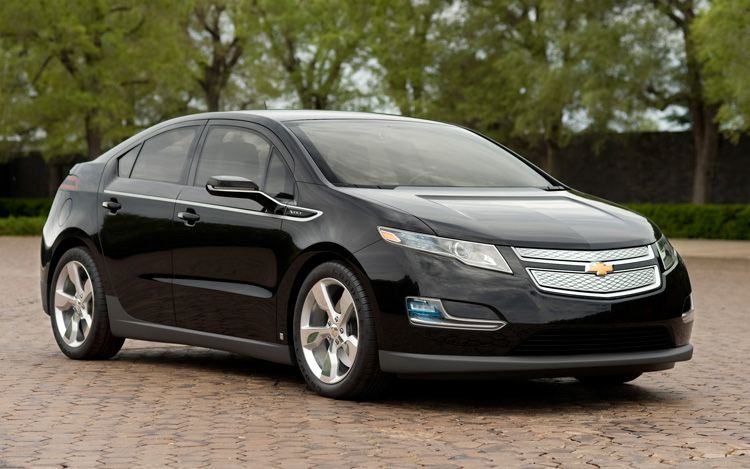
    Chevy Volt: By Evan

    The Chevy Volt is a car that Chevy hopes will begin to lead to more green cars.  The Chevy volt in turn has been named the green car of the year 2011.  This car presents a more practical solution to a mix between electric and gas powered cars.  Chevy claims that this car is able to drive for around 35 miles completely gas free and on a single charge.  After 35 miles or so a gas motor will turn on and take the driver of up to around 340 miles more on a single tank of gas.  This car is not completely gas independent, but for most comuters in urban and suburban areas it could prove to be virtually if not all electric.  The concept of an automobile like the Chevy Volt will begin the transition away from fossil fuel in cars all together.  This car proves to have the same luxuries as every other car that is not quite so electricity dependent.  Chevy even claims specifics such as, “10 hour charge time on a 120 volt line” and “4 hours on a 240 volt line.”  This charge time suggests you can plug the car in overnight and wake up and drive around 35 miles gas free the next day.  Chevy even claims that “$1.50” will be the price of a gas free commuter to drive this car a day.  This remarkably inexpensive price makes this car appealing to the public while it still remains green and more environmentally sound than any other car competitor out on the market that still remains an average price range.  The price of the Volt seems to be around $32,780 according to the Chevy Website.  This price puts the car in an average price range compared to other cars on the market.

    My personal feeling about this car is that it is a remarkable break through.  We have had the technology to do this for a while, but the car companies had to make these cars seem practical and affordable to the public and it seems like Chevy has accomplished this.  I think that as Americans we have perfected electric power more than fossil fuel extraction and in turn we have a more abundant supply of resources for electricity on the homeland than resources like oil, which we must trade will nations such as Saudi Arabia.  The idea of being able to plug a car in overnight and wake up the next day and drive 35 miles with out gas is very appealing to me and the consumers of the car industry. 

    My final conclusion is that this car proves to be an excellent green car that offers the owner with a cheaper cost per drive due to the lack of independence the Volt has on gasoline.  The car has a very average price, so it is not out of the price range of the common public consumers in the automobile industry.  It even proves to be much more practical than other attempts at a mix between gas and electric engines.  For example, the Hybrids don’t use gas if you go under a certain speed and then turns the gas generater on whenever it goes above that speed or runs out of electricity.  This process is somewhat effective, but Hybrids are still gas dependent on highways and usually anywhere with a speed limit about 35 miles per hour or over.  Where the Volt will be gas independent for around 35 miles with no limitation created due to the users speed.  This car seems to pave the way to the future, while still remaining practical to the public.  I know when this car comes out I will want to purchase it and envy everyone who has it.

    Work Cited

    “2011 Chevy Volt | Electric Car | Chevrolet.” 2011 Cars, SUVs, Trucks, Crossovers & Vans | Chevrolet. Web. 08 Jan. 2011. http://www.chevrolet.com/volt/.
  • Brink: Dawn of SMART

    Ever played a war game were you had a small fence or a fallen tree in front of your character, and wondered why your character couldn’t just climb it or just jump over the tree  to get faster to the enemy or skip a long walk. Well, Splash Damage is developing a game, which will be released in 2011, were obstacles are not a problem anymore to you.

    Brink is not just any other first person shooter (FPS), but it’s a game that is going to change the way we know shooting games. The developers of Splash Damage designed a game where you are allowed to move freely through the map, thanks to their program SMART (“Smooth Movement Across Random Terrain”). It allows players to maneuver around complex environments without equally complex input by analyzing their position and judging what they are trying to do. The movement style is that of parkour, similar to that as seen in the Mirror’s Edge and Assassin’s Creed games.

    A little background on the game:

    In Brink, two sides, “Resistance” and “Security”, fight in the previously utopian city known as The Ark, a floating city surrounded by the waters of a flooded Earth. The Ark was designed as a prototype of a perfect city, with renewable resources and no pollution, large enough to support 5,000 residents. However, due to many refugees entering the city from other parts of the world, its population has grown to 50,000, meaning there are not enough resources to go around – resulting in the city being on the brink (hence the name of the game) of a civil war.

    Conclusion:

    In my opinion I think this game will make it far, no other shooting game has tried to approach the genre the way Brink does. I really enjoy playing video games; it’s one of my favorite things to do. And what I have noticed is that control and movement is a very important aspect of a game, because if you don’t have a smooth movement and is hard to control you character, well, you could get killed in the game and have to redo whatever you did before, something that for some people it is really frustrating. It can also make the game so hard that you will get bored of playing it and probably never finish it. So Brink will surely keep you busy for a bunch of hours in front of the TV, and I don’t think anyone will get bored of it, it has a very interesting story line, and it will have a very interesting multiplayer experience. This game is surely an innovation to the shooting genre as we know it.

    Sources:

    http://en.wikipedia.org/wiki/Brink_(video_game)

    http://brinkthegame.com/ark/island/

    http://bethblog.com/index.php/2010/03/04/brink-developer-diary-3-ed-stern/

    http://www.splashdamage.com/brink#/screens_brink/025_tb.jpg

  • This is an Example of what I am looking for

    Read the following http://blogs.saschina.org/chemicalparadigms/2010/10/31/bend-it-like-jabulani/