The Design Technology Blog

Category: Uncategorized

  • World’s Lightest Basketball Shoe

    World’s Lightest Basketball Shoe


    THE PEOPLE INVOLVED

    “NBA Most Valuable Player candidate Derrick Rose of the Chicago Bulls was spending time with adidas’ footwear-development teams one weekend in 2009 when he saw the shoe that he’ll wear in the NBA playoffs tomorrow.

    Rose clamored for the shoe to be made available immediately, but adidas assuaged him by saying he’d love it when R&D was finished. And ready it now is, with adidas taking yet another step in providing its athletes and consumers with the sports industry’s lightest footwear.

    The ‘Adizero CrazyLight’ will be available for $130 retail June 3 in four color schemes: sharp blue/white, black/red/white, gray/white/neon green and red/white. The shoe weighs in at just 9.8 ounces, making it 15 percent lighter than the nearest mid-top basketball shoe and half-an-ounce lighter than the next low-top.

    The launch of the Crazy Light comes on the heels, so to speak, of two recent additions to the adiZero line: the 6.9-ounce 5-Star football cleat and the 5.8-ounce F50 soccer cleat, each of which is considered the lightest in its sport. Now, the Crazy Light takes claims that prize for basketball.

    “We’ve reached our destination,” said adidas VP Lawerence Norman during a Manhattan news conference Thursday to announce the shoe.

    As adidas designer Robbie Fuller told Wired.com, professional and collegiate athletes continuously cite light weight, cushioning and support as the three essential criteria for a shoe. “Every component [in the Crazy Light] had to check those three boxes,” Fuller said.
    Fuller and the design team started with a new Sprintweb “exoskeleton” to define the shoe’s upper, which adidas engineer Elysia Davis called the first of two fundamental technologies to ensure the Crazy Light would have the proper support and stability while maintaining such a light weight. ”


    HOW DOES THE TECHNOLOGY BENEFIT US?

    At less than 1 mm thick and with strong bonding properties that provide vertical and horizontal strength in the shoe, Sprintweb ensures that the shoe’s light weight won’t let it break down with heavy use. Davis emphasized that every part of the upper connects to something strong. “If you’re getting tension from the laces through the eye stays, that’s going to be a load-bearing element of the shoe,” Davis told Wired.com. And so each eye stay is connected to a lower part of the shoe that can absorb the stress of each movement.

    That was also critical to the second piece of tech Davis emphasized: determining where material would be placed in the shoe.


    THE INNOVATION BEHIND THE SHOE

    The innovation team studied video of basketball movements to look for areas where weight could be placed and other areas where it could be saved. The goal was to provide an upper with multidirectional support, because basketball players constantly make linear and lateral movements. “Some of the challenges you might not have to consider in a conventional upper, you have to take into consideration” with a lighter shoe, Davis said.

    In order to help the shoe live up to its name, the design team used translucent nylon in the upper to decrease weight. The effect is three-fold: The mesh-like material adheres to the shoe’s minimalist design, it improves breathability throughout the foot, and it adds aesthetic intrigue by letting the consumer look through one side of the shoe and out the other.

    One lightweight element added to the Crazy Light is adidas’ Sprintframe. Already used in other adiZero models, this technology for the shoe’s chassis makes has the external heel counter stitched to the sock liner — just two layers. Fuller said the conventional method is very different: “Shoes typically have an outer-upper layer, then glue, then a heel counter, then glue, then foam, then glue, then lining, then a sock liner.”


    The Crazy Light’s lightweight emphasis made its way from the shoe’s upper down to its underside. The outside part of the traction system has thicker rubber for added durability. Its midfoot area was slimmed down, although varying traction patterns are abundant. The pivot area toward the inside of the foot allows for quick, cutting movements. The S-curve that travels through the middle of the shoe from the inner heel to the outside toes is built with thin longitudinal grooves, incorporating optimal traction while reducing the top impediment to court grip.


    BIBLIOGRAPHY

    http://www.adidas.com/us/shoes-adizero-basketball/_/N-svZ1z13ofrZ1z13y9k?sequenceparam=svZ1z13ofrZ1z13y9k&cm_mmc=AdieSEM_Google-_-Basketball-B-Exact-_-Shoes-Products_B-Adizero_Crazy_Light-General-_-adidas%20crazy%20light&cm_mmca1=US&cm_mmca2=Exact

    http://www.footlocker.com/_-_/keyword-adidas+crazy+light

    http://bleacherreport.com/articles/1163419-adidas-crazy-light-2-breaking-down-basketballs-lightest-shoe

    http://www.wired.com/playbook/2011/04/adidas-lightest-basketball-shoe

     

  • PPR Revolutionizing Fashion One Carbon Emission At A Time…

    PPR is a French multinational which develops a worldwide brand portfolio for luxury brands such as Gucci and Yyves Saint Laurent. Moreover it has has just announced its five-year plan to reduce CO2, waste, the use of water and the sourcing of raw materials and hazardous chemicals. It will involve all of PPR’s labels such as Yves Saint Laurent,  Alexander McQueen, Balenciaga, and Stella McCartney.

    According to The Guardian, PPR wants to “ultimately implement efficient and innovative initiatives to reduce the environmental impacts from the sourcing of raw materials, processing, manufacturing, and distribution of the Group’s products”.

    “Our pursuit of operating on a more sustainable level across all areas of our business is integral to our business plan and to the longevity of our businesses. The next five years are pivotal and we now have a clear view of what we want to achieve, and the actionable targets we need to make to get us there,” said Francois-Henri Pinault , chairman and CEO of PPR.

    FUTURE OF FASHION 

    One thing the company is keen to work on, though, is the visibility and traceability of the snake market.

    “We are confident that this type of innovative, sustainability-driven approach will ultimately generate new business revenues from sustainable products and services and create new business models for us as a group.”

    Marks & Spencer is becoming proactive and is beginning to think sustainably – by shwopping. The chain is launching a new “buy one, give one back” campaign in collaboration with Oxfam in a bid to change the shopping behaviour of consumers. Customers are invited to leave their old or unwanted clothes at Marks & Spencer stores, where they will then be given to Oxfam. The charity will then either re-sell them through its network of stores, re-use them in international markets (for example as summer clothing in Africa, warm clothing in Eastern Europe), or recycle them into new materials.


    Bibliography: 

    • http://www.vogue.co.uk/blogs/the-green-style-blog/
    • http://www.safedenim.com/
    • http://www.ppr.com/en


  • Planned Obsolescence: Textbooks

    Planned Obsolescence
    Planned Obsolescence is one of many design policies. The policy follows an idea of planning or designing a product that has a limited useful life therefore after a certain period of time it becomes limited or obsolete.
    Planned obsolescence has great benefits for the producer because the consumer is forced to purchase the product again therefore resulting in the producers to gain profit. An example of a planned obsolescence product are textbooks as although core subjects remain the same over the years as not much is changed, new textbook editions are made frequently. The new editions that are made result in the school to purchase them therefore although the old textbooks contain the somewhat of the same information the differences in page numbers between the old textbooks and the updated ones result in students to purchase these textbooks even though they are quite expensive. In addition, In most subjects, the information doesn’t change dramatically from one year to the next, but don’t tell the publishers that or else they’d be out of a job. In addition, some of the changes producers make include switching chapters around, adding or subtracting diagrams, including CDs that can’t be used again once they’re registered etc. Furthermore, due to the expenses, many students are purchasing used textbooks from online sources which is more affordable.

    Sources:

    http://www.thedailygreen.com/environmental-news/latest/planned-obsolescence-460210


    http://www.slate.com/articles/arts/everyday_economics/1999/10/planning_for_obsolescence.html


  • Planned Obsolescence of Video Games and Their Consoles

    Nowadays, the video game market is extremely competitive and companies are desperately trying to make as much money off of one game, in the shortest amount of time. This has led to post-launch support for their products at small prices called Downloadable Content (DLC). The thing that this has lead to is companies like Rockstar Games (creators of Grand Theft Auto) ask their developers to plan out how long they will allow the content on the disk to ‘live’ and when they will release their first piece of DLC.

    http://playstationlifestyle.net/2012/05/01/rockstar-announces-max-payne-3-dlc-plans-pre-order-it-all-for-30/

    One of the ways they get people to buy this new content is by offering a fresh way to play the game and separating those who buy it from those who don’t; creating a constant pull for those who don’t buy it to join their friends

    This same thing applies to the video game consoles on which we play these games. Companies like Sony and Microsoft plan out at what time their support for their current console would become less profitable than releasing a new console all together. They must also take into consideration when their competitors are planning to release their next generation of consoles so as to avoid being left behind. For example, many people believe that because of the PS3’s late release compares to the Xbox 360, it has had consistently less sales than the Xbox (and Wii).

    The video game industry has been speeding up recently, with people on both sides of the spectrum; those who don’t buy games unless there is post-launch content (free or otherwise) and those who hate the direction in which games are going.  This is because they feel that they are being denied access to content that they felt that was included on game discs before.

  • Ergonomic Keyboard

    Ever wondered why we have to sit directly infront of the computer in such a situated way while working on our computers? Didn’t you get sick of it? Ever hated how much u have to push down for a button to record a key? Now
    Apple computers have created the best ergonomically designed keyboard, the Apple Wireless Keyboard. With its light weight and complexly simple shape that is comforting on your lap, desk, bed, anywhere. It is compatible with any Apple computer with bluetooth wireless technology. Going up to 10 meters away from the computer, the Apple keyboard will satisfy users from a fairly far distance, not limiting the space between them and the computer. With no cables and nothing to tangle on, the keyboard also has ergonomically designed low profile aluminum encloser, crisped, responsive keys satisfying all users while typing.

  • Planned Obsolescence

    A set of new inkjet cartridges can cost more than the printer itself. Also, you may be prevented from using every expensive drop of pigment. Many ink cartridges come with proprietary smart chips on them that disable printing when one of the colors falls to a certain level, even if there’s really enough ink to do the job. Plus, the smart chips can discourage refilling or use of third-party ink. This is known as “notification obsolescence” which is a type of obsolescence that companies developed which tells the user when it’s time to buy a replacement.  Each large laser printer cartridge requires about three quarts of oil and 2.5 pounds of plastic to make. Some water filters have similar technology that calls for replacement before the medium is necessarily used up.

    Solutions for consumers:

    • Buy cheaper generic cartridges, particularly ones that let you refill the ink. This cuts down on plastic use, and saves you money.
    • Print less. Use draft and grayscale settings to save ink, and optimize content from the Web or e-mail before you send to the printer, so you don’t waste ink on headers, footers and ads you don’t want.
    • You can also skip printing by using online backup services, Google docs and e-mailing things to yourself.
    • Print only when necessary.

    If you want to learn more, look at these youtube videos
  • Planned Obsolescence- Light Bulbs

    Planned Obsolescence is a trend started in the 1920’s by the Phoebus Cartel, a group of light bulb manufacturing companies, in which the product is intentionally designed to become obsolete and require replacement.

    After more than 100 years Thomas Edison’s early light bulbs still glow in the museum where they are kept. Clearly the technology exists to keep lightbulbs glowing for centuries but then why do our lightbulbs never last more than a year or two? This is because lightbulbs have been intentionally designed to die after 1000 hours, in a scheme to increase profits for the manufacturer.

    Advantages for the manufacturer:

    • generates long term sales which turn into profits
    • increases the demand for the lightbulbs, if the lightbulb had a life-time guarantee then the consumer would only ever demand one lightbulb
    • can use low-quality, non-durable, cheap materials which reduces the cost of production
    • not designed to last so construction can be fast, simplified and efficient which also ultimately decreases the cost of production

    Advantages for society:

    • the increased demand places pressure on the manufacturer to increase output which provides more job opportunities
    • promotes new innovation, as times are progressing demand for new and improved products is high
    Disadvantages for society:
    • creates waste which creates negative externality, it usually ends up in illegal dumps in third world countries
    • exploits consumers as they are constantly spending their income on a product that they could buy once
    • decreases the quality of the product as it is not designed to last
    The manufacturer has the technology and the ability to lengthen the life span of lightbulbs through their selection of materials, production technique, and the repairability of the produt. Yet they choose to exploit consumers and harm the environment all in the interest of maximizing profit! Does that really seem far? There are a number of ways that we as consumers can attempt to overcome the manufacturer-enforced problem of planned obsolescence. In the case of lightbulbs we can consider buying longer lasting lightbulbs such as LED and florescent bulbs. These may cost more initially (unfair for the consumer) but down the line they will prove to be a better investment and save a lot of energy which benefits the environment. Most importantly, we can keep our lights turned off as often as possible as the less bulbs are on the less energy they use and the longer they will last.
  • Planned obsolescence in apple products

    Apple have added tamper resistant screws to several of their products such as their mac-book pro. The screws are unique to apple products and have one purpose, to keep users out. Consumers are claiming that this is forcing apple consumers to throw away their products sooner and buying newer ones faster. This forces users to send their laptops to Apple for repairs and upgrades instead of doing it themselves for a fraction of the price. In fact reading through the comments I discovered that their are several things that apple does to encourage buying. Several people complained about their laptop dying literally days after the warranty went off, not being able to replace spare parts such as the battery and the logic board. The logic board is a 5 in 1 board that is inside laptops including all the pieces in a computer. This means that if one piece the whole thing has to be replaced. I find this ridiculous, as I have had my computer for around 5 years, and have simply upgraded it over time for the fraction of the price and with less waste.  If a piece breaks or more likely becomes outdated it is easily replaceable and the old piece can be sold.

    I believe Mac computers should allow their laptops to become more tinker friendly or risk being sued for anti competitive behavior.

    http://www.cultofmac.com/77814/is-apple-guilty-of-planned-obsolescence/

  • Designers and planned obsolescence with laptops

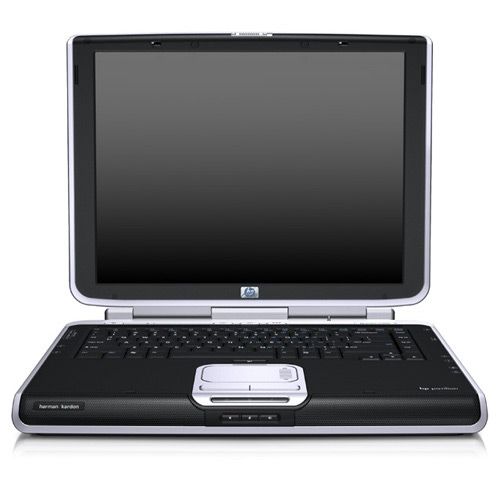
    Planned obsolescence is a method a number of designers use to ensure that people continue to buy their products. One product that planned obsolescence is used in is laptops. The new software is often carefully calculated to reduce in value to consumers of the previous version. They do this by making programs upwardly compatible only, meaning the new versions are the only ones that can read all the files of the old version, but it doesnt work the other way around. Laptops also do not last for a long amount of time. Sooner or later the laptop’s quality will reduce and will begine to get slower and not function as well as it used to.


  • How to choose the right office or desk chair

    When youre employed in a place that consists of a lot of desks and offices you will always be on the move in order to finish your work, however there is downturn to that excess of movement due to the fact that some chairs can consistently harm your spine. So due to that, one should always buy a chair that is ergonomically fit for him and one that fits his back posture in order to avoid back problems.

    What type of chair is ergonomically fit for you

    in this vast and international market, there are many chairs availible that serve and fullfil your ergonomic needs, however it is a known fact that there is no chair that is perfect ergonomically there fore one must endure himself in several tests before purchasing the most ergonomically fulfilling chair. From my point of view, people must buy chairs based on of they are healthy or medically capable of healing or preserving someones back, people should not pick their chairs based on its comfort

    One of the most vital aspects in a chair is the lower back support. due to the inward curve the lumbar spine has, sitting periodically for extended periods of time causes slouching to occur in the posture which often causes strains in the back. The advantage of ergonomic chairs is that it has an adjustable lumbar adjustment which allows the person to adjust based on his needs and medical requirements.

    • Lumbar support. Lower back support in an ergonomic chair is very important. The lumbar spine has an inward curve, and sitting for long periods without support for this curve tends to lead to slouching (which flattens the natural curve) and strains the structures in the lower spine. An ergonomic chair should have a lumbar adjustment (both height and depth) so each user can get the proper fit to support the inward curve of the lower back.