The Design Technology Blog

Category: Uncategorized

  • 3D Printing

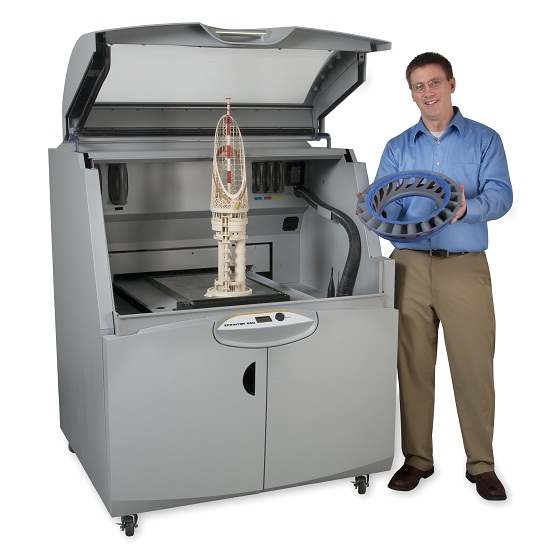
    3D printing is the process of producing a three dimensional object of any shape or form from a digital model. It is done by the utilization of an additive process where successive layers of material are laid down in different shapes. 3D printing has become an essential component of design as it assists in speeding up the process of manufacturing and enables production to be applied on a large scale. On top of that, it dismisses the possibility of human errors as these printers are usually flawless unless a designer types a fallacy into the software. Moreover, it increases innovations as prototypes can be done in a matter of hours, giving designers more time to evaluate their product and make final adjustments and improvements. Additionally, this method reduces the cost of designing as the money spent on traditional prototyping and tooling is no longer required. Although the manufacturing of 3D printers is an enormous step forward for mankind, it still brings some unethical issues upon us. Unfortunately, it has been proven that weapons can be 3D printed. It has therefore become questionable whether companies should continue to produce and sell 3D printers as frequently and casually as before. No more than a week ago, news about a 3D printed handgun that can fire 380 calliber bullets was reported in Texas, USA. Multiple harmful outcomes are currently being predicted about the USA due to the simplified process of obtaining firearm. “If you help people to make terrorist bombs, you are morally and partially responsible for the damage that they do,” warns Kirk O. Hamson, a business ethicist and executive director for the Markkula Center for Applied Ethics at Santa Clara University in California. Such harsh statements have made the usage of 3D printers both socially and ethically unpopular and widely disapproved of. Nonetheless, on another note, 3D printing happens to help eliminate both waste and carbon emissions. It can also potentially lessen transportation impacts and dismiss wasted inventory. Ultimately, 3D printing helps designers work efficiently and produce customer-satisfying products in less time and on a larger scale. In addition, it is environmentally friendly. However, due to the arisen ethical and social issues, it is possible that this method of manufacturing can eventually no longer be viable until numerous modifications and policies are put on the consumption of such printers.

    Sources:
    “Z Corp 3D Printing Improving Design | Z Corporation.” 3D Printers and Rapid Prototyping | 3D Systems. 3DSYSTEMS, n.d. Web. 22 May 2013. .

    Chapman, Ben. “| Sustainability Workshop.” Autodesk Sustainability Workshop Home Page. N.p., n.d. Web. 22 May 2013. .

    Krasny, Jill. “The Ethics of 3D Printers–and the Guns They Can Produce | Inc.com.” Small Business Ideas and Resources for Entrepreneurs. N.p., 15 May 2013. Web. 22 May 2013. .

  • 3D Printing

    3D printing is the process of producing a three dimensional object of any shape or form from a digital model. It is done by the utilization of an additive process where successive layers of material are laid down in different shapes. 3D printing has become an essential component of design as it assists in speeding up the process of manufacturing and enables production to be applied on a large scale. On top of that, it dismisses the possibility of human errors as these printers are usually flawless unless a designer types a fallacy into the software. Moreover, it increases innovations as prototypes can be done in a matter of hours, giving designers more time to evaluate their product and make final adjustments and improvements. Additionally, this method reduces the cost of designing as the money spent on traditional prototyping and tooling is no longer required. Although the manufacturing of 3D printers is an enormous step forward for mankind, it still brings some unethical issues upon us. Unfortunately, it has been proven that weapons can be 3D printed. It has therefore become questionable whether companies should continue to produce and sell 3D printers as frequently and casually as before. No more than a week ago, news about a 3D printed handgun that can fire 380 calliber bullets was reported in Texas, USA. Multiple harmful outcomes are currently being predicted about the USA due to the simplified process of obtaining firearm. “If you help people to make terrorist bombs, you are morally and partially responsible for the damage that they do,” warns Kirk O. Hamson, a business ethicist and executive director for the Markkula Center for Applied Ethics at Santa Clara University in California. Such harsh statements have made the usage of 3D printers both socially and ethically unpopular and widely disapproved of. Nonetheless, on another note, 3D printing happens to help eliminate both waste and carbon emissions. It can also potentially lessen transportation impacts and dismiss wasted inventory. Ultimately, 3D printing helps designers work efficiently and produce customer-satisfying products in less time and on a larger scale. In addition, it is environmentally friendly. However, due to the arisen ethical and social issues, it is possible that this method of manufacturing can eventually no longer be viable until numerous modifications and policies are put on the consumption of such printers.


    Sources:
    “Z Corp 3D Printing Improving Design | Z Corporation.” 3D Printers and Rapid Prototyping | 3D Systems. 3DSYSTEMS, n.d. Web. 22 May 2013. .

    Chapman, Ben. “| Sustainability Workshop.” Autodesk Sustainability Workshop Home Page. N.p., n.d. Web. 22 May 2013. .

    Krasny, Jill. “The Ethics of 3D Printers–and the Guns They Can Produce | Inc.com.” Small Business Ideas and Resources for Entrepreneurs. N.p., 15 May 2013. Web. 22 May 2013. .

  • The 3Doodler

    The 3Doodler (http://www.youtube.com/watch?feature=player_embedded&v=DQWyhezIze4

    The 3Doodler is the first 3D pen that was created, and up to now, still the only one in the world. It is the invention of Peter Dilworth and Max Bogue. It uses thermoplastic that is heated and cooled as it passes through the body of the pen. As one of the creator states: “We wanted to design a 3D printing device that could be used within minutes, without needing any technical knowledge, software or computers. We also wanted it to be affordable as well as fun, so that anyone could 3Doodle!” –  Peter Dilworth, Co-Founder. The creation of the 3Doodler is beneficial for designers and also younger people that would like to have easy access to a 3D printing tool. As the 3Doodler uses electricity to heat up the plastic, it is possible to use it everywhere in the house, without the installation of any software or program in order to make it work, like normal 3D printers require. There are not any problems with the production and use of this invention. However, if we consider the fact that the 3Doodler uses plastic, which is produced from oil, this can lead to consider the relative environmental impact that the pen has. Moreover, as it uses also electricity to produce the 3D sketches, it could lead to an increase in consumption of electricity which will therefore raise the cost of the Bill of the household and also impact the environment as well. Conclusively, as the environmental and social issues that are implied with the use of this new invention are limited, the 3Doodler is the next big step towards using 3D printing and sketching in our everyday life and everyday designs.


    Bibliography:

    The 3Doodler, Peter Dilworth and Max Bogue, 2011. www.the3Doodler.com


    Use of the 3Doodler
  • 3D Printed Guns


    At first, the idea of 3D printing was all positive, with ideas ranging from organs to key chains. Recently though, developers have been exploring 3D printed guns. Last week an engineer from Wisconsin printed a 25$ gun from a 3D printer. The gun was used to fire 9 .380 caliber rounds and successfully fired all 9 rounds. The engineer claims that the plastic used in most 3D printers is stronger than the most expensive plastic available, making the printing of 3D guns accessible to most people. The first 3D printed gun, called “The Liberator”, was fired at the beginning of the month for the first time. Even though the gun only fired one shot, it was a significant shot. Following the creation of the gun, many US congressmen have called to ban 3D guns. Many American’s could argue that this is beneficial as it makes guns more accessible but in truth, this idea is extremely dangerous. Giving almost anyone access to a gun is a horrible idea. This not only gives the normal man access to a gun, but it also gives terrorists, murders, etc. access to the gun. Another scary thought is that if people are starting to print 3D guns now, what will they be printing in the future? 3D bombs? The gun is actually so easy to download that any person can go on this website at any time http://defcad.org/liberator/ and download it. There are currently no laws that stop anyone from printing a 3D printed gun at home. Many people are saying that the 3D printer isn’t actually that big of a deal, saying that most people can’t afford a 3D printer to print the gun. One of the main concerns brought up is that 3D printed guns wouldn’t be detectable by metal detectors, meaning that any person with a gun could walk onto a plane, or into a secured place, without any problem. As this problem continues to grow, what will the government do?

  • Sports wear!

    Smart materials have many different uses and are developed to meet needs that are starting to emerge in our modern society. Smart materials can sense and react to environmental conditions and are produced to perform a particular function. Some of them:

    • alter according to external stimulus (change when something happens to them or around them)
    • change when the tempreture changes, either hotter or colder – Thermochromatic
    • are activated by internal or external power sources.


    Some fabrics and textiles incorporate smart materials. For instance there are sanitized fabrics for sportswear that contain anti bacterial properties to combat smell and sweat as well as synthetic fabrics with moisture management properties that can regulate and absorb sweat.

    Nike has a “Dri-fit” line that includes smart materials that absorb sweat.


  • Bare conductive ink

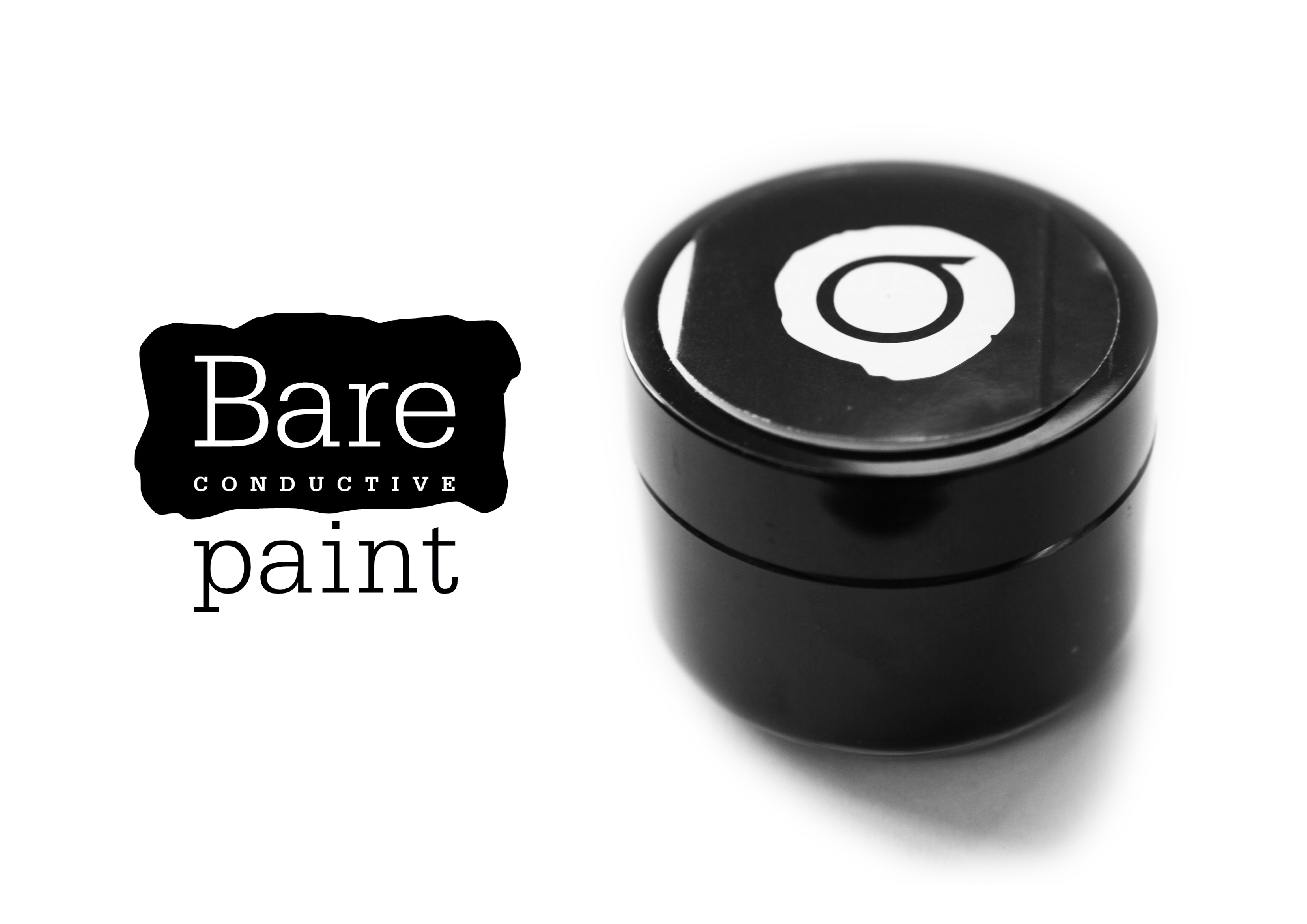
    This material is a type of ink that conducts an electrical current. Developed by art students in university, this material literally lets you draw the current onto something. Of it’s many magnificent abilities, it can also sense when somebody is touching it. When touched, the electrical current is triggered, which makes it function as an on/off switch. The ink only acts as a conductor once it is dry, which means that one can alter the current as long is it is still wet. It comes in a form of a pen, or in a small bucket filled with ink, and it is currently only available in black. The ink has the ability to power lamps, LED lights, and many other devices. This amazing breakthrough has the potential to completely eliminate the use of wires in households, instead, they can be painted onto the surface. Of course, it comes with multiple disadvantages. The ink only has the potential conductivity to power lamps, or a few light bulbs, but it doesn’t have enough electricity to power a computer for example. Also, once drawn, it is difficult to alter the current; one would have to remove the existing lines, and draw new lines instead, whereas a wire can simply be moved to the consumer’s preferences. Though of course, this totally eco-friendly material is the only one of it’s kind in the market today, and with development, it has the potential to eliminate the use of wires in different devices.


    Bare ink video:


  • Reactor light lenses

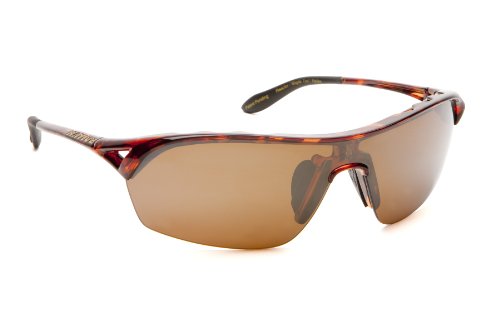
    An Example of a smart material application is with reactor light lenses, also known as photochromic lenses, used in glasses. There are two types of lenses that are used, the glass version and the plastic. The glass version of these lenses uses microcrystalline silver halides, for example silver chloride in the glass. The plastic version of these lenses use organic photochromic molecules, for example oxazines and naphthopyrans. The reason both of these lenses only darken when they are used outside is because they need UV exposure from the sun. When indoors, they are like normal glasses, but when outside, they turn into sunglasses and protect your eyes by sensing the UV rays.


  • Mouth Guards

    An example of a smart material is a mouth guard. The definition of a shape memory alloy is “an alloy that remembers its original, cold-forged shape: returning to the pre-deformed shape when heated.” The process of forming your mouthguard includes putting the mouth guard in boiling water to make it’s shape go back to it’s original form, and then putting it into your mouth right after, in order for the mouth guard to form to your teeth. When it is formed to your teeth, it remains that way until you put it in boiling water again. Once the mouth guard is formed to your teeth, you can then use it to protect your teeth. Even though it’s easy to change the form of a mouth guard, it is still extremely effective in protecting your teeth from physical contact. Mouth guards are used in activities such as sports. Especially boxing, basketball, and other sports and activities. Due to the ability to change the form of a mouth guard, it provides the best protection that you can get against physical contact. If you just used a mouth guard that wasn’t formed  to your teeth, the protection wouldn’t be as good. However, with the mouth guard formed to your teeth, it provides the maximum protection.

    sources:

    http://forums.sherdog.com/forums/f11/how-effective-mouth-guards-preventing-teeth-loss-485440/

  • Paper Clip Smart Material

    Tha paperclip is a very helpful material. A paper clip is an instrument used to hold sheets of paper together, usually made of steel wire bent to a looped shape. Paper clips usually have an oblong shape with straight sides, but may also be triangular or circular, or have more elaborate shapes. It has the functions of a shape memory material, as when you deform the paperclip, then insert it into hot water, the paper clip will return to its original shape. Also it is helpful as it is used instead of a stapler. The stapler will ruin your paper after stapled when you try to unstaple it. However, the paper clip can hold papers together and you can take it off and on anytime without harming the paper. It doesnt contain waste material, and it is easily recyclable

    http://en.wikipedia.org/wiki/Paper_Clips_Project

    http://www.officemuseum.com/paper_clips.htm

  • NIR Smart Materials

    Gn NIR Smart Material

    Info, reference and Images: http://portal.acs.org/portal/acs/corg/content?_nfpb=true&_pageLabel=PP_ARTICLEMAIN&node_id=223&content_id=CNBP_028638&use_sec=true&sec_url_var=region1&__uuid=b76e7b48-770f-46e3-9b87-e0977b03d403

    Near-Infrared light, enters  the skin and has great potential in curing diseases. This is because certain types of smart-materials, when hit by NRI light, break up into the cells of our body.  The problem with this is that materials that respond effectively to NIR need high levels of it, causing problems with toxics that are emitted by them. Scientists are trying to find a way out of this critical health problem. Adah Almutairi and his colleagues have researched different smart materials and have discovered that, hit with low power NRI, these materials break up and seem to be non-toxic for the cells of the human body. For example “hydrogel”, which is a flexible material that contains water and has the characteristic explained previously. Hopefully these will lead to further research and thus, more cures for different diseases.