The Design Technology Blog

Category: Materials

  • Smart Underwear

    The expenses attributed with hospital treatments has generated a growing demand for “home based healthcare management”. As a result Joseph Wang and his colleagues at the University of California San Diego, have developed underwear that uses piezoelectric power  to monitor a person’s blood pressure, heart rate, and other vital signs. This allows 24/7 at-home surveillance thus reducing the load on hospitals and reducing one’s expenses.
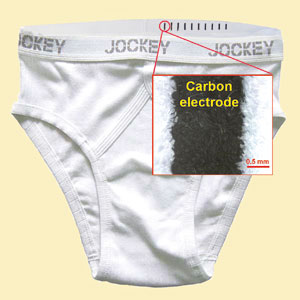
     

    The mechanics of the biosensors on the elastic bands

    In order to form the sensors, the scientist placed “screen-printed carbon electrode arrays directly onto the elastic bands”. Thus the skin tight pressure on the skin, from the elastic bands, allows hydrogen peroxide and the enzyme NADH to be monitored.


    Similar Products 

    In 2009 Canadian scientists created underwear that deliver mild electrical currents to paralyzed muscles in order to prevent ulcers and other similar problems. They will contain sensors that detect increased pressure and lack of oxygen in the buttocks muscles of people bound to a wheelchair. When the pressure gets to a certain level, the electric underwear will emit a jolt of electricity for seven to 13 seconds that will clench the muscles as in exercise and recirculate the blood. In addition another major problem many adults suffer from is the issue of incontinence. Incontinence is the problem of involuntary urination, but with revolutionary underwear one could receive a text  message to warn wearers if their incontinence protection is leaking.


    Plans for the Future 

    In the future Professor Wang hopes to develop more advanced sensors in order to detect alcohol levels in drivers or stress levels in soldiers and athletes. The designers also hope that one day the underwear can release drugs to relieve pain and treat wounds. Wang goes on to say, “We envision all the trend of personalized medicine for remote monitoring of the elderly at home, monitoring a wide range of biomedical markers, like cardiac markers, alerting for any potential stroke, diabetic changes, and other changes related to other biomedical scenario,’ said Wang. Wearable biosensors can also provide valuable information to athletes or even measure blood alcohol levels.”


    Richard Compton at the University of Oxford, UK comments, ‘electrochemical sensors are widely used in niche applications and it is timely for a greater diversity of sensors to emerge, given the sensitivity and low cost of electrochemical measurements. I have full confidence in this idea coming to fruition.’


    FOR MORE INFO 

    Biosenors in Briefs – http://www.youtube.com/watch?v=Rs9R3JJ6LjM


    SOURCES

    http://www.businessweek.com/lifestyle/content/jun2010/bw20100622_476361.htm

    http://www.rsc.org/Publishing/ChemTech/Volume/2010/05/biosensors_in_briefs.asp

  • The Effects of Pesticide on Humans


    What we don’t know about Pesticides


    What is a pesticide? 

    Pesticides are substances or mixture of substances intended for preventing, destroying, repelling or mitigating any pest. (epa.gov) 

    A pesticide may be a chemical substance, biological agent (such as a virus or bacterium), antimicrobial, disinfectant or device used against any pest. Although it is well noted that pesticides certainly have their benifits, they do come with strong drawbacks and problems, such as toxicity and chemical harm that can be examined in humans and animals. 

    Why are they dangerous? 

    These are Pesticide Farmworkers

    There are two types of dangers to be considered when discussing the risks of pesticides on humans, first one is direct exposure to pesticides, and the second one would be indirect exposure. In either case it is notable that pesticides are a major contributor to anything in the range of simple irritation of the skin and eyes to more severe effects such as affecting the nervous system, mimicking hormones causing reproductive problems, and also causing cancer. (http://www.epa.gov/opp00001/health/human.htm). Further research determined a correlation between Hodgkin lymphoma and leukemia, 2 major worldwide diseases, with excessive exposure to pesticides. 

    What is the difference between direct and indirect exposure? 

    Direct exposure when it comes to pesticides is simple, it occurs to the people who work on the farms and are applying the pesticides to the plantations. They’re effects are typically more severe and quicker in developing, and it is noted by the World Health Organization and the UN that 18,000 people die each year of pesticide posioning in developing countries (does not include highly poverty stricken regions or developed countries) , with a further 3 million agrarian workers suffering from mild poisoning. Indirect exposure can happen in two different ways. The first one occurs when the food is contaminated by poor pesticides and results in the food being altered in either taste or biological make up. The harm obviously comes from the biological make up as such alterations in the food can result in neurological, skeletal or other organ problems in humans.  On the defence of pesticides, most pesticides are designed in a way to not in anyway effect the taste or other properties of the plant. (Benefits of Pesticides: A story worth telling, Purdue.edu). The other way that pesticides impact humans indirectly is through the environment. The problem with pesticides is they can sometimes be caught in the wind contaminating the air and also transported to nearby water sources. The contamination of the water and air can lead to distrarous effects on human health, especially in undeveloped regions whose water is already contaminated. People who live nearby farms are likely to suffer air contamination because the wind transports it in the air and is then breathed by the people.  Another problem is contamination of the soil, which overtime damage or destroy the farming potential of the plot. In total the US spent 9.6 Billion dollars on human health and environmental cost from pesticides. (Pimentel, David. “Environmental and Economic Costs of the Application of Pesticides Primarily in the United States.”) 

    What are alternatives? 

    Alternatives to pesticides are available and include methods of cultivation, use of biological pest controls (such as pheromones and microbial pesticides), genetic engineering, and methods of interfering with insect breeding. Application of composted yard waste has also been used as a way of controlling pests. These methods are becoming increasingly popular and often are safer than traditional chemical pesticides. In addition, EPA is registering reduced-risk conventional pesticides in increasing numbers. Another important aspect of the alternatives is that studies have shown that they are equally, if not better, than traditional pesticides. 

    Personal Recommendation 

    I say that it is probably best to use the alternatives as the start up costs may be greater but in the end will save money greatly on health costs and also cause a better image for the farm or company. 


  • Bass Guitars

    Summary

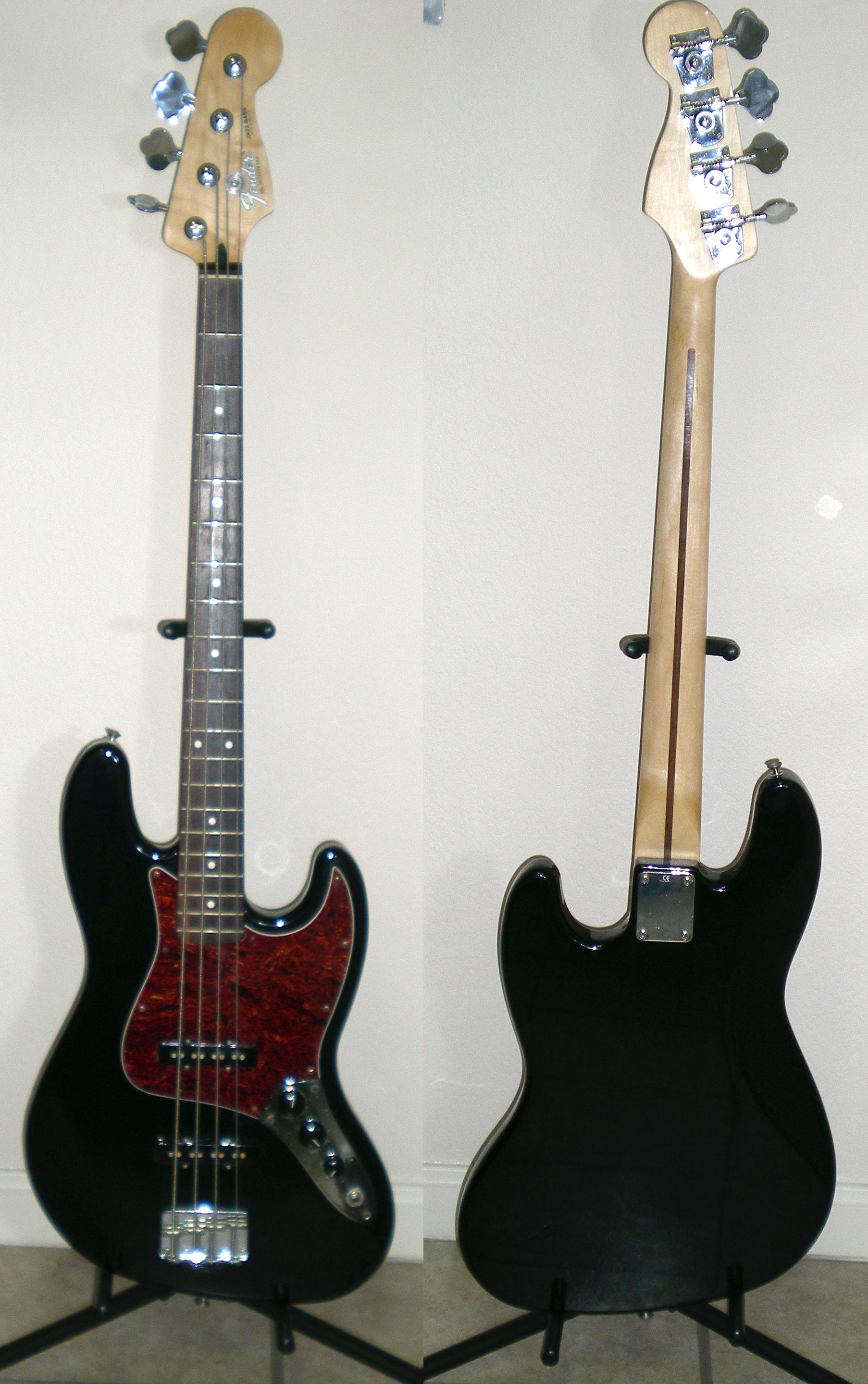
    The bass guitar, or electric bass or bass, is a stringed instrument that is primarily played with the fingers, thumbs, or using a pick. The thumb is used by plucking, slapping, popping, tapping, or thumping. The bass guitar has a similar design to that of the electric guitar. The bass has a longer neck and scale length (length of the strings). Also, basses can come with four, five, or six strings, the four-string bass being the most commonly used. The four string bass is tuned the same as the double bass. The bass is commonly used for keeping the beat of a song and is used in most styles of music.

    Design Consideration

    The body of a bass is usually made out of wood, but other materials including graphite have been used before. Many different types of wood may be used to make the body, neck, and fretboard of a bass. However, the most common type of wood used for the body of a bass is alder. For the neck, maple wood is commonly used and for the fretboard, rosewood is preferred. Mahogany, maple, ash, and poplar are other commonly used woods for the body of the bass. Mahogany for the neck is also used and maple or ebony for the fretboard.
    Handmade instruments by highly skilled luthiers (stringed instrument makers) are becoming more and more available. These lutheirs use exotic materials when making basses, such as the woods bubinga, wenge, ovangkol, ebony, and goncalo alves. Graphite composites are used to make lightweight necks, in some cases. Exotic woods are used in more expensive instruments. For example, Alembic (a bass and guitar making company) uses cocobolo as a body or top layer material because of its attractive grain. Warwick bass guitars are also known for having exotic hardwoods. Most of the necks are made of ovankol and the fingerboards are made of wenge or ebony. Solid bubinga bodies are used for tonal and aesthetic qualities.

    Strings

    The standard design for the bass guitar has four strings, tuned to E, A, D, and G. These are in fourths meaning that the open highest string, G, is an eleventh (an octave and a fourth) below middle C. This makes the tuning of all four strings the same as that of the double bass. Tuning is the same on the lower strings of a five or six stringed guitar.

    Strings types include all-metal strings and strings with different coverings. All-metal strings include roundwound, flatwound, halfwound, found wound, and pressure wound. Two examples of different string coverings include tapewound and plastic-coatings. This variety of materials used in strings allows bass players to have a range of tonal options. In the 1950s and early 1960s, the most commonly used string used by bassists was flatwound strings with a smooth surface. These strings had a smooth, damped sound similar to that of a double bass. In the late 1960s and 1970s, roundwound bass strings became popular, but flatwounds continued to stay popular as well. These roundwound strings were similar to those of guitar strings at the time. Comparing the two string types, roundwounds have a brighter timber (quality of a musical note) with greater sustain (amount of time it takes for the sound of the string to become silent) than that of flatwounds.
    The following is a video of a bass solo:

    http://www.youtube.com/watch?v=5omFFeLEXFE

  • Touchscreen

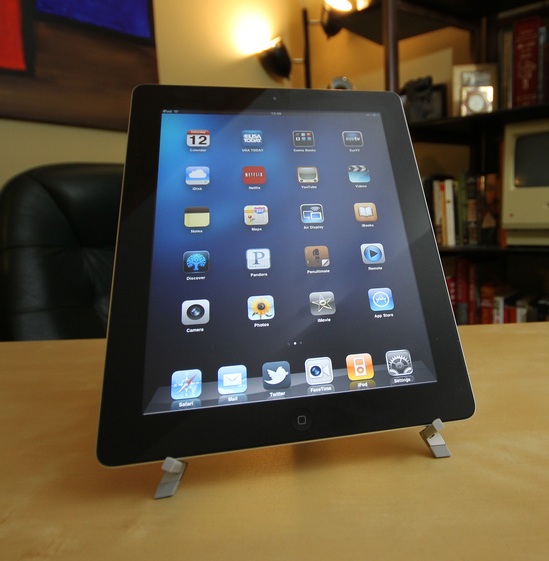
    A touchscreen is an electronic visual display that can detect the presence and location of a touch within the display area. The term generally refers to touching the display of the device with a finger or hand. Touchscreens can also sense other passive objects, such as a stylus. Touchscreen is common in devices such as all-in-one computers, tablet computers, and smartphones.

    The touchscreen has two main attributes. First, it enables one to interact directly with what is displayed, rather than indirectly with a cursor controlled by a mouse or touchpad. Secondly, it lets one do so without requiring any intermediate device that would need to be held in the hand. Such displays can be attached to computers, or to networks as terminals. They also play a prominent role in the design of digital appliances such as the personal digital assistant (PDA), satellite navigation devices, mobile phones, and video games.

    The first touch screen was a capacitive touch screen developed by E.A. Johnson at the Royal Radar Establishment, Malvern, UK. The inventor briefly described his work in a short article published in 1965 and then more fully – along with photographs and diagrams – in an article published in 1967. A description of the applicability of the touch technology for air traffic control was described in an article published in 1968.

    Technologies

    Resistive

    A resistive touchscreen panel is composed of several layers, the most important of which are two thin, electrically conductive layers separated by a narrow gap. When an object, such as a finger, presses down on a point on the panel’s outer surface the two metallic layers become connected at that point: the panel then behaves as a pair of voltage dividers with connected outputs. This causes a change in the electrical current, which is registered as a touch event and sent to the controller for processing.

    Surface acoustic wave

    Surface acoustic wave (SAW) technology uses ultrasonic waves that pass over the touchscreen panel. When the panel is touched, a portion of the wave is absorbed. This change in the ultrasonic waves registers the position of the touch event and sends this information to the controller for processing. Surface wave touchscreen panels can be damaged by outside elements. Contaminants on the surface can also interfere with the functionality of the touchscreen.

    Infrared

    An infrared touchscreen uses an array of X-Y infrared LED and photodetector pairs around the edges of the screen to detect a disruption in the pattern of LED beams. These LED beams cross each other in vertical and horizontal patterns. This helps the sensors pick up the exact location of the touch. A major benefit of such a system is that it can detect essentially any input including a finger, gloved finger, stylus or pen. It is generally used in outdoor applications and point of sale systems which can’t rely on a conductor (such as a bare finger) to activate the touchscreen. Unlike capacitive touchscreens, infrared touchscreens do not require any patterning on the glass which increases durability and optical clarity of the overall system.

    Acoustic pulse recognition

    This system, introduced by Tyco International’s Elo division in 2006, uses piezoelectric transducers located at various positions around the screen to turn the mechanical energy of a touch (vibration) into an electronic signal. The screen hardware then uses an algorithm to determine the location of the touch based on the transducer signals. The touchscreen itself is made of ordinary glass, giving it good durability and optical clarity. It is usually able to function with scratches and dust on the screen with good accuracy. The technology is also well suited to displays that are physically larger. As with the Dispersive Signal Technology system, after the initial touch, a motionless finger cannot be detected. However, for the same reason, the touch recognition is not disrupted by any resting objects.

    Construction

    There are several principal ways to build a touchscreen. The key goals are to recognize one or more fingers touching a display, to interpret the command that this represents, and to communicate the command to the appropriate application.

    In the most popular techniques, the capacitive or resistive approach, there are typically four layers;

    1. Top polyester coated with a transparent metallic conductive coating on the bottom
    2. Adhesive spacer
    3. Glass layer coated with a transparent metallic conductive coating on the top
    4. Adhesive layer on the backside of the glass for mounting.

    When a user touches the surface, the system records the change in the electrical current that flows through the display.

    http://computer.howstuffworks.com/question716.htm

    http://electronics.howstuffworks.com/iphone1.htm

    http://www.scholarshipsinindia.com/answer/touch_screens.html

  • Shooting Glass

    The following is a video on shooting different types of glass, including bulletproof glass.

    Bullet Glass Slow Motion

  • Jabulani Ball

    Jabulani Ball

    History

    Throughout the history of football, people have been searching year after year for the perfect ball. It has been a quest to improve and improve a ball that is used in the most widespread sport in the world. World Cup after World Cup has seen new footballs with incremental changes in material between each one. In 1836, Charles Goodyear patented vulcanized rubber, he spent nearly 20 years in attempting to create a ball for football and finally he invented the first vulcanized rubber football in 1855. In 1862, H.J. Lindon developed one of the first inflatable rubber bladders for balls. “By the 1900’s bladders were made with stronger rubber and could withstand heavier pressure.  Most balls produced by that time used rubber bladders. The balls were made from inner tubes covered with heavy brown leather.  These balls would bounce easier and yet could be kicked. Most balls had a tanned leather cover with eighteen sections stitched together arranged in six panels of three strips each.” (soccerballworld.com). Throughout the next 70 years, leather balls were the only ones in the game and then in the 1970 world cup in Mexico, a revolutionary ball was introduced to the 32-Panel Adidas Telstar ball.

    The 2006 World Cup Ball, Teamgeist Ball

    This football was made from synthetic leather patches sewn together in a design based on the ‘Buckminster Ball’ or known as the Buckyball. For the next 36 years Footballs were made in this style with minimal change. In 2006, the Teamgeist. The introduction of a 14-panel construction method means that the number of three-panel touch points is reduced by 60% (60 to 24) and the total length of the panel lines falls by over 15% (400.5 cm to 339.3 cm). Building on the introduction of thermal bonding technology in 2004.

    Introduction Of Jabulani

    The ball is made from eight spherically molded panels and has a textured surface intended to improve aerodynamics. Nevertheless, the ball received extensive criticism from players and coaches before and during the World Cup who said that the path of the ball through the air was unpredictable.

    “The ball was constructed using a new design, consisting of eight (down from 14 in the last World Cup) thermally bonded, three-dimensional panels.

    The 2010 World Cup Ball, Jabulani

    These then are spherically molded from ethylene-vinyl acetate (EVA) and thermoplastic polyurethanes (TPU). The surface of the ball was textured with grooves, a technology developed by Adidas called “Grip ‘n’ Groove” that is intended to improve the ball’s aerodynamics. The design has received considerable academic input, being developed in partnership with researchers from Loughborough University, United Kingdom.” (Wikipedia). This table shows that the moulding technique means the ball retains its shape, and the lack of seaming means there is essentially zero water retention, which will reduce sluggishness of the ball.

    Personal Experience

    Through personal experiences I have been able to conclude that the unpredictability of the ball is both a good and a bad thing. As the unexpected behavior can trick a goal keeper, whilst at the same time, the speed makes control of the ball quite difficult.

    Resources

    http://www.jabulaniball.com/

    http://en.wikipedia.org/wiki/Adidas_Jabulani

    http://www.soccerballworld.com/Jabulani_2010.htm

    http://www.adidas.com/campaigns/football/content/products.aspx?collection=OMB

    http://en.wikipedia.org/wiki/Adidas_Teamgeist

    http://www.soccerballworld.com/History.htm

  • PVC

    The thermosetting resins include phenolic resin and melamine resin, which are thermally hardened and never become soft again. Thermoplastic resins include PVC, polyethylene (PE), polystyrene (PS) and polypropylene (PP), which can be re-softened by heating.

    Usually, thermoplastics are supplied in the form of pelletised material (compounds) with additives (antioxidants, etc.) already blended in it. However, PVC resin is often supplied in powder form and long term storage is possible since the material is resistant to oxidation and degradation. Various additives and pigments are added to PVC during the processing stage, and the blend is then converted into PVC products.
    PVC is sometimes known as ‘Vinyl’ in Europe and predominantly so in North America. In Europe, ‘Vinyl’ usually refers to certain specific flexible applications, such as flooring, decorative sheets and artificial leather.

    PVC_pellets_(Ineos)WEB

    PVC is a thermoplastic made of 57% chlorine (derived from industrial grade salt) and 43% carbon (derived predominantly from oil / gas via ethylene). It is less dependent than other polymers on crude oil or natural gas, which are nonrenewable, and hence can be regarded as a natural resource saving plastic, in contrast to plastics such as PE, PP, PET and PS, which are totally dependent on oil or gas. This chlorine gives to PVC excellent fire resistance: when PVC is set on fire, the flames go out as the fire source is removed due to the material’s self-extinguishing properties.

    PVC is one of the most used plastic materials in the world. At global level, demand for PVC exceeds 35 million tonnes per annum and it is in constant growth (+5% on global average), with higher growth rates in the developing countries.

    It is the most widely used polymer in building and construction applications and over 60 per cent of Western Europe’s annual PVC production is used in this sector.

    PVC is a more economic material
    PVC products make life safer, more comfortable and more pleasurable. And, because PVC has an excellent ratio of economic cost to performance, it allows people of all income levels access to these important benefits. The diversity of PVC applications challenges the imagination. In everyday life, they are all around us, from construction profiles to medical devices, from roofing membranes to credit cards, from children’s toys to pipes for water and gas. Few other materials are as versatile or able to fulfil such demanding specifications. In this way, PVC facilitates creativity and innovation, making new possibilities.

    PVC underpins safety
    Wire and cables sheathed with PVC prevent potentially fatal electrical accidents. In hospitals around the world PVC medical tubing – which does not break or kink – delivers fluids and medicines to the sick. Car components which use very strong PVC can reduce the risk of any injuries being caused in case of an accident. Most PVC products are long lasting – up to and over 60 years. These applications are reliable throughout their service lives and cut down vastly on maintenance or repair. Modern cars, for example, last many years longer simply because PVC protects the underside from water and corrosion.

    PVC enhances our lives
    Functional performance is by no means the whole story. PVC has a distinguished role in beauty and aesthetics. In fashion, furniture and all types of indoor and outdoor accessories, PVC opens up functional and design opportunities that are both visually striking and fundamentally practical. In short, people everywhere benefit from this material. Sometimes invisible but always reliable, PVC products make the difference when it counts.

    References:

    http://www.pvc.org/

  • Materials Blog- Super Conductors

    Super Conductors

    Have you ever been annoyed by the speed of your internet connection or the processing power of your computer? Did you ever consider what could be done to improve the quality of both? Well, a possibility lies in the development of superconductors.

    The definition of a super conductor comes from the term “superconductivity” which relates to the electrical resistance a material exhibits. In a superconductor, or a material with superconductivity, this resistance is zero ohms or very near zero.  Generally, this involves the cooling of a material to ultra low temperatures, such as below 20°K (-253°C). The cooling temperature varies between materials and is known as the transition temperature.

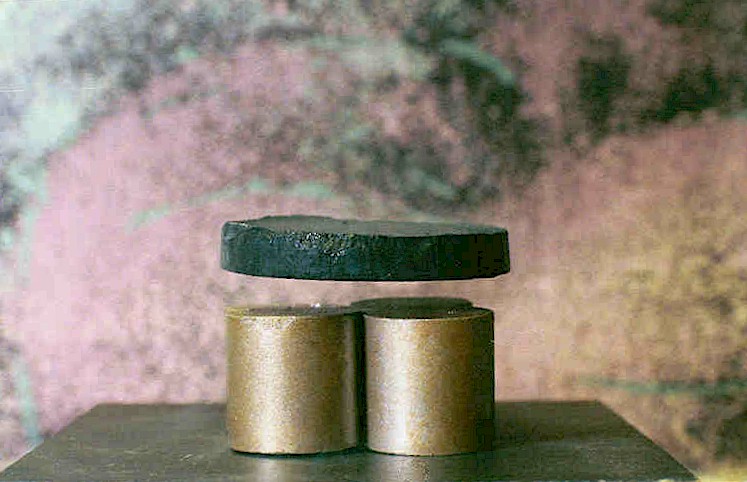
    The extremely low electrical resistance of super conductors allow for several unusual, yet useful, properties unique to or exemplified by the super conductor. Among these are the Meissner effect, or the property of materials, when cooled to become super conductors, to gain influence on a magnetic field and repel the field, the flux trapping effect, or the establishment of attraction between a powerful magnet and a super conductor, and the resulting magnetic levitation/suspension effect. The simultaneous attraction and repulsion of a super conductor and a magnet allow for the magnet and super conductor to maintain a fixed distance away from each other in a very stable manner. In other words, the magnet, or in turn the superconductor, can float above the other while staying in place with very little friction. This is especially useful in the development of transportation; minimal friction levitation allows trains, or other  modes of transportation, to move at maximum speeds in a noiseless manner. See the video below for more information. Other useful applications of the properties of super conductors include extremely efficient electrical wiring. Super conductors quickly and without resistance transport electricity, even if carrying only a minimal voltage. This allows for very sensitive equipment to be manufactured which can measure the most minute of electrical or magnetic discharges, changes, or disruption. Such machines are needed in the field of medicine for uses including brain examination and magnetic imaging. Super conductors, therefore, are useful in the manufacturing of more efficient and powerful motors, transformers, computer parts, and generators. A further suggested use is in a new energy storage medium: the magnetic energy-storage.

    How Superconducting Levitation Works

    The first documented research of super conductors came with the experiments done by in 1911 by the Dutch physicist Keike Kamerlingh Onnes with mercury wires. He discovered that mercury loses its electrical resistivity at below (4°K). Ensuing research made by scientists led to the development of higher and higher temperature super conductors. Super conductors were developed that consisted of multiple elements or were even metallic. The majority of super conductors in existence today are either alloys or ceramics. The highest temperature super conductors are actually ceramics with Hg2Ba2Ca2Cu3O8 at just above 130 degrees Kelvin. Today, multiple universities and companies around the world, work to produce cheaper and higher temperature super conductors. Unfortunately, most superconductors are expensive to produce, utilizing rare elements.

    Sources:

    “superconductivity.” Encyclopædia Britannica. Encyclopædia Britannica Online. Encyclopædia Britannica, 2011. Web. 06 Mar. 2011.

    qwest.net

  • Kevlar

    Kevlar is a material developed by DuPont in 1965 but it was only used in 1970 for commercial use. Kevlar is used in body armor and armored vehicles, it is also applied in clothing to protect the user from cuts. Sports equipment such as bicycle tires to stop punctures, it is applied to table tennis paddles, motor cycle clothing, and racing sails. Kevlar has even been used in audio equipment since it has acoustic properties, drumheads, woodwind reeds, rope, cable, brakes, electricity generation, construction of buildings, and expansion hoses and joints.

    Kevlar is strong because of the weave which is very similar to small spider webs. It was invented by Stephanie Kwolek and Herbert Blades. The weave consists of a liquid and a solid also known as an aramid weave. These weaves corrode in exposed to chlorine but is resistant to heat.

    There are different types of Kevlar, they are all numbered and have their own use. Kevlar K-29 for example is used industrially for cables and brakes and armor while Kevlar K-49 is used in tires to replace rubber and bicycle frames but also in the hull of a boat because it is incredibly strong.

    The chemical composition of Kevlar is poly para-phenyleneterephthalamide (composite.about.com). Aramids belong in the nylon family.

    Kevlar is also very light and extremely strong of course and the tensile strength is high. However it does absorb moisture which makes it more sensitive to environments it is also harder to cut because you will need special scissors.

    The material is rather expensive to get and can get to about 33 dollars per yard but you have to buy in great amounts.

    This is a table of the three main Kevlar types 29, 49, and 149. (composite.about.com)

    Grade Density
    g/cm^3
    Tensile
    Modulus
    GPa
    Tensile
    Strength
    GPa
    Tensile
    Elongation
    %
    29 1.44 83 3.6 4.0
    49 1.44 131 3.6–4.1 2.8
    149 1.47 186 3.4 2.0

    Sources:

    http://composite.about.com/od/aboutcompositesplastics/l/aa050597.htm

    http://en.wikipedia.org/wiki/Kevlar#Production

    http://www.wisegeek.com/what-is-kevlar.htm

  • Glass

    Glass belongs in the ceramics category of materials. It contains primarily silicon dioxide and sodium dioxide, along with calcium oxide and other chemicals in small quantities.

    Production

    It is produced from sand, limestone and sodium carbonate with the use of large amounts of heat. The glass furnaces reach up to 1675°C for all the above mentioned ingredients to melt together. Usually recycled glass is added to the mixture to reduce the temperature necessary to melt all the materials together. The glass is then set in to shape with the use of molders or blowers.

    Physical Characteristics

    Glass is made in furnaces such as this one, located in a glass studio in New York

    Glass has various different characteristics. It is very hard, since it is a ceramic, yet it is very brittle. It is transparent, which is a very rare characteristic in materials and it allows it to absorb and reflect light. It does not conduct electricity, and can be easily colored.

    Main types of glass

    There are two main types of glass other then the one mentioned above; toughened glass, and laminated glass. Toughened glass can withstand more tensile load and compressive stress on the surface. It also shatters in to little pieces after it is broken, it’s in use in places such as windscreens of cars. Laminated glass contains layers of glass around a plastic transparent sheet (which can be recolored). The plastic prevents cracks from appearing on the glass. They can be seen in use in windscreens or bank teller windows (as they’ve been made bulletproof).

    Uses of Glass

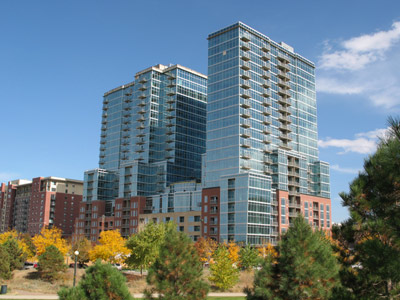
    Glass is used in all kinds of different areas, such as construction, furniture and of course, glassware. It is used a lot in construction due to it thermal conductivity, which reduces the resources necessary to heat the house/room. It is very resistance to tensile and compressive forces, making a good material to place weight upon. Furthermore it is transparent which allows natural light to enter the house/room, again further decreasing the amount of energy required to light the house.

    This building in Denver, has it's outer layer made mostly from glass to let in natural light

    It’s transparency allows for interesting interior designs, which can’t be achieved with non transparent materials. Glass is also used in furniture such as tables, this goes along with the transparency adding to a unique design. Another major use of glass is in glassware, which includes everything from glasses, to plates, to figures, and more.

    There are thousands of different kinds of glassware designs