A shape-memory alloy is an alloy that remembers its original, cold-forged shape: returning to the pre-deformed shape when heated. Shape-memory alloys have many applications such as medicine. One example of that is dental braces, which are are devices used in orthodontics that align and straighten teeth and help to position them with regard to a person’s bite, while also working to improve dental health. The application of braces moves the teeth as a result of force and pressure on the teeth. There are four basic elements that are needed in order to help move the teeth. In the case of traditional metal or wire braces, one uses brackets, bonding material, arch wire, and ligature elastic, also called an “O-ring” to help align the teeth. The teeth move when the arch wire puts pressure on the brackets and teeth. This movement needs to be done slowly otherwise the patient risks losing his or her teeth. This is why braces are commonly worn for around two and a half years and adjustments are only made every three to four weeks.
Category: Materials
-
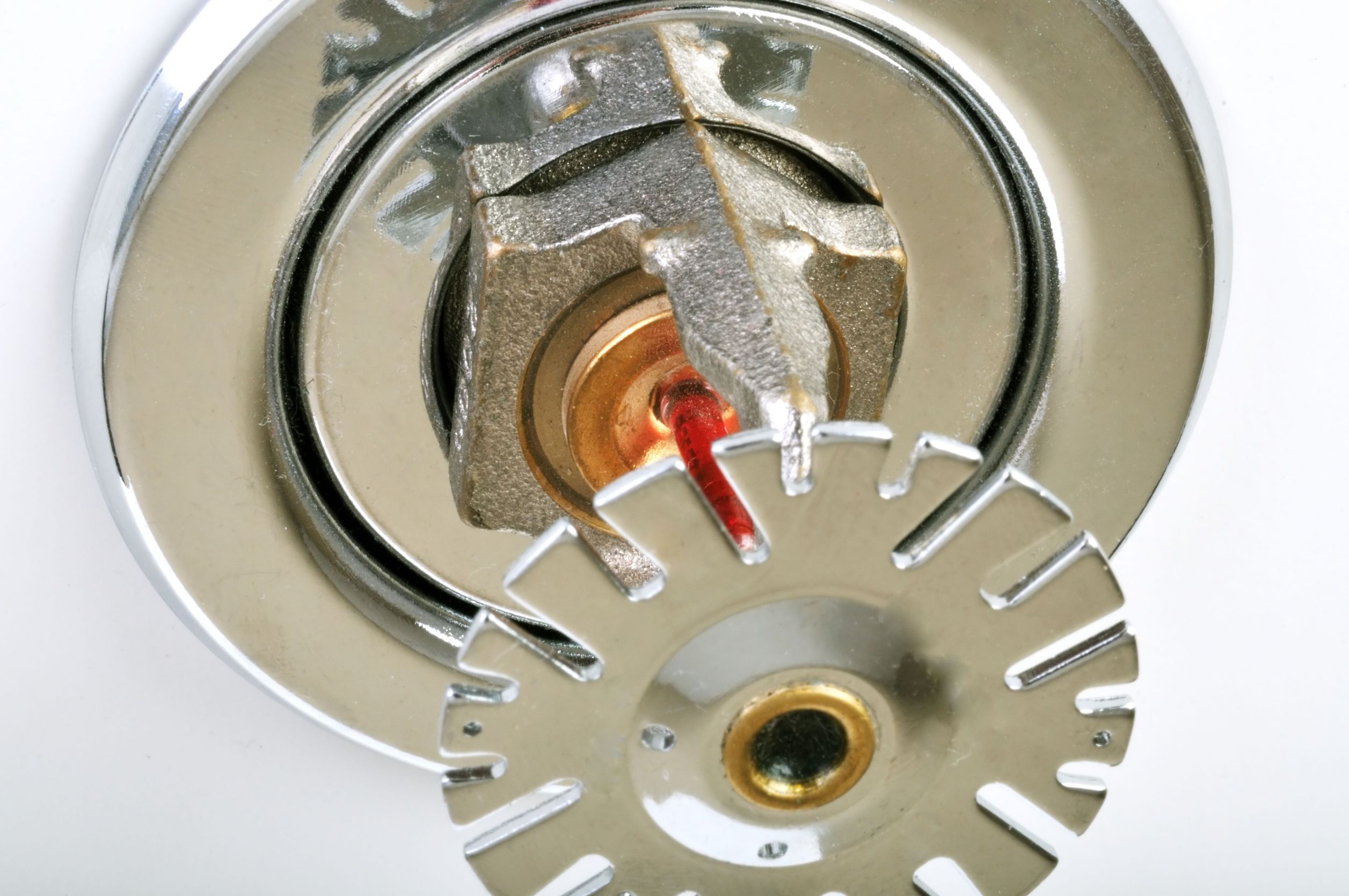
Fire Sprinklers as Shape Memory Alloys
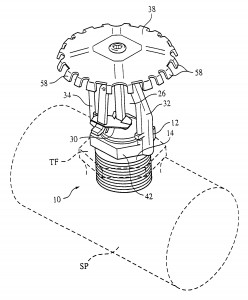
A shape memory alloy is a group of metallic materials that can return to some previously defined shape or size when subjected to the appropriate thermal procedure. That is, shape memory alloys can be plastically deformed at some relatively low temperature and, upon exposure to some higher temperature, will return to their original shape. Materials that exhibit shape memory only upon heating are said to have a one-way shape memory, while those which also undergo a change in shape upon recooling have a two-way memory. There are examples of SMAs used in safety devices which will save lives in the future. Anti-scalding devices and fire-sprinklers utilizing SMAs are already on the market. The anti-scalding valves can be used in water faucets and shower heads. After a certain temperature, the device automatically shuts off the water flow. The main advantage of Nitinol-based fire sprinklers is the decrease in response time. The shape-memory element expands as it is heated, forcing a bolt to break, thereby opening the sprinkler valve.
Biblio:
http://www.azom.com/article.aspx?ArticleID=134
http://www.freepatentsonline.com/y2010/0025050.html
-
Chevy Corvette’s new smart material

Chevy in releasing their new 2013 corvette created a new smart material to try and making the car lighter. This material replaces the heavier motorized actuator to open and close the hatch vent that releases air from the trunk with a new smart metal alloy. This allows the trunk lid to close more easily than on the previous models where trapped air could make the lid harder to close. It does this using smart memory alloys, made from copper aluminum and nickel. In the new Corvette, the shape memory alloy wire opens the hatch vent whenever the deck lid is opened, using heat from an electrical current s. When activated, the wire contracts and moves a lever arm to open the vent, allowing the trunk lid to close. Once the trunk lid is closed, the electrical current switches off, allowing the wire to cool and return to its normal shape, which closes the vent to maintain cabin temperature. This new material is about 2 pounds lighter than its predecessor. As well, this material is cheaper to produce, which saves the company money. In terms for the environment, it is beneficial because it uses less energy to maintain temperature in the car, which saves on lots of energy when you consider all the amount of cars that would be sold.
-
Plastic Bags

Plastic shopping bags, carrier bags or plastic grocery bags are a type of shopping bag made from various kinds of plastic. In use by consumers worldwide since the 1960s, these bags are sometimes called single-use bags, referring to carrying items from a store to a home.. In recent decades, numerous countries have legislation restricting the sale of plastic bags, in a bid to reduce littering and pollution. Traditional plastic bags are usually made from polyethylene, which consists of long chains of ethylene monomers. Ethylene is derived from natural gas and petroleum. The polyethylene used in most plastic shopping bags is either low-density (resin identification code 4) or, more often, high-density. Color concentrates and other additives are often used to add tint to the plastic. Many ethical concerns arise concerning the plastic bag invention however. Firstly, it is not a biodegradable material meaning it could stay for millions of years in an ecosystem without decomposing. Nature cannot decompose it’s structure. This would become an obstacle in the sense that it could have long-lasting consequences. A way to reduce or eliminate the need for plastic bags is to bring your own cloth bags to the supermarket instead of using their plastic bags. Thus they would be losing money and their plastic bags would not make them any money.
en.wikipedia.org/wiki/Plastic_bag
-
Fiberglass
Fiberglass is an incredibly versatile material and it comes in several forms. Almost everyone has seen fiberglass insulation and anyone who has touched it will recall the itchy feeling often with a little rash which develops afterwards. This Is because the minute shards of glass cut into the skin and cause irritation.
The fiberglass used in the automotive industry is different from insulation fiberglass. It usually comes in a mat, tissue or cloth, although a chopped strand mixed with resin is often used for large applications such as boat hulls.
MATERIALS
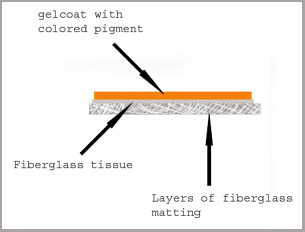
Gelcoats are the shiny face of fiberglass, gelcoats are what you see on most fiberglass vehicles (which haven’t been painted) or boat hulls. Gelcoats consist of a thick gel-like resin mixed with a colored pigment, it is the first thing laid into a mold and therefore when the mold is removed it becomes the exterior.
Below is simple diagram showing how many fiberglass bodies are constructed, there are other methods and this is just a common example.
Tissue
Fiberglass tissue as the name suggests is a very thin tissue like layer of fiberglass, it is very smooth and porous and the tissue sits underneath the gelcoat. Tissue helps to smooth out the inherent roughness of fiberglass matting, while also adding strength.
Mat
Fiberglass matting makes up the bulk of any fiberglass bodied car. Several layers are built up one on top of another until the desired thickness and strength is achieved. This is what you might see if you look at the inside of a fiberglass panel.
Cloth
Fiberglass cloth is strong and is often used where it may be visible and therefore aesthetics are important. One of the downsides of fiberglass cloth is that because the strands are neatly woven the layers do not intermesh like they do with the disorganised and loose strands on the fiberglass mat. Therefore the layers of cloth sit on top of one another, rather than meshing together like the fiberglass mat.
Resin and Hardener
Without resin the fiberglass itself would be useless for building anything requiring rigidity. Resin is mixed with a catalyst before application to the fiberglass. The drying process involves a chemical reaction which has several variables including, the amount of catalyst, temperature, humidity, and any water present in the fiberglass resin (water shouldn’t be there!).
End result
The results which can be achieved with fiberglass are quite impressive. Once fully hardened and sealed with resin or a gelcoat fiberglass is waterproof, relatively light weight and when done properly it is extremely strong. It is reasonably inexpensive when compared to the alternatives, in short it is an ideal material for the automotive field.http://www.fiberglasswarehouse.com/index.php
http://www.inlinefiberglass.com/
http://www.uscomposites.com/cloth.html
-
Silicon Nanowires – New Age Efficiency
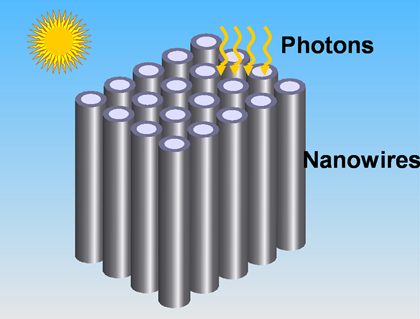
Currently, millions of tons of fossils fuels are combusted to produce energy through converting thermal energy to electric energy or kinetic energy in an inefficient way. Fossil fuel engines run at approximately 40% efficiency, with the other 60% being lost to the environment. A recent discovery has been made by scientists at Stanford University in the application of silicon nanowires as producers of electricity. A current property of thermoelectric materials is the conduction of electricity when one end of the material is warmer than the opposite end, generating electricity. However, in most cases producing such a material is either very expensive or requires considerable costs to keep one end warmer than the other as since many materials that conduct electricity well also conduct heat well and so near equal temperature is established at both sides. The break through to this dilemma comes with the development of silicon nanowires. These tiny wires have the intriguing property of electrical conductivity but highly reduced thermal conductivity, allowing for significantly increased efficiency in thermoelectric applications. The idea is that the energy lost to the environment primarily to heat escaping, can be converted into electrical energy, increasing the efficiency of fossil fuel usage.
 http://spie.org/Images/Graphics/Newsroom/Imported/1087/1087_fig1.jpg
The applications for this discovery are far reaching, as it affects nearly all electronic products, any engine using fuel to evolve thermal energy, and even the efficiency of batteries. A further benefit of the application of this technology comes with the fact that the silicon industry is already well established and so integration of procedures to produce silicon on the nano scale for wiring can be done faster and in a more feasible fashion. In addition, silicon is not considered a rare material, like platinum or gold, but actually exists in a vast quantity in Earth’s crust.
Source: http://www.stsm.ir/resources/10302-16101387085210silicon%20nanowire%20thermoelectrics.pdf
-
Thermoelectric Boots
“Everything we do generates power — about 1 watt per breath, 70 watts per step.”
Smart Material: Thermoelectric material.
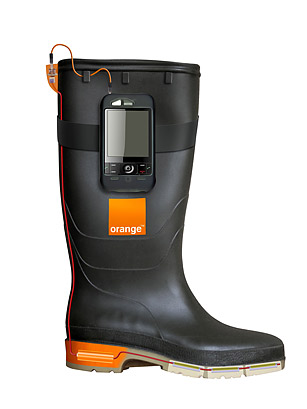
European telecommunications provider, Orange, introduced a prototype in 2010 of a pair of rubber boots that convert heat from your feet into electrical power. This electricity can be used to charge battery-powered handhelds, such as mobile phones. In order to charge the handheld’s battery to an hour, you must walk for 12 hours. This may seem long – running would make the process faster, as the more heat produced, the more electricity produced.
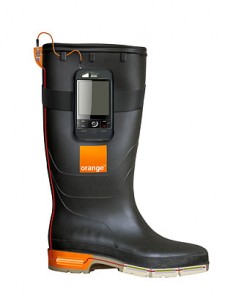
They are a great sustainable, eco-friendly alternative to the vast amount of electrical power that is used everyday to charge battery-powered devices. They are also practical, because the electricity is produced from regular everyday activity.
How the boots convert the heat into electricity:
http://www.gizmag.com/thermoelectric-orange-power-wellies-generate-electricity/15346/
Sources:
http://www.gizmag.com/thermoelectric-orange-power-wellies-generate-electricity/15346/
http://www.time.com/time/specials/packages/article/0,28804,2029497_2030623_2029815,00.html
-
Heat Sensitive Colors in Ceramics
Thermochromism in ceramics or ceramics that change color with change in temperature can be used in many places. A casual use of this technology is in mug’s made of ceramic. When hot tea or cofee etc. is poured into it the image appears on the surface of the mug. The heat of the liquid causes the thermocromism of the ceramic to take affect.
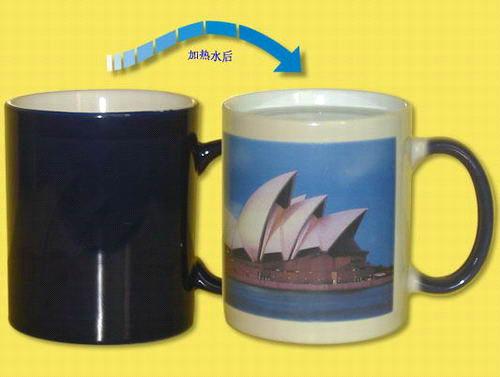
As you can see here the handle of the mug hasn’t changed color. This is most likely because it is further away from the hot liquid content of the mug and therefore not affected by it’s heat.
Another nice application for thermochromic ceramics can be tiles. Tiles can be used for flooring or walls in bathrooms or kitchens. This can be very useful in some cases because you can tell where someone has been if they touch thermocromic tiles along their pathway. This can be applied in high-security buildings. Below are some images of more casual uses; shower tiling, flooring etc.
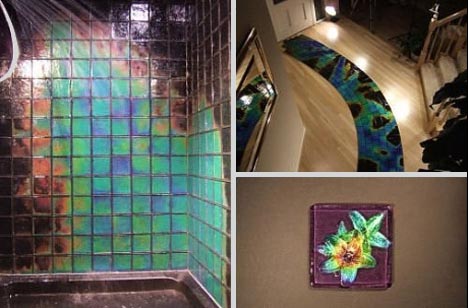
image 1 from: http://www.ecvv.com/product/3052896.html
image 2 from: http://dornob.com/hot-or-cool-color-changing-chameleon-tiles/
other sources: http://en.wikipedia.org/wiki/Thermochromism
-
Bendable Eyeglasses
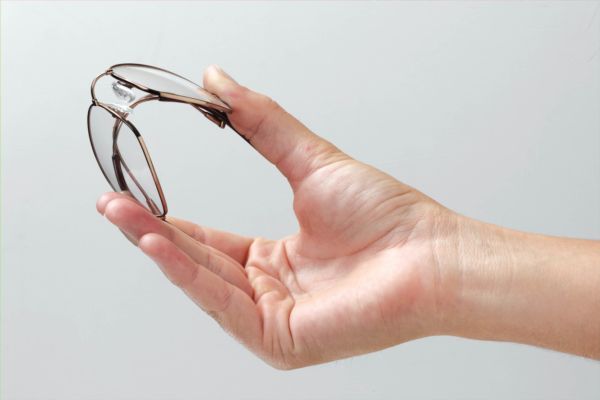
Marchon Eyewear have developed a range of eyeglass frames featuring a revolutionary new material. The frames are made from a shape memory alloy of titanium under the trademark name, Flexon. Frames made from this alloy are noticeably lighter and more flexible than other frames. The eyeglass frame can be bent, twisted and contorted in many ways but will always spring back to its original shape, as seen in the following video:
Flexon Bendy Glasses Frame
Regular eyeglasses will often become bent and not sit straight on their user’s face after daily use and it can prove very difficult to return them to their original shape. However, this is no longer a problem with frames made from Flexon as it is not possible to permanently distort their shape.Marchon Eyeglasses has designed glasses appealing to a range of men, women, and children whilst expanding its designer portfolio to include such names as: Calvin Klein, Fendi, and Valentino.
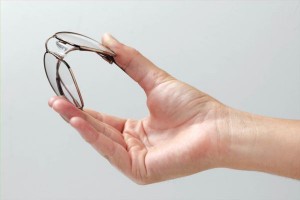
Eyeglasses,however, are not the only useful utilization of shape memory alloys (SMA) of titanium, such as Flexon. Nitinol is a SMA with similar properties to that of Flexon and can be used in the underwire of bras, golf clubs, and novelty products (magicians bending spoons). Some of its more beneficial uses are in medical situations in which it can be used to locate/mark breast tumors, stents (a collapsed stent is inserted into a vein and then heated so it returns to its original shape and helps to improve blood flow), and also in orthopedic implants as it is highly bio-compatible.
As seen above, despite its value to daily life in the form of resilient glasses frames, this SMA also has many other worthy uses in medical situations.
-
Haute Couture Meets High End Technology: The Future of Fashion
THE PIEZING DRESS: EVERY WOMAN’S DREAM
Although the world continues to change due to the constant improvements in technology, none is more fascinating then the idea of technology influencing the world of fashion. Diana Eng is an example of an extraordinary designer who was able to combine the worlds of technology and art to create remarkable pieces. Eng is one of several up-and-coming technophiles who take fashion as seriously as technology. Her delicate silk chiffons stand apart from the hardware that makes up most of our gadgetry, yet they allow the customer to make technology an integral part of their wardrobe.According to the designer Amanda Parkes, among the most important functions of technologically enhanced designer wear are power generation and storage. Parkes designed the Piezing, a dress that uses piezoelectric discs and film to harness the body’s movement for electrical power, which is stored in a battery near the belly button. (Piezoelectric materials use vibrations from movement to generate electricity.) The battery can then be used to charge a favorite device. Elena Corchero’s exquisite parasols and fans are adorned with intricate embroidery. But solar cells, conductive thread, and batteries give her old-school style a modern twist: Corchero’s Light Gown is a beautiful piece that integrates the world of art and technology as this timeless piece made out of piezoelectric materials has the ability to turn into a night-light when hung on its charger-hook. The creation of these dresses made out of piezoelectric material is fascinating as not only is it innovative as well as aesthetically pleasing but it also has a wide variety of functions with the combined affect of human motion and piezoelectric effect. The entire mechanism involves the storage of generated electricity in small storing battery for further use conditions. The main highlight of this product is, the produced electricity, generated after the result of mechanical motion in the area encircled around elbow joints and hip potion of the dress.
THE FUTURE
The remarkable idea of technology and art being combined in the world of fashion is truly revolutionary and allows us to ponder on what the future will be as we ask ourselves questions such as what happens when these tools are part of our second skin—when instead of carrying our technology, we inhabit it, the way we inhabit a T-shirt? The use of piezoelectric materials in fashion is truly revolutionary and as the idea spreads and more designers begin to incorporate it within their work not only will their works be characterized as being unique but truly extraordinary as they have the ability to solve the problems surrounding our world by finding unique solutions therefore having the ability to entirely redefine our world.
sources:
http://www.ecofriend.com/entry/10-innovative-eco-friendly-products/
http://www.crunchwear.com/?s=piezoelectric