The Design Technology Blog

Category: Design

  • Alloys & Their Uses

    Bronze Mask Alloy Used For Jewelry (Image By Martin Lodemore)

    The components of various alloys contain metallic and non-metallic elements. There are a large number of possible combination of different metals and each has its own specific set of properties. The Uses for alloys are limitless depending on the materials involved and the complexity of the alloy. The alloys are used extensively in fields that involve but are not limited to; aircrafts, military, commercial, industrial, medical, residential and manufacturing applications. Alloys like Aluminium, Copper, Nickel, Stainless steel, Titanium all have different uses in various applications.

    Uses of Aluminium Alloys

    Aluminium when combined with other metals gives strength and specific characteristics for a particular use. Aluminium alloys are extensively used in the production of cars and engine parts. The vast range of quality Aluminium is used in various applications like transport, packaging, electrical application, medicine, and construction of homes and furniture. Flight at high altitudes would not be possible without the the strong aluminium alloys used that undergo mass amounts of stress and pressure.

    Uses of Copper Alloys

    Copper alloys have exceptional electrical and thermal performance, good corrosion resistance, high ductility and relatively low cost. Copper alloy is used in airtight seals and copper tin alloys are primarily used for sleeve bearings due to its strength and ductile properties. Copper alloys are also less expensive than gold or platinum. Due to high strength, electrical and thermal conductivity copper alloys are used in the manufacture of all types of electrical equipment.

    Uses of Nickel Alloys

    Nickel materials have made significant contributions to present-day society. Nickel alloys have good corrosion resistance and heat resistance. Nickel alloys are used for a wide variety of applications like aircraft gas turbines, nuclear power systems and widely used in chemical and petrochemical industries. Several nickel alloys are used in control equipments to determine and control electrical characteristics.

    Uses of Stainless steel Alloys

    In order to reduce corrosion losses, there are extensive uses of stainless steels. Stainless steel alloys are used for many commercial applications such as watch straps, cutlery etc. Stainless alloys used for making tubes intended for placement on the bottom of the sea. Stainless Alloys are also widely used in the electronic, agricultural, road and rail industries. Stainless steel grades are used for handling bulk wet materials, tanks, containers, conveyors, chimneys and many others.

    Uses of Titanium Alloys

    Titanium alloys have high melting point than stainless steels. Due to high strength, toughness and stiffness, many titanium alloys are used in aerospace structures and other high-performance applications. Titanium alloys are used for different spacecraft parts, jet engines and airframe to save weight and improve aircraft efficiency. It corrosion resistance allow its uses in chemical, petrochemical and biomaterial applications.

    Shape Memory Alloy

    (SMA, smart metal, memory metal, memory alloy, muscle wire, smart alloy) is an alloy that “remembers” its original, cold-forged shape: returning the pre-deformed shape by heating. This material is a lightweight, solid-state alternative to conventional actuators such as hydraulic, pneumatic, and motor-based systems. Shape memory alloys have applications in industries including medical and aerospace.

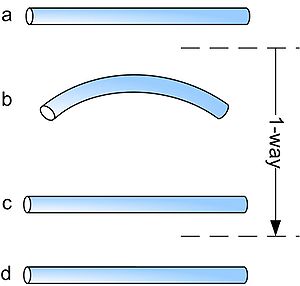
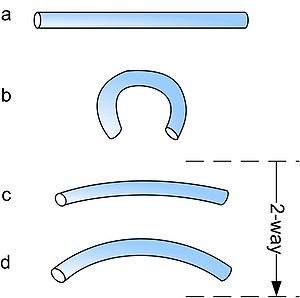
    One-way vs. two-way shape memory

    Shape memory alloys have different shape memory effects. Two common effects are one-way and two-way shape memory
    References:

    http://www.ehow.com/list_6708135_different-types-alloys-use.html

    Educational Electronics USA: Metals and Non-Metals — Part XVI

    Pricescope Diamond Journal: An Overview Of Common Alloys Used In Jewelry
    http://en.wikipedia.org/wiki/Shape_memory_alloy

  • Plastics used to make cars

    Bend New Materials into Futuristic Shapes

    New materials for car bodies may soon transform the auto industry. Auto engineers can mold these carbon-fiber-reinforced plastics into virtually any shape. The materials are both strong and light which increasies fuel efficiency and safety at the same time. Cars built entirely out of plastic could be the wave of the future, making metal a thing of the past when it comes to cars.

    New, innovative cars made almost entirely of plastic are paving the way for what you may be driving in the future.

    A mechanical engineer at Porsche Engineering Services in Troy, Mich., says, “With plastics you can design cars which are very bold, and that gives you an advantage to sell nicer cars.”

    Plastics have gained a lot of ground over traditional metals used in cars, making it possible to build almost an entire vehicle completely of non-metal material.

    Mechanical engineers use a lightweight, high-strength aerospace material called carbon-fiber-reinforced plastic. It’s used in the doors, hoods, fenders, chasis and also in support frames for the engine and transmission. You can mold the plastics into very complicated shapes that maybe you can’t do in steel, plastics help cars lose weight to go farther on fuel.

    New materials, like plastic, are usually tested on high-end vehicles first. Once the materials are proven to be more efficient and cost effective, they eventually filter down to affordable consumer vehicles.

    BACKGROUND:

    Student designers at the College for Creative Studies are creating new plastic polymer materials as alternatives for automobile elements typically made of steel. The designs were part of a semester-long project and the automotive division of the Society of Plastics Engineers.

    ADVANTAGES:

    Among other advantages, plastics can significantly reduce the weight of a vehicle, improving fuel efficiency by reducing drag, and also cutting down on emissions. Because plastic can be more easily molded, components can be tailored for more comfortable human-ergonomic features, as well as more streamlined, aerodynamic shapes. Less material can be used than with steel components and the durability of plastics results in a longer, more reliable vehicle lifetime.

    SOURCES:

    http://en.wikipedia.org/wiki/Carbon_fiber-reinforced_polymer

    http://www.azom.com/Details.asp?ArticleID=1662

    http://www.icis.com/Articles/2008/09/08/9153976/plastics-use-in-cars-rises-as-emissions-laws-get-tough.html

    http://news.softpedia.com/news/New-Materials-Boost-Hydrogen-Cars-039-Efficiency-54358.shtml

  • Race Cars and Carbon Fiber

    Racing cars have been a major sport for many years, and the industry of racing has increased since the appearance of F-1 races. Racing cars used to be made from the same material as road cars, that are steel, aluminum and other metals. But on the early 1980s Formula 1 cars underwent some changes, which have become an important part of the design of the car: the use of carbon composite materials to build the chassis.

    Today most of the racing cars chassis, which includes the monocoque, suspension, wings and engine cover, are built with carbon fiber.  Carbon fiber reinforced plastic, or CFRP, is a strong, light and very expensive composite material which, because of its mechanical properties is used to build racing cars at every level.

    The Ascari Kz1 is a super car made completely from carbon fiber


    The four advantages that this kind of material, that other materials don’t have are:

    • Super lightweight
    • Super strong
    • Super stiff
    • Can easily be molded into all kinds of different shapes


    Also to better understand that carbon fiber is better than steel (commonly used in some parts in road cars) here is a table:

    Material Tensile strength Density Specific strength
    Carbon fibre 3.50 1.75 2.00
    Steel 1.30 7.90

    0.17


    We can see that carbon fiber is almost 3 times stronger and more than 4 times lighter than steel. That is why it is such a good material for racing cars.


    Sources:

    http://formula1.about.com/od/car1/a/carbon_fiber.htm

    http://www.solarnavigator.net/composites/carbon_fibre_and_racing_cars.htm

    Pictures:

    http://pictures.topspeed.com/IMG/crop/200703/2007-ascari-kz-1r-gt3_460x0w.jpg

    http://0.tqn.com/d/formula1/1/G/h/2/-/-/fiber1.jpg


  • Solar Powered Clothing

    Solar power is already becoming a mainstream source of energy all over the western hemisphere. At this point however it is used almost exclusively by large corporations which can afford to set up hundreds of cubic meters of solar panels. Most people are still in doubt about whether switching to solar panels for their houses is worth it or not, since it costs quite a lot.

    What about smaller scale uses of solar panels? One smaller scale use of solar panels has already been designed – in clothing.

    The idea is that clothes would be specially outfitted with solar panels, and electronic devices could be charged by just plugging them in to the solar panel’s battery (which is in one of the pockets of the clothing) and walking around in the sun for a while. This would save money by making people use electricity less at home, as well as maybe eventually making batteries obsolete.

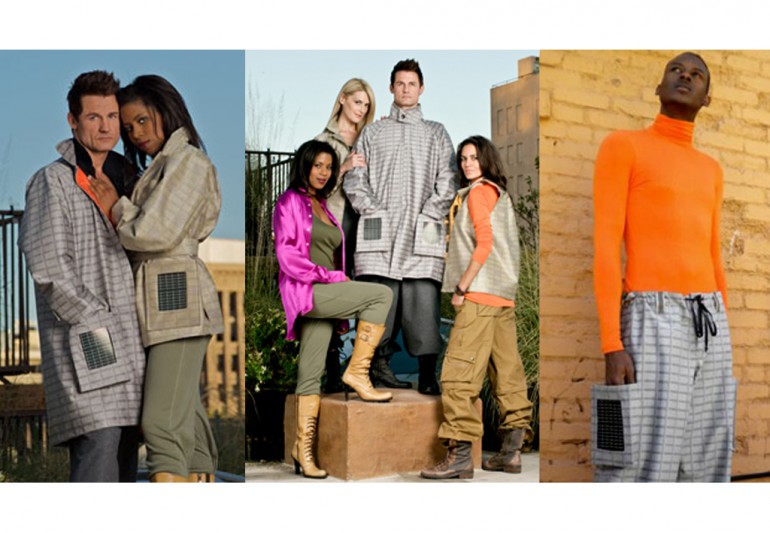
    Silvr Lining has developed a range of clothing items that feature pockets to house solar panels to charge up mobile electronic devices, the theme in their new GO Collection.

    The GO Collection includes a hip-length, Bush-style Director’s Jacket, hooded Utility Vest, 3/4 length Myer’s Topper overcoat and Urban Cargo Pant, letting you have solar powered energy in every possible garment you wear.

    All garments are made from Ultrasuede, a 100 percent polyester fabric that feels like natural suede but is resistant to stains and discoloration, is easy to wash and dry, and is animal-friendly. The clothes (as of now) come in two colors; olive green, or stone gray.

    All articles of clothing in the range feature specially designed pockets to house the independently functioning solar power supply panels, which measure 6 x 8 inches (15 x 20 cm) and output power that is tailored for automatic charging of mobile electronic devices. The chargers can of course be removed from the clothing, and support USB 2.0.

    All the pieces of the GO Collection include two solar panels, while additional units can be purchased separately for the Director’s Jacket, which can accommodate up to four panels.

    Even so – the solar panel jacket isn’t cheap compared to most clothing. The price ranges from US$920 for the Urban Cargo Pant up to $1,260 for the Myer’s Topper. Additional solar panels cost $175 each.

    Of course the GO collection isn’t the only solar powered clothing collection in the market, it reveals the concept of hoe they work however.
    In terms of strength, most clothing solar panels will convert about 5 percent of the light that hits them into electricity, whereas typically solar panels with silicon cells are 16 percent to 20 percent efficient. The actual amount of energy created differs between item.
    The clothes can also be heated up by the solar panels, so people can be warm during the winters.
    Developers believe that the clothing will become mainstream in the next 20 years when solar panels have become cheaper themselves.

    Sources:

    http://news.bbc.co.uk/2/hi/science/nature/2000633.stm

    http://news.cnet.com/8301-11128_3-9891134-54.html

    http://blog.cleantechies.com/2008/10/23/solar-powered-clothing/

    http://www.gizmag.com/go-collection-of-solar-charging-clothing/17323/picture/126538/

  • Brink: Dawn of SMART

    Ever played a war game were you had a small fence or a fallen tree in front of your character, and wondered why your character couldn’t just climb it or just jump over the tree  to get faster to the enemy or skip a long walk. Well, Splash Damage is developing a game, which will be released in 2011, were obstacles are not a problem anymore to you.

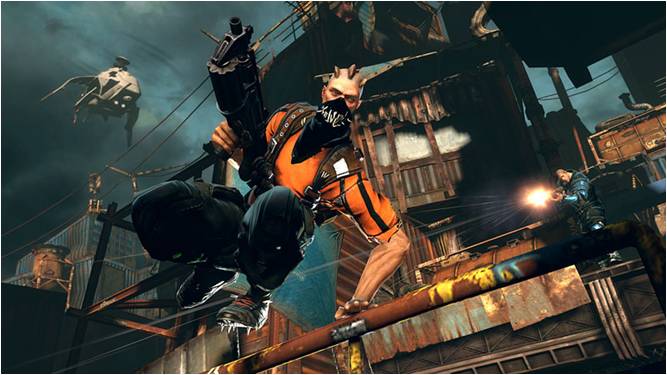
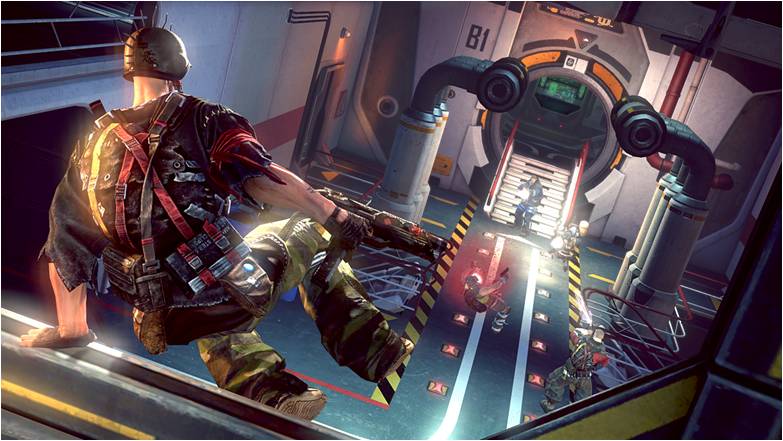
    Brink is not just any other first person shooter (FPS), but it’s a game that is going to change the way we know shooting games. The developers of Splash Damage designed a game where you are allowed to move freely through the map, thanks to their program SMART (“Smooth Movement Across Random Terrain”). It allows players to maneuver around complex environments without equally complex input by analyzing their position and judging what they are trying to do. The movement style is that of parkour, similar to that as seen in the Mirror’s Edge and Assassin’s Creed games.

    A little background on the game:

    In Brink, two sides, “Resistance” and “Security”, fight in the previously utopian city known as The Ark, a floating city surrounded by the waters of a flooded Earth. The Ark was designed as a prototype of a perfect city, with renewable resources and no pollution, large enough to support 5,000 residents. However, due to many refugees entering the city from other parts of the world, its population has grown to 50,000, meaning there are not enough resources to go around – resulting in the city being on the brink (hence the name of the game) of a civil war.

    Conclusion:

    In my opinion I think this game will make it far, no other shooting game has tried to approach the genre the way Brink does. I really enjoy playing video games; it’s one of my favorite things to do. And what I have noticed is that control and movement is a very important aspect of a game, because if you don’t have a smooth movement and is hard to control you character, well, you could get killed in the game and have to redo whatever you did before, something that for some people it is really frustrating. It can also make the game so hard that you will get bored of playing it and probably never finish it. So Brink will surely keep you busy for a bunch of hours in front of the TV, and I don’t think anyone will get bored of it, it has a very interesting story line, and it will have a very interesting multiplayer experience. This game is surely an innovation to the shooting genre as we know it.

    Sources:

    http://en.wikipedia.org/wiki/Brink_(video_game)

    http://brinkthegame.com/ark/island/

    http://bethblog.com/index.php/2010/03/04/brink-developer-diary-3-ed-stern/

    http://www.splashdamage.com/brink#/screens_brink/025_tb.jpg

  • Beretta A391 xtremaA2

    NEW BERETTA A391 XTREMA2
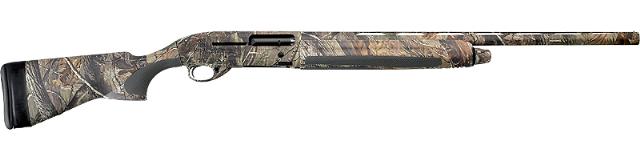
    Designed for the use of Super Magnum 12 ga. 3 ½ in. (89 mm) cartridges, but capable of functioning with lighter cartridges, the new Beretta A391 Xtrema2 gas operated semiautomatic is the ideal shotgun for long distance shooting and the most difficult game.

    MODERN DESIGN, ULTIMATE TECHNOLOGY
    Streamlined Shapes. The skilfully rounded receiver blends perfectly with the stock grip and it permits instinctive, rapid target acquisition. Impeccable balance makes this shotgun easy- and fast to handle. The strongly outlined sides of the receiver confer a distintinctive character to the gun.
    The slim fore-end and the stock boast a new ergonomic design that facilitates the ount of the shotgun. The accurate design of the trigger guard elegantly merges with the receiver.
    The enlarged opening of the trigger guard allows the use of gloves. The top of the receiver is designed to accept (with an optional Weaver base) optics and other aiming systems.

    Stock And Fore-End In Technopolymer.

    The stock and fore-end are produced in durable, resistant, fiberglass reinforced technopolymer that ensures anti-scratch properties and an improved feel in cold weather.Special extended soft plastic inserts are overmolded on the gripping areas of the stock and fore-end to guarantee a secure grip also in adverse weather conditions and to absorb vibrations when shooting.

    EXCLUSIVE AQUA TEK PROTECTION
    Aqua Technology is the name given to the exclusive special surface and protective treatments that are applied to the metal parts of the new Beretta A391 Xtrema2 shotgun.
    The steel barrel is chrome-plated inside to withstand the rigors of steel shot. The external surface of the barrel is first blued and then covered that an exclusive protective coating which remarkably increases its resistance to corrosion. The receiver is made of black anodized aluminum alloy and also boasts the same protective coating. All the internal parts are either nickel or chrome plated, or they are protected by a special process based on a ionic deposition which impregnates the surfaces with ceramic compounds and metals (e.g. Titanium, Chrome) guaranteeing a great resistance to wear and corrosion.

    This unique treatment, grey pearl in color, extends to the breech bolt group, the trigger and the carrier.
    The main internal springs (recoil spring, magazine tube spring, valve spring), the self-compensating valve and the rear drop/cast plate are made of stainless steel. The homogeneous matte black finish, which characterizes all the metal parts in view, boasts anti-glare properties.

    MINIMUM RECOIL, MAXIMUM PERFORMANCE
    Gas Operation System with Exhaust Valve. The unique gas operation system, patented by Beretta, with self-cleaning gas cylinder and piston, is provided with a self cleaning exhaust valve that automatically vents the excess gases of the most powerful cartridges.The result is that the shotgun, without any adjustment, fires everything from the weakest 28g (1 ounce, 3 ¾ dram equivalent) game load to the heaviest 64g (2 ¼ ounce) Super Magnum cartridge. The exhaust valve remains attached to the barrel, ensuring easy and quick assembly and disassembly of the shotgun.

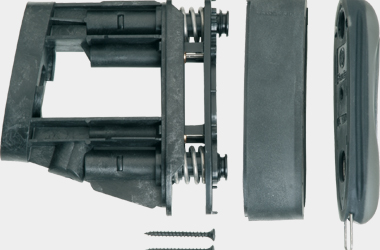
    New Kick Off® Recoil Absorber
    The new Beretta patented Kick Off system  has been conceived to further reduce felt recoil when shooting. Thanks to the Kick Off device, the recoil energy is gradually dissipated by two hydraulic absorbers  inserted into the stock. The result is superior comfort for the shooter. At the same time, the vibrations and the muzzle jump when shooting are strongly reduced.

    Recoil Reduction System. A spring-mass recoil-reduction system, located inside the stock, counteracts the rearward forces generated by shooting and greatly reduces felt recoil.
    Bolt Travel Recoil Absorber. Manufactured from an advanced elastomer, it reduces the vibrations transmitted to the shooter and contributes to the shotgun’s reliability and durability.

    Adjustable Length of Pull. Thanks to the two stock spacers (one assembled) the length of pull of the Xtrema2 Standard model can be adjusted to all shooters.

    Gel•Tek Recoil Pad. It reduces felt recoil and vibrations transmitted to the shooter and is interchangeable with extreme ease.

    Rotating Bolt. The rotating bolt with two locking lugs guarantees maximum safety and reliability even with the heaviest cartridges. The operating rods are integral to the bolt body, ensuring that it is guided symmetrically and with minimal friction. The disassembly and reassembly of this unit is also simplified.

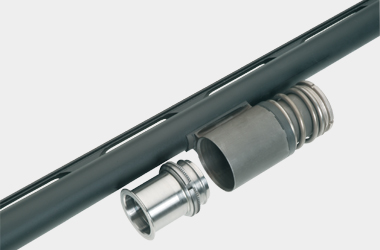
    Optima-Bore Barrel.
    The Optima-Bore internal barrel profile features an overbored diameter and lengthened forcing cone that considerably improve shot pattern distribution and felt recoil reduction.

    Optimachoke Plus Choke Tubes.
    The Beretta Optimachoke ,Plus tubes feature a long, gradual constriction, internal profile formed to minimize shot deformation and to enhance the concentration and distribution of shot patterns. Engineered to resist steel shot stress and corrosion.

    RICH ACCESSORIES

    The Beretta A391 Xtrema2 shotgun is supplied with a modern design case and a complement of accessories: additional set of stock drop/cast plates, 25 ml. Beretta Gun Oil, set of Optimachoke Plus choke tubes with spanner, stock spacer with assembly screws , front and rear sling swivels.

    Stock Drop and Cast Spacers. They allow the stock drop and cast to be adjusted by simply
    modifying their assembly position.

    Quick Detachable Sling Swivels. Thanks to an exclusive quick-release system it is possible to fasten
    and remove the rear swivel from the stock without any tools.

    BIBLIOGRAPHY:

    1. http://en.wikipedia.org/wiki/Beretta_Xtrema_2
    2. http://www.berettausa.com/products/a391-xtrema2/default.aspx
    3. http://www.e-gun.net/more.asp?gid=20484&gun=shotgun


  • Windsurfing Sails

    Windsurfing sails

    In windsurfing there are many types of sails to enhance speed and or maneuverability. These are many types of sails called free style, wave, freeride, stand-up/ paddle board, freemove, beginners, children, slalom, and lastly the race sail.

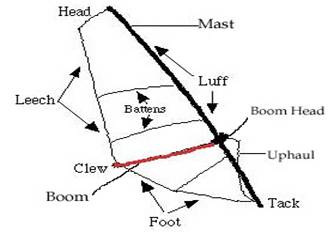
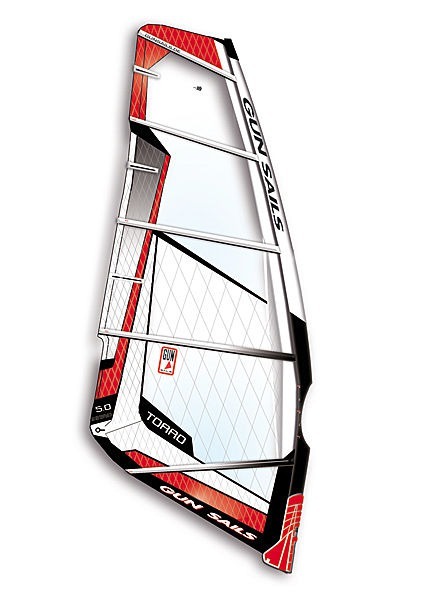
    The difference between these sails all depends on the design. The main aspects of the design are the material, the size, weight, the boom, the chambers, and the leech (see image). The three most common materials used for a windsurfing sail are Dacron (woven polyester), Mylar, and Monofilm. Dacron is used in the beginner’s sails, it is lightweight, cheap, but it can outstretch after over use. Mylar is actually a coated form of Dacron, it holds its shape better but it takes part in delamination overtime.  To strengthen areas of the sail they use Kevlar mesh.


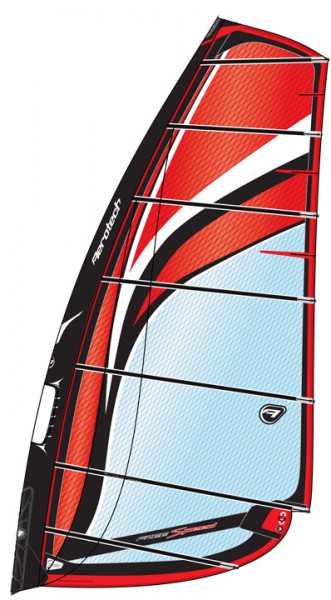
    A freeride (speed) sail
    Camber (the straight lines accross a sail)


     The difference between speed, freestyle and wave sails is the design of course. In a speed sail there are more chambers to maximize the shape of the sail. These cambers lock the shape to increase the amount of wind that can be captured to increase speed.

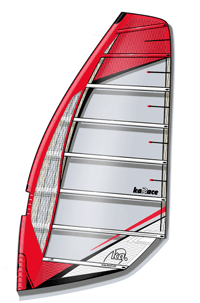
    A freestyle sail has cambers that are at a greater angle compared to a speed sail. Also there are less cambers since freestyle sails needs maneuverability and quick turns, more cambers will increase the difficulty of the turns which is not needed in a freestyle sail.  

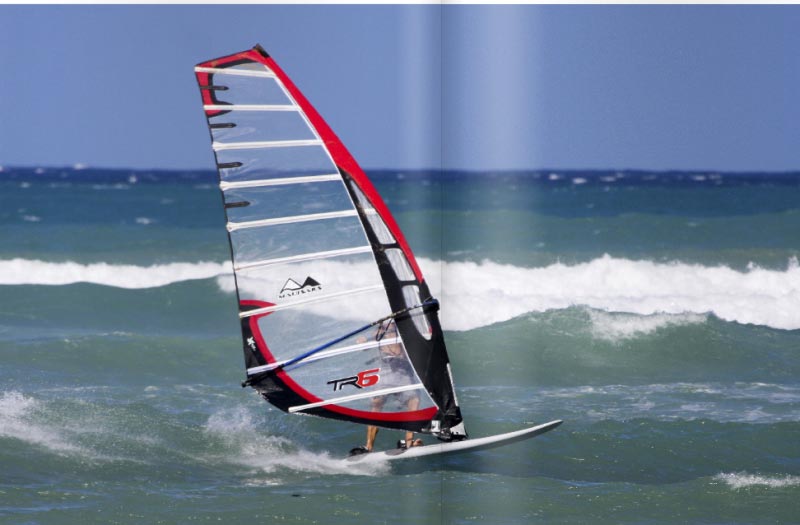
    Wave sails are made of stronger materials that can handle a beating if something goes wrong. Wave sails are made to easily change directions and have a good handling. Also, wave sails have fewer cambers to increase handling, but not loose speed. Another design difference is the end (rear) of a sail, for speed the sails extend out and down further than wave sails, because wave sails cannot get caught in the waves.

    A wave sail

    Notice how the rear is cut higher and shorter than that of the speed sail.

    A freestyle sail

    A combination of both a speed and wave sail.

    Personally I sail with freestyle sails but I do want to try speed and wave sails. There are many different sizes to fit the person who sails them (this affects weight), I can handle a 4.5m^2 which is about twice my size.

     Bibliography:

    http://www.nauticexpo.com/boat-manufacturer/windsurf-sail-891-_2.html

    http://eartheasy.com/windsurfpage.htm

    http://www.seabreeze.com.au/Articles/Windsurfing/Whats-the-difference-between-sails_903109.aspx

    By Vera Butter

  • Reebok ZigTech (Analysis)

    Haven’t you ever wanted to run longer but was too exhausted to continue? Maybe you were suffering muscle pains after a hard workout and was forced to skip the following day’s practice? Whatever the reason or excuse you might have came up with the new ZigTech shoes made by Reebok will make sure you will never miss a day or practice ever again. The new advanced technology put into the creation of these new series of shoes is revolutionary and one of a kind.

    Design and Unique Structure

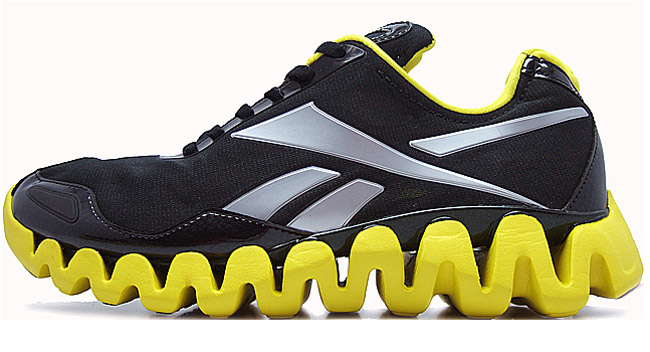
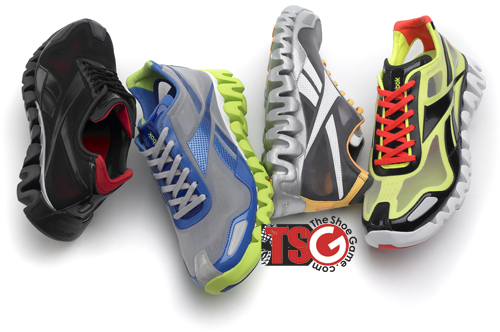
    The shoe already stands out from the crowd due to the rarely shaped foam base

    Solely the design of the ZigTech is very attractive. Compared to other models of running shoes, it catches your eye due to a much different look and shape, rather than regular trainers that we have seen over and over again in the past years. The shoes are very light; no more than 12 ounces (340 grams) each. The true secret of the shoe is actually the zig-zag base from which the name of the shoe derives. The squiggly foam, according to many shaped to resemble a heartbeat monitor, is light and flexible which allows for great amortization and support. The shoes also have a distinct springiness which becomes more and more noticeable as the runner increases his speed. This is because each part of the foam acts independently, allowing for smooth absorption of the impact. In addition, the shoe uses a common Pump Technology that has been known for the past 20 years however its efficiency has been debated by many.

    Other than the advanced base, the shoe has all the characteristics and typical traits of athletic shoes. The toe box, heel cup and the footbed, as experts like to call them, are all areas of the shoe that the ZigTech shares with regular trainers. ZigTech comes in a variety of colors and models but thanks to the Reebok website it is possible to customize your own shoe according to preference.

    Reebok allows complete customization of your shoes

    Benefits behind the Technology

    Reebok’s newest technology implemented in the ZigTech training shoe gives a wide range of benefits to the user:

    1. Upon impact with a surface, energy is sent from heel to toe and up to the body allowing the return of some energy lost during the contact with the ground. Many people have stated that the with each step the shoe feels like it’s accelerating and propelling the user forward.

    2. The ZigTech reduces the tearing and wearing of important leg muscles by up to 20%, at the same time minimizing chances of damage or injury

    3. The stable heel and the soft base provide a strong frame that firmly fits your foot. The shoe is set to rap itself around the foot of the user, fitting it with great precision.

    4. Upon exercising, the flexible foam smoothly reacts with the ground. Each part bends independently to fit the irregularities in the surface, providing an even run.

    5. The shoes have been said to be very breathable which is quite  useful; the feet do not get as sweaty and the ZigTechs are much more comfortable. This trait can also prevent a variety of blisters or burns from forming on your feet, something that can really effect the running form of regular runners.

    The View of the Public

    Like in most cases, different people have different opinions and impressions about a product however the ZigTechs have received a large quantity of positive responses. Many athletes, performing a variety of sports ranging from American football to Formula 1 racing, have been endorsing this new shoe model. Among them has been Martin Fagan, an Irish Olympic Marathoner who has been using and adapting the ZigTechs to his daily workout routine. He pointed out the fact that the shoes allowed him to run longer distances and recover faster after a practice. He enjoyed them so much that he began even wearing them to the gym. Fagan said they feel so comfortable that his other shoes do not feel as good anymore.

    “It took no time at all to realize how soft and comfortable they were-that happened as soon as I put them on”, said Martin during his interview with one of the Runner’s World journalists.

    In general I think that the shoes are a fantastic invention that will greatly enhance and improve the efficiency of the workouts of different athletes. The ZigTech are a tremendous model of training shoes, but nothing more than that. I think in races, whether on low or high competitive levels, they would benefit the user in an unfair and unjust way. Shoes such as these should be used solely for the purpose of training for tournaments were only the skill and ability of the participant matter. Nevertheless, the ZigTechs are shoes that should definitely be checked out during the next visit to one of the Reebok or any other athletic store.

    Sources and More Information:

    http://theshoegame.com/articles/bill-mcinnis-creator-of-zigtech-interview.html

    http://solecollector.com/Sneakers/News/Available-Now-Reebok-ZigTech/

    Runner’s World Magazine November 2010 (US Edition)

    https://defynewyork.wordpress.com/2010/02/25/get-ziggy-with-it-the-reebok-zig-tech-2010/

    http://www.examiner.com/outdoor-recreation-gear-in-national/reebok-zigtech-review

    http://www.reebok.com/US/more/zigtech

    By Adam Dyk

    Class: Design Technology HL 1

    Teacher: Mr. Mark Trumpold

  • The Nike Mercurial Superfly II Elite (in depth analysis)

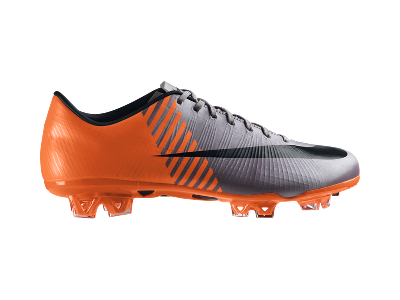
    The Nike Mercurial Vapor Superfly II Elite

    Original Color for Superfly II Elite

    Personal Point of View on the Shoes

    Theses shoes over the past few weeks have left somewhat of a great impression on me. I’ve looked at them, held them and been given a quick trial with these shoes. I have a love hate relationship with these boots from personal experience alone, but completely understand why these are the top and newest shoes on the market right now. I wouldn’t call them the perfect shoe for me, I’ve tried somewhere over 20 football shoes in the past 5 years and I’ve come to learn that all shoes have advantages and disadvantages and depending on the person, the shoe could suit different people in different ways. These shoes from my own knowledge are by far the lightest I’ve ever tried. The lightness of these shoes contributes to why they are so popular, it made me run faster and accelerate quicker, and in a sport which is played so quickly, speed is of a high priority. I personally think that these shoes have been well designed in the aspect of visual attractiveness, because when I walked into the shop they were the first shoes that came into my view. Certainly they are attention grabbers, and being in the middle of the field it’s quite important that my teammates know where I am.

    Nike’s Stated Benefits of the Shoes

    • Flywire for ultra light-weight and support

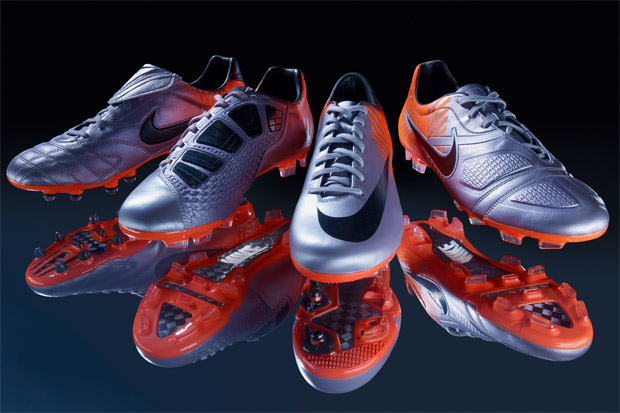
      All four shoes of the Nike Elite series introduced for the Fifa World Cup 2010
    • Revolutionary traction for extra grip
    • Traction pattern for cutting and instant acceleration
    • Includes exclusive shoe bag and box
    • Firm-ground (FG) Bladed and conical cleats for use on short grass fields.

    Nike’s revolutionary traction in Nike’s opinion is the top reason for the shoe’s popularity. The traction in this shoe is

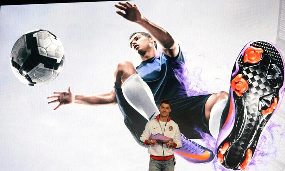
    Cristiano Ronaldo endorsing the new football shoes

    what is called ‘adaptive traction’ that activates a cleat in the forefoot that extends when enough pressure is exerted, it extends when needed for the “relentless grip and acceleration the game demands.” Along with the injected stud, the traction in the vapor allow for effortless acceleration. The shoe also includes toe off traction for instantaneous bursts of speed.

    All fields of the aesthetics and materials were carefully chosen and for specific reasons. The Vapor Superfly II Elite features innovative Flywire. Flywire is made of nylon fibers, these fibers are sturdier than older materials and help hold the foot in position. Another advantage to Flywire is that the mass of the material is a lot lighter than older materials. The Flywire also provides better control of the ball and adjust to the foot a lot better. The most minimizing factor of weight in the unparalleled lightness of these shoes is the carbon-fiber chassis, which makes the shoe lighter but also at the same time maximizes strength. The final major contribution to making these shoes such a success was the perforated sockliner which presents low profile cushioning and support whilst also lessens the cleat stress. The total weight of this pair of shoes is an amazing and currently unmatched 370g (13 oz). This boot is favored by wingers or strikers who feel that speed is the most important asset in their game. As a publicity stunt, Nike got Olympic Gold Medalist sprinter, Asamfa Powell, to run 100 meters in these football shoes and on the first attempt he covered the entire distance of the football field in less than 10 seconds, four tenths of a second slower than the track world record.

    Part of Nike Elite Series

    After spending nearly 2 hours in the store I came to the conclusion they weren’t the shoes for me. Instead I chose the T90 Laser III, also from the same elite series. The new revolutionizing elite series consists of 4 shoes. The first, as I have discussed previously in depth because they have been the biggest success and most sophisticated technology, was the Superfly II. Secondly was the shoes I purchased, based upon personal preference, the T90 Laser III. Thirdly, the Tiempo III, these boots are more intertwined with the classical designs of the previous years, but still incorporates much of the revolutionary technology. The final pair is the CTR360, which is the sturdiest of all the shoes, and as the name of the shoe states it optimizes control of the ball. As I have said before the choice goes down to preference but all these shoes have their given benefits and a choice of any of these would be a choice of a football shoe that has left its mark in revolutionizing the football industry.

    Sources and Further Readings:

    http://store.nike.com/us/en_us/?l=shop,pdp,ctr-inline/cid-1/pid-337913/pgid-301857

    http://www.studs-up.com/2010/08/nike-mercurial-vapor-superfly-2-elite-review/

    http://www.designboom.com/weblog/cat/8/view/9325/nike-mercurial-vapor-superfly-ii.html

    http://www.prodirectsoccer.com/prodinfo.asp?PID=PDS-002-009-C17&DEPT=2&BRAND=9&SS=1&PROFILE=Speed

    By Laurance Townsend

    Class: Design Technology SL I

    Teacher: Mr Mark Trumpold

  • Treehugger

    In Treehugger’s own words …  “TreeHugger is the leading media outlet dedicated to driving sustainability mainstream. Partial to a modern aesthetic, we strive to be a one-stop shop for green news, solutions, and product information. We publish an up to the minute blog, weekly and daily newsletters, weekly radio interviews, and regularly updated Twitter and Facebook pages.”

    Treehugger is divided into three areas of  ‘getting informed’, ‘interact’ and ‘take action’ which include extensive sub – categories.

    http://www.treehugger.com/best-of-green/