The Design Technology Blog

Category: Design

  • Water Bobble

    Australian designer, Karim Rashid, has created a revolutionary product that is not only environmentally friendly but extremely convenient.

    “We all love bottled water.In fact, we are obsessed by the convenience of it, but unfortunately, this doesn’t lead to a sustainable future.”

    He has successfully reinvented the water bottle developing the bobble, which takes tap water and filters it into clean water as you drink.

    Research shows, Australians alone spend $544 Million every year on disposable and portable water bottles. Each year, nearly 300,000 barrels of oil are used to make plastic water bottles, most of which are thrown away. Littering our pavements and ending up in landfills.

    Rashid set out to satisfy his desire for fresh, clean, portable water while minimising the considerable costs bottled water imposes on our environment and ourselves. He then invented a recyclable and resilient water bottle which holds low cost and is aesthetically pleasing. The bottle is not only sustainable but also made from recycled plastic, ensuring every aspect of its creation and existence is environmentally friendly.

    Disadvanage: Filter has to be replaced every 2 months or 150 litres.

    http://www.waterbobble.com.au/our-story.html

  • Steve Jobs

    Steve Jobs, born in San Fransisco on 1955, is well know for his original and innovative products. After attending the Cupertino Junior High School, Jobs joined Reed College, but dropped out after only one semester. He continued auditing certain classes, of which one is calligraphy. This calligraphy class soon changed his life dramatically.

    After meeting Steve Wozniak while working for HP in a summer job, Jobs  joined Atari, a manufacturer of popular video games. After acquiring some experience there, Steve Jobs, together with Steve Wozniak and Ronald Wayne founded Apple in 1976. Having been friends with Steve Wozniak for several years now, Steve Jobs was able to convince Steve Wozniak to assemble and sell computers.

    Steve Jobs release the Macintosh in 1984, it was the first commercially successful computer with a graphic user interface (GUI). Not long after, however, an internal power struggle caused the recently hired CEO John Sculley to relieve Steve Jobs of his duties as the head of the Macintosh division.

    Around the same time, Steve Jobs founded another company, NeXT Computer. The company’s focus was to develop high-end computers, and those who could afford it developed a  strong following due to its technical strengths. Just two years later, Steve Jobs bough The Graphics Group, which is a company that is now known as Pixar.

    Several years later, in 1998, Apple bought then NeXT Computer company, bringing Steve Jobs back to the company. He soon became CEO after the board of directors lost confidence in the CEO of that time. Steve Jobs straight away terminated several projects

    such as the Newton project. He also assigned new project leaders and fired several employees. During this time employees developed a fear of encountering Steve

    Jobs while riding in the elevator “afraid that they might not have a job when the doors opened”.

    Since the return of Steve Jobs, Apple has entered several new markets, under which the portable music player market with the iPod in 2001, the phone market with the iPhone in

    2007, and recently the tablet market, with the iPad. Ever since, Steve Jobs has been considered one of the greatest innovators in modern history.

    Fun Fact: Steve Jobs officially earns one dollar a year.

    Sources:

    http://en.wikipedia.org/wiki/Steve_Jobs

    http://www.appleinsider.com/articles/06/03/24/apples_jobs_pays_295m_in_taxes_on_10m_vested_shares.html

  • Environmentally Friendly Toilets

    A Swedish company is selling dry toilets to help countries where water or sewerage systems are a concern. These toilets work by keeping the urine and the solid waste separate and using the second to create manure for farms. So far, the company has sold about 2,000 dry toilets, but the demand is growing worldwide.

    These toilets work by keeping the urine and the solid waste separate and using the second to create manure for farms. So far, the company has sold about 2,000 dry toilets, but the demand is growing worldwide. Read more…

    Here are some short excerpts from the India News article.

    ‘Don’t mix, don’t flush, don’t waste’ is the slogan of a Swedish entrepreneur selling dry toilets – a revolutionary concept that not only saves water but also converts human waste into manure.

    Sven Ingvar-Nilsson, 77, has been successfully using the dry toilet design for the last 11 years at his massive farm on the outskirts of this small Swedish town. He says that the concept not only uses human waste but also saves a lot of water that is wasted every time you flush.

    The urine section is rinsed using approximately 0.1 litres of water each use. The urine is led to a tank where it is collected for further transport, preferable for spreading as fertilizer in garden or agriculture. Solids fall into a bin housed in an insulated container in which negative pressure is created by a fan and vent.

    The solid waste dries and thus bacteria and viruses are eliminated by a simple and reliable method. After a drying period of six months the solids can be composed, burned or dug down in the soil where it is quickly broken down. A standard bin (holding 80 litres) will need to be emptied every three months for normal family use.

  • Green Building

    Green Building

    Sustainable building design

    The process:

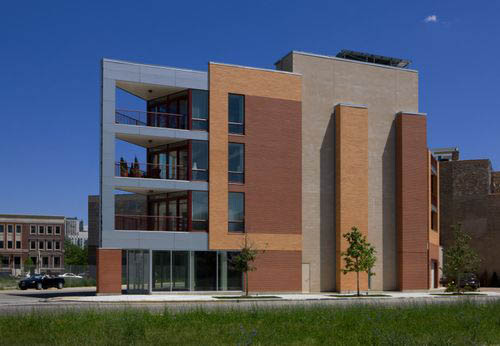
    Green building is an environmentally responsible process that efficiently uses resources and lean production in order to minimize carbon emissions and damage towards the environment. This is a socially responsible practice that takes the effects of building into consideration. The common objective is that green buildings are designed to reduce the overall impact of the built environment on human health and the natural environment by; efficiently using energy, water, and other resources, protecting occupant health and improving employee productivity and reducing waste, pollution and environmental degradation. Green building does not specifically address the issue of the retrofitting existing homes.

    Building’s life-cycle:

    The building life-cycle ranges from design, construction, operation, maintenance, renovation, to demolition. This practice expands and complements the classical building design concerns of economy, utility, durability, and comfort.

    Natural building:

    This is a similar concept which is usually on a smaller scale and tends to focus on the use of natural materials that are available locally. Green architecture and sustainable design are other related topics. Sustainability may be defined as meeting the needs of present generations without compromising the ability of future generations to meet their needs.

    Green Building at CAC:

    The new elementary building at the Cairo American College (CAC) in Egypt was designed while meeting the standards of triple bottom line sustainability, “An expanded spectrum of values and criteria for measuring organizational success: economic, environmental and social.” The school also uses appropriate technology and focuses on sustainable development. This is shown through sustainable building.

    Objectives for sustainable buildings:

    • resource efficiency
    • energy efficiency
    • pollution prevention (including indoor air quality and noise abatement)
    • harmonization with the environment (including environmental assessment)
    • Integrated and systemic approaches (including environmental management systems).

    Video on sustainable buildings:

    watch?v=nAMrtHC2Ev0&feature=player_embedded

    Sources:

    http://www.getloans.com/blog/wp-content/uploads/2010/05/sustainable-building-design.jpg

    http://www.youtube.com/watch?v=nAMrtHC2Ev0&feature=player_embedded

    http://www.ruthtrumpold.id.au/designtech/pmwiki.php

    http://en.wikipedia.org/wiki/Green_building

  • Concentrated Solar Power

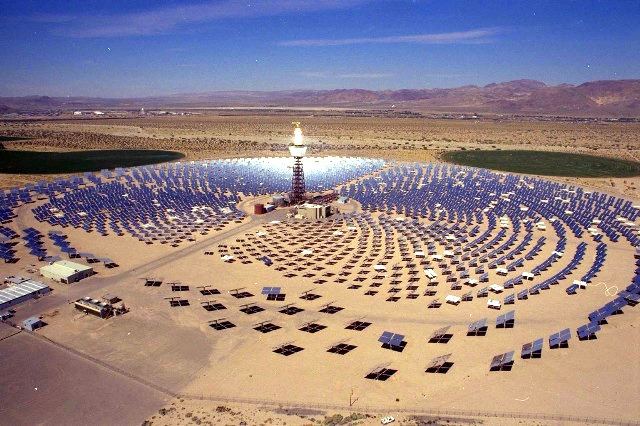
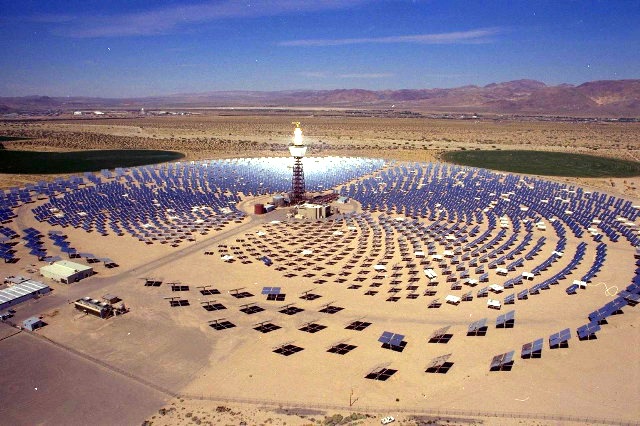
    Solar power has been around for a good amount of time now.  Solar panels are effective green sources of energy, but they don’t harness much power and they are very expensive.  The average house uses around 3.85 kw a day (http://www.solarpoweristhefuture.com/how-many-solar-panels-does-it-take-to-make-one-kilowatt.shtml) and you need around 5 panels to generate this power which cost around 280 dollars each according to (http://www.dmsolar.com/solar-module-1.html).  This may not seem too expensive, but if you consider powering thousands of houses through one solar plant then the space needed and the amount of panels needed increases.  With the increased panels comes an increased cost and it just isn’t practical considering the amount of power that comes from other sources of power.  However, concentrated sun power does require space, but cuts costs because it uses mirriors instead of a vast amount of panels to direct beams of sunlight to a central sun tower.  This slashes costs and utilizes the power of the sun more efficiently.

    CSP (Concentrated Solar Power) creates power from a steam turbine usually.  The directed sunlight is converted to heat energy which allows a heat engine to spin a steam turbine.  According to wikipedia (http://en.wikipedia.org/wiki/Concentrated_solar_power) a typical concentrated solar plant can produce power at about $2.50-$4.00 per watt.  Therefore a typical plant producing around 250 megawatts costs around $600 million to $1 billion dollars to manufacture.  This for of power is a competitor for the transition from fossil fuel for multiple reasons.  One is that the power from the sun is free and unlimited if the plant is placed in strategic areas.  Another comparison that wikipedia mentions is that CSP plants can produce “12 to 18 cents per kilowatt-hour” which can be compared to a nuclear plant in Arizona which produce “1.65 cents per kilowatt-hour.”  The nuclear plant still more efficiently produces power, but the solar plant can be judged as a competitor in the green power category.  With continued advancement in CSP it could be possible to make them even more efficient and less expensive, but they are still much more valuable than the typical solar plant that doesn’t concentrate the sun’s power.

    Concentrated Solar power can be the wave of the future in the power industry.  All that need to be done is that it must become cheaper and more cost effect.  CSP is starting to pave the way to this much needed improvement to allow for the complete harnessing of the suns power and true renewable energy.

    Sources:

    http://en.wikipedia.org/wiki/Concentrated_solar_power

    http://www.dmsolar.com/solar-module-1.html

    http://www.solarpoweristhefuture.com/how-many-solar-panels-does-it-take-to-make-one-kilowatt.shtml

    Image soure: http://blog.hasslberger.com/img/concentrated-solar-power.jpg

  • Wake-up Light

    Wake up light

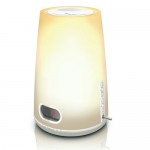
    Philips brought out the wake up light around 2008. This light is a new form of alarm clock.

    The light will simulate a sunrise and give the person a pleasant way of waking up, this is because of a natural reaction the user will have towards the sun rise. Nature’s alarm clock is the sun rise and in the past (before technology) people would rely solely on the sun, they go to bed once the sun sets and wake up when it rises. This lamp uses this natural reaction to wake you up very pleasantly.

    The theory behind it is that when the sun rises your body slowly prepares you to wake up by creating fewer hormones which make you sleep (adenosine and melatonin) and will be breaking down the melatonin and adenosine to wake you up again.

    The product was tested in different parts of the world especially where it is dark such as Norway during the winter. After about 6 weeks 98% of the citizens who tested the product wanted to continue. Links 4 and 5 show the results of 60 days as well as after two, four and six weeks.

    The price can range from 109€ to 129€ this is a lot of money but I believe it will make a large difference when used. There are also models where there is an iPod/ iPhone charger dock attached to the light to play your music while using the light.

    1 http://sleep.health.am/sleep/more/what-makes-you-sleep/

    2 http://blog.onlineclock.net/wake-yourself-up-with-light/

    3 http://www.wakeup.philips.com/#/gb_en/the-town/aurora_borealis

    4 http://www.wakeup.philips.com/#/gb_en/the-results

    5 http://www.wakeup.philips.com/#/gb_en/the-people

  • Bass Guitars

    Summary

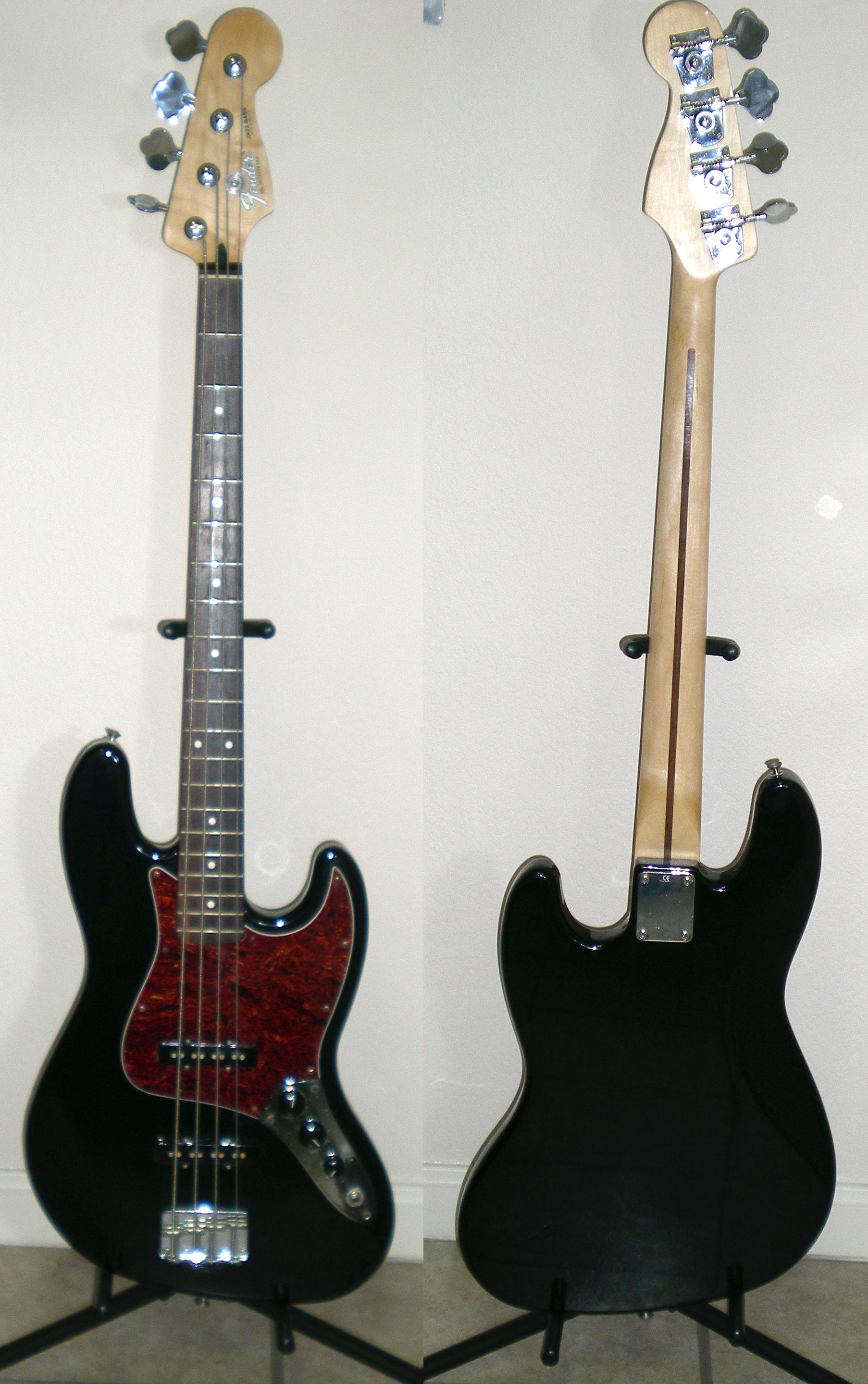
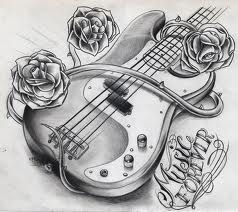
    The bass guitar, or electric bass or bass, is a stringed instrument that is primarily played with the fingers, thumbs, or using a pick. The thumb is used by plucking, slapping, popping, tapping, or thumping. The bass guitar has a similar design to that of the electric guitar. The bass has a longer neck and scale length (length of the strings). Also, basses can come with four, five, or six strings, the four-string bass being the most commonly used. The four string bass is tuned the same as the double bass. The bass is commonly used for keeping the beat of a song and is used in most styles of music.

    Design Consideration

    The body of a bass is usually made out of wood, but other materials including graphite have been used before. Many different types of wood may be used to make the body, neck, and fretboard of a bass. However, the most common type of wood used for the body of a bass is alder. For the neck, maple wood is commonly used and for the fretboard, rosewood is preferred. Mahogany, maple, ash, and poplar are other commonly used woods for the body of the bass. Mahogany for the neck is also used and maple or ebony for the fretboard.

    Handmade instruments by highly skilled luthiers (stringed instrument makers) are becoming more and more available. These lutheirs use exotic materials when making basses, such as the woods bubinga, wenge, ovangkol, ebony, and goncalo alves. Graphite composites are used to make lightweight necks, in some cases. Exotic woods are used in more expensive instruments. For example, Alembic (a bass and guitar making company) uses cocobolo as a body or top layer material because of its attractive grain. Warwick bass guitars are also known for having exotic hardwoods. Most of the necks are made of ovankol and the fingerboards are made of wenge or ebony. Solid bubinga bodies are used for tonal and aesthetic qualities.

    Strings

    The standard design for the bass guitar has four strings, tuned to E, A, D, and G. These are in fourths meaning that the open highest string, G, is an eleventh (an octave and a fourth) below middle C. This makes the tuning of all four strings the same as that of the double bass. Tuning is the same on the lower strings of a five or six stringed guitar.

    Strings types include all-metal strings and strings with different coverings. All-metal strings include roundwound, flatwound, halfwound, found wound, and pressure wound. Two examples of different string coverings include tapewound and plastic-coatings. This variety of materials used in strings allows bass players to have a range of tonal options. In the 1950s and early 1960s, the most commonly used string used by bassists was flatwound strings with a smooth surface. These strings had a smooth, damped sound similar to that of a double bass. In the late 1960s and 1970s, roundwound bass strings became popular, but flatwounds continued to stay popular as well. These roundwound strings were similar to those of guitar strings at the time. Comparing the two string types, roundwounds have a brighter timber (quality of a musical note) with greater sustain (amount of time it takes for the sound of the string to become silent) than that of flatwounds.

    The following is a video of a bass solo:

    http://www.youtube.com/watch?v=5omFFeLEXFE

  • Touchscreen

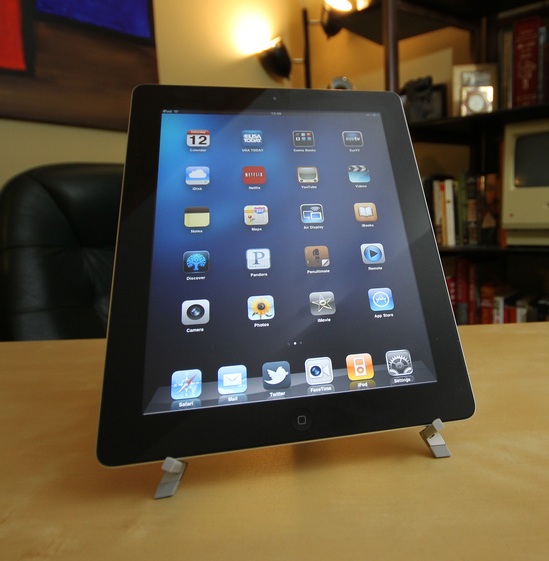
    A touchscreen is an electronic visual display that can detect the presence and location of a touch within the display area. The term generally refers to touching the display of the device with a finger or hand. Touchscreens can also sense other passive objects, such as a stylus. Touchscreen is common in devices such as all-in-one computers, tablet computers, and smartphones.

    The touchscreen has two main attributes. First, it enables one to interact directly with what is displayed, rather than indirectly with a cursor controlled by a mouse or touchpad. Secondly, it lets one do so without requiring any intermediate device that would need to be held in the hand. Such displays can be attached to computers, or to networks as terminals. They also play a prominent role in the design of digital appliances such as the personal digital assistant (PDA), satellite navigation devices, mobile phones, and video games.
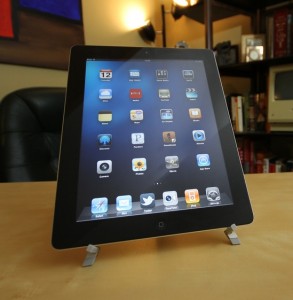
    The first touch screen was a capacitive touch screen developed by E.A. Johnson at the Royal Radar Establishment, Malvern, UK. The inventor briefly described his work in a short article published in 1965 and then more fully – along with photographs and diagrams – in an article published in 1967. A description of the applicability of the touch technology for air traffic control was described in an article published in 1968.

    Technologies

    Resistive

    A resistive touchscreen panel is composed of several layers, the most important of which are two thin, electrically conductive layers separated by a narrow gap. When an object, such as a finger, presses down on a point on the panel’s outer surface the two metallic layers become connected at that point: the panel then behaves as a pair of voltage dividers with connected outputs. This causes a change in the electrical current, which is registered as a touch event and sent to the controller for processing.

    Surface acoustic wave

    Surface acoustic wave (SAW) technology uses ultrasonic waves that pass over the touchscreen panel. When the panel is touched, a portion of the wave is absorbed. This change in the ultrasonic waves registers the position of the touch event and sends this information to the controller for processing. Surface wave touchscreen panels can be damaged by outside elements. Contaminants on the surface can also interfere with the functionality of the touchscreen.

    Infrared

    An infrared touchscreen uses an array of X-Y infrared LED and photodetector pairs around the edges of the screen to detect a disruption in the pattern of LED beams. These LED beams cross each other in vertical and horizontal patterns. This helps the sensors pick up the exact location of the touch. A major benefit of such a system is that it can detect essentially any input including a finger, gloved finger, stylus or pen. It is generally used in outdoor applications and point of sale systems which can’t rely on a conductor (such as a bare finger) to activate the touchscreen. Unlike capacitive touchscreens, infrared touchscreens do not require any patterning on the glass which increases durability and optical clarity of the overall system.

    Acoustic pulse recognition

    This system, introduced by Tyco International’s Elo division in 2006, uses piezoelectric transducers located at various positions around the screen to turn the mechanical energy of a touch (vibration) into an electronic signal. The screen hardware then uses an algorithm to determine the location of the touch based on the transducer signals. The touchscreen itself is made of ordinary glass, giving it good durability and optical clarity. It is usually able to function with scratches and dust on the screen with good accuracy. The technology is also well suited to displays that are physically larger. As with the Dispersive Signal Technology system, after the initial touch, a motionless finger cannot be detected. However, for the same reason, the touch recognition is not disrupted by any resting objects.

    Construction

    There are several principal ways to build a touchscreen. The key goals are to recognize one or more fingers touching a display, to interpret the command that this represents, and to communicate the command to the appropriate application.

    In the most popular techniques, the capacitive or resistive approach, there are typically four layers;

    1. Top polyester coated with a transparent metallic conductive coating on the bottom
    2. Adhesive spacer
    3. Glass layer coated with a transparent metallic conductive coating on the top
    4. Adhesive layer on the backside of the glass for mounting.

    When a user touches the surface, the system records the change in the electrical current that flows through the display.

    http://computer.howstuffworks.com/question716.htm

    http://electronics.howstuffworks.com/iphone1.htm

    http://www.scholarshipsinindia.com/answer/touch_screens.html

  • The Cubic Houses

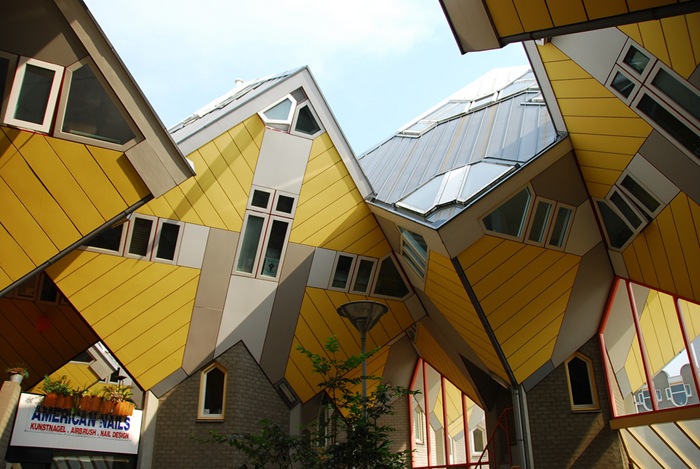
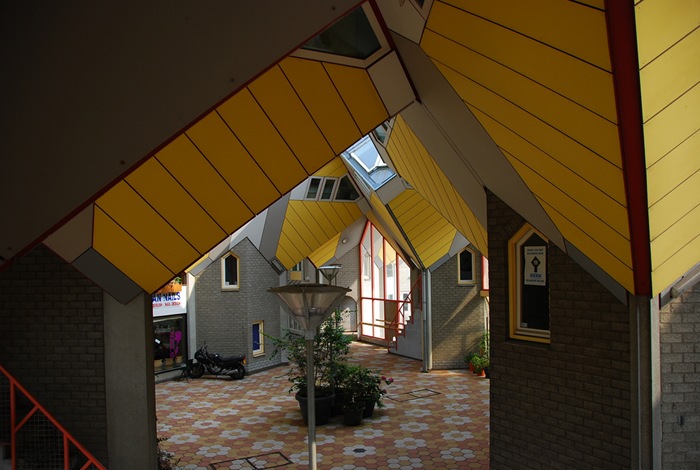
    How would you feel to live on a tilted house that is basically a cube? and to live in a forest of these tilted cubic houses?. Well someone thought about it, and the original idea came about in the 1970s by Piet Bloom. The city of Rotterdam asked him to design housing on top of a pedestrian bridge and he decided to use the cubic houses idea. The whole concept behind these houses is that Pit tries to create a forest by each cube been an abstract tree.

    The cubes are tilted and sit on hexagon-shaped pole structures. The structure of the pole consists of three concrete pillars that have concrete filling the space in between.

    The cube has a basic structure of a concrete floor with concrete pillars. On top of this structure is something similar to a typical wood frame structure with wood stud framing and rockwool insulation.

    The insulation and the wood panels are covered with cement/wood fiberboards, to protect them from exposure to the elements. And to give the cubes a nice appearance, zinc panels were used and complemented by double-glazed windows.

    Sources:

    http://unusual-architecture.com/cubic-houses-rotterdam-netherlands/

    http://www.galinsky.com/buildings/cubichouses/

  • Jabulani Ball

    Jabulani Ball

    History

    Throughout the history of football, people have been searching year after year for the perfect ball. It has been a quest to improve and improve a ball that is used in the most widespread sport in the world. World Cup after World Cup has seen new footballs with incremental changes in material between each one. In 1836, Charles Goodyear patented vulcanized rubber, he spent nearly 20 years in attempting to create a ball for football and finally he invented the first vulcanized rubber football in 1855. In 1862, H.J. Lindon developed one of the first inflatable rubber bladders for balls. “By the 1900’s bladders were made with stronger rubber and could withstand heavier pressure.  Most balls produced by that time used rubber bladders. The balls were made from inner tubes covered with heavy brown leather.  These balls would bounce easier and yet could be kicked. Most balls had a tanned leather cover with eighteen sections stitched together arranged in six panels of three strips each.” (soccerballworld.com). Throughout the next 70 years, leather balls were the only ones in the game and then in the 1970 world cup in Mexico, a revolutionary ball was introduced to the 32-Panel Adidas Telstar ball.

    The 2006 World Cup Ball, Teamgeist Ball

    This football was made from synthetic leather patches sewn together in a design based on the ‘Buckminster Ball’ or known as the Buckyball. For the next 36 years Footballs were made in this style with minimal change. In 2006, the Teamgeist. The introduction of a 14-panel construction method means that the number of three-panel touch points is reduced by 60% (60 to 24) and the total length of the panel lines falls by over 15% (400.5 cm to 339.3 cm). Building on the introduction of thermal bonding technology in 2004.

    Introduction Of Jabulani

    The ball is made from eight spherically molded panels and has a textured surface intended to improve aerodynamics. Nevertheless, the ball received extensive criticism from players and coaches before and during the World Cup who said that the path of the ball through the air was unpredictable.

    “The ball was constructed using a new design, consisting of eight (down from 14 in the last World Cup) thermally bonded, three-dimensional panels.

    The 2010 World Cup Ball, Jabulani

    These then are spherically molded from ethylene-vinyl acetate (EVA) and thermoplastic polyurethanes (TPU). The surface of the ball was textured with grooves, a technology developed by Adidas called “Grip ‘n’ Groove” that is intended to improve the ball’s aerodynamics. The design has received considerable academic input, being developed in partnership with researchers from Loughborough University, United Kingdom.” (Wikipedia). This table shows that the moulding technique means the ball retains its shape, and the lack of seaming means there is essentially zero water retention, which will reduce sluggishness of the ball.

    Personal Experience

    Through personal experiences I have been able to conclude that the unpredictability of the ball is both a good and a bad thing. As the unexpected behavior can trick a goal keeper, whilst at the same time, the speed makes control of the ball quite difficult.

    Resources

    http://www.jabulaniball.com/

    http://en.wikipedia.org/wiki/Adidas_Jabulani

    http://www.soccerballworld.com/Jabulani_2010.htm

    http://www.adidas.com/campaigns/football/content/products.aspx?collection=OMB

    http://en.wikipedia.org/wiki/Adidas_Teamgeist

    http://www.soccerballworld.com/History.htm