The Design Technology Blog

Blog

  • Mouth Guards

    An example of a smart material is a mouth guard. The definition of a shape memory alloy is “an alloy that remembers its original, cold-forged shape: returning to the pre-deformed shape when heated.” The process of forming your mouthguard includes putting the mouth guard in boiling water to make it’s shape go back to it’s original form, and then putting it into your mouth right after, in order for the mouth guard to form to your teeth. When it is formed to your teeth, it remains that way until you put it in boiling water again. Once the mouth guard is formed to your teeth, you can then use it to protect your teeth. Even though it’s easy to change the form of a mouth guard, it is still extremely effective in protecting your teeth from physical contact. Mouth guards are used in activities such as sports. Especially boxing, basketball, and other sports and activities. Due to the ability to change the form of a mouth guard, it provides the best protection that you can get against physical contact. If you just used a mouth guard that wasn’t formed  to your teeth, the protection wouldn’t be as good. However, with the mouth guard formed to your teeth, it provides the maximum protection.

    sources:

    http://forums.sherdog.com/forums/f11/how-effective-mouth-guards-preventing-teeth-loss-485440/

  • Dental Braces

    A shape-memory alloy is an alloy that remembers its original, cold-forged shape: returning to the pre-deformed shape when heated. Shape-memory alloys have many applications such as medicine. One example of that is dental braces, which are are devices used in orthodontics that align and straighten teeth and help to position them with regard to a person’s bite, while also working to improve dental health. The application of braces moves the teeth as a result of force and pressure on the teeth. There are four basic elements that are needed in order to help move the teeth. In the case of traditional metal or wire braces, one uses brackets, bonding material, arch wire, and ligature elastic, also called an “O-ring” to help align the teeth. The teeth move when the arch wire puts pressure on the brackets and teeth. This movement needs to be done slowly otherwise the patient risks losing his or her teeth. This is why braces are commonly worn for around two and a half years and adjustments are only made every three to four weeks.

  • Fiberglass

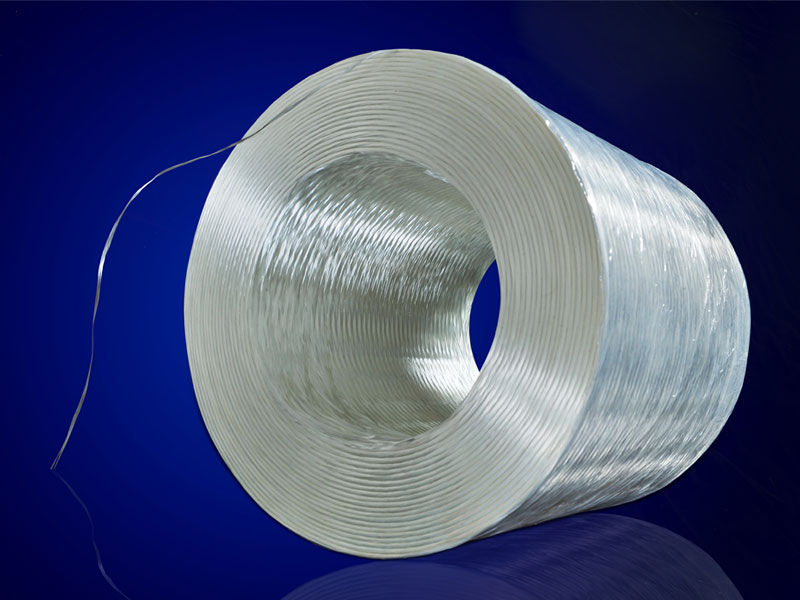
    Fiberglass is actually plastic wrapped in glass composed of plastic. It enters the environment through manufacturing, using, and disposing such materials. Damaged materials, such as fiberglass insulation, could possibly release fibers into the air and could eventually blend with other airborne particles as component of dust. This exposure can take place through ingestion, breathing or even skin contact. Moreover, such effects can ordinarily take place through home maintenance or moving materials which contain fiberglass. When fiberglass reaches the lungs, it could easily remain there and case numerous health problems, such as the elevation of asthma, damage of cellular mechanisms, and the promotion of cancer cell growth. However, despite the few negative effects, fiberglass does happen to be quite environmentally friendly: It features the lowest embodied energy in comparison to other window frame materials, provides the longest life expectancy,  and has self-extinguishing capabilities in case of fire. Additionally, fiberglass provides stable tolerances and high quality throughout the production phase.


    Sources:

    http://www.livestrong.com/article/124778-fiberglass-breathing-danger-effects/

    http://www.fiberglasswindows.com/benefits.htm

    http://www.google.com.eg/search?hl=en&site=imghp&tbm=isch&source=hp&biw=1440&bih=805&q=fiberglass&oq=fiberglass&gs_l=img.3..0l10.1039.3207.0.3765.10.8.0.2.2.2.638.1664.2j3j2j5-1.8.0…0.0…1ac.1.5.img.G5Ql-riWcsY#imgrc=RTu6RTxEd361RM%3A%3BBdTjX3qSO_qm4M%3Bhttp%253A%252F%252F3mcollision.com%252Fmedia%252Fcatalog%252Fproduct%252Fcache%252F1%252Fimage%252F9df78eab33525d08d6e5fb8d27136e95%252F0%252F5%252F05834_fiberglass_resins.jpg%3Bhttp%253A%252F%252Fdigital.thejoytime.com%252FImages.aspx%253Fq%253D3m%2526s%253D50%3B1500%3B1500

  • Paper Clip Smart Material

    Tha paperclip is a very helpful material. A paper clip is an instrument used to hold sheets of paper together, usually made of steel wire bent to a looped shape. Paper clips usually have an oblong shape with straight sides, but may also be triangular or circular, or have more elaborate shapes. It has the functions of a shape memory material, as when you deform the paperclip, then insert it into hot water, the paper clip will return to its original shape. Also it is helpful as it is used instead of a stapler. The stapler will ruin your paper after stapled when you try to unstaple it. However, the paper clip can hold papers together and you can take it off and on anytime without harming the paper. It doesnt contain waste material, and it is easily recyclable

    http://en.wikipedia.org/wiki/Paper_Clips_Project

    http://www.officemuseum.com/paper_clips.htm

  • Fire Sprinklers as Shape Memory Alloys

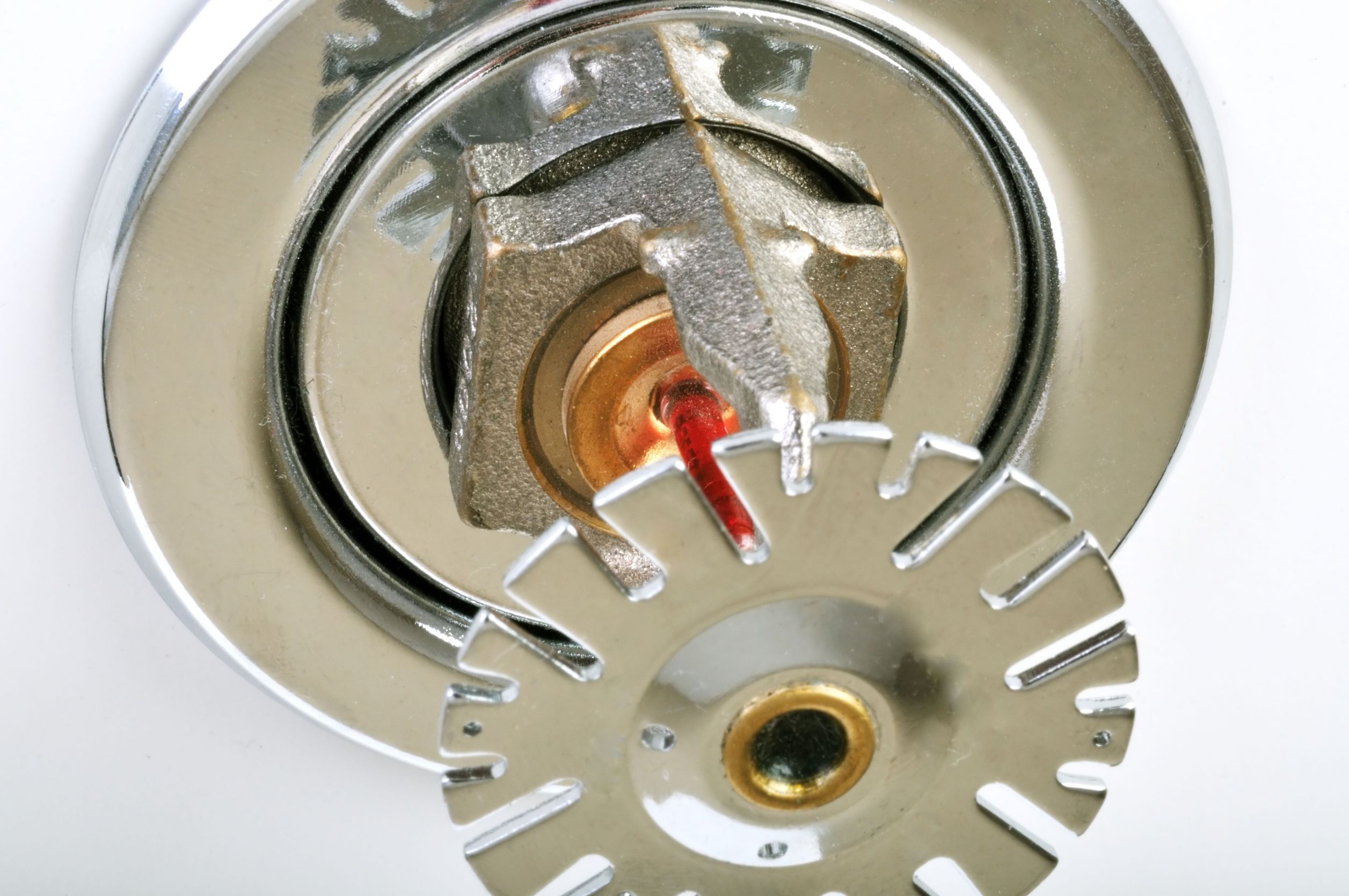
    A shape memory alloy is a group of metallic materials that can return to some previously defined shape or size when subjected to the appropriate thermal procedure. That is, shape memory alloys can be plastically deformed at some relatively low temperature and, upon exposure to some higher temperature, will return to their original shape. Materials that exhibit shape memory only upon heating are said to have a one-way shape memory, while those which also undergo a change in shape upon recooling have a two-way memory.  There are examples of SMAs used in safety devices which will save lives in the future. Anti-scalding devices and fire-sprinklers utilizing SMAs are already on the market. The anti-scalding valves can be used in water faucets and shower heads. After a certain temperature, the device automatically shuts off the water flow. The main advantage of Nitinol-based fire sprinklers is the decrease in response time. The shape-memory element expands as it is heated, forcing a bolt to break, thereby opening the sprinkler valve.

    Biblio:

    http://www.azom.com/article.aspx?ArticleID=134

    http://www.freepatentsonline.com/y2010/0025050.html

  • NIR Smart Materials

    Gn NIR Smart Material

    Info, reference and Images: http://portal.acs.org/portal/acs/corg/content?_nfpb=true&_pageLabel=PP_ARTICLEMAIN&node_id=223&content_id=CNBP_028638&use_sec=true&sec_url_var=region1&__uuid=b76e7b48-770f-46e3-9b87-e0977b03d403

    Near-Infrared light, enters  the skin and has great potential in curing diseases. This is because certain types of smart-materials, when hit by NRI light, break up into the cells of our body.  The problem with this is that materials that respond effectively to NIR need high levels of it, causing problems with toxics that are emitted by them. Scientists are trying to find a way out of this critical health problem. Adah Almutairi and his colleagues have researched different smart materials and have discovered that, hit with low power NRI, these materials break up and seem to be non-toxic for the cells of the human body. For example “hydrogel”, which is a flexible material that contains water and has the characteristic explained previously. Hopefully these will lead to further research and thus, more cures for different diseases.       

  • Fibreglass – Omar Elgebaly

    Fiberglass is a fibre reinforced glazs which is held together by a plastic matrix. The material itself is lightweight and extremely strong. Common uses of fibre glass include boats, bike frames, windows, surfboards, etc. It’s lightweight and inherent strength yield a reliably weather resistant product, making it extremely versatile in it’s uses. It was developed in World War II as a replacement for molded plywood used in aircraft radars, as it was transparent to microwaves. It’s first civilian application was for boats and soorts car frames. After that, it started gaining acceptance towards the 1950’s. Since then, use of this material has widely broadened.

    It is currently a matter of debate as to whether fibreglass has a negative impact on health. in the 1950’s, fibreglass became a popular alternative for asbestos. As it is widely known asbestos cause deteriorating health effects, people have started wondering as to whether fibreglass displayed similar harmful effects due to their similarities. Although a great deal of debate surrounds this phenomena, it has been agreed upon that fibreglass is an irritant. Skin irritation is assiciated with the thick fibres of  filamentous glass. It has also been known to cause eye and throat irritation. If one is exposed to prolonged exposure, it may cause difficulty in breathing, which goes away once yiu are removed from it’s vicinity. It is also currently a subject of debate on whether it is carcinogenic. Hiwever, sufficient evidence has not yet been provided. It has some environmental implications, one such being is that it is not environmentally degradable. It’s biggest con is it’s disposal.


    Sources:

    http://greenhomeguide.com/askapro/question/what-is-the-environmental-footprint-for-manufacturing-fiberglass-windows-i-m-interested-in-fiberglass-because-it-s-supposedly-more-energy-efficient-than-aluminum

    http://www.einstein.yu.edu/administration/environmental-health-safety/industrial-hygiene/fiberglass.aspx

  • Temperature Responsive Polymers/Thermo Responsive Polymers

    Temperature responsive polymers are polymers that exhibit a drastic and discontinuous change of their physical properties with temperature. The term is commonly used when the concerned property is the solubility in a given solvent but may also be used when other properties are affected. Thermoresponsive polymers belong to the class of stimuli responsive materials that are different from temperature sensitive materials whih change their properties continuously with environmental conditions. This polymers display a miscibility gap in their temperatue composition diagram. Depending on whether the miscibility gap is found at low or high temperatures, an upper or lower critical solution temperature exists, respectively.

    The areas of application are tissue engineering, liquid chromatography, drug delivery, and bioseparation. There are only few commercial applications exist.

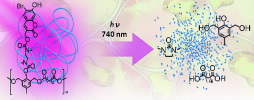
    Thermo responsive polymer chains in solution adapt an expanded coil conformation. At the phase separation temperature they collapse to form compact globuli. This process can be observed directly by methods of static and dynamic light scattering. Indirectly, the drop of viscosity can be observed. When mechanisms for the reduction of surface tension are absent the globule will aggregate, subsequently causing turbidity and the formation of visible particles.

    Polymers dissolve in a solvent when the Gibbs energy of the system decreases, i.e., the change of Gibbs energy (ΔG) is negative. From the known Legendre-Transformation of the Gibbs Helmholtz equation follows that ΔG is determined by the enthalpy of mixing (ΔH) and entropy of mixing (ΔS).

    \Delta G_{mix}=\Delta H_{mix}-T\cdot\Delta S_{mix}

    Adhesion of cells on a surface coated with a thermo responsive polymer. Displayed is a polymer with LCST.
    Thermoresponsivity in Organic Solvents:

    Due to the low entropy of mixing miscibility gaps are often observed for polymer solutions. Many polymers are known that show UCST or LCST behavior in organic solvents. Examples for organic polymer solutions with UCST are polystyrene in cyclohexane, polyethylene in diphenylether or polymethylmethacrylate in acetonitrile. 

    Thermoresponsivity in Water:

    Polymer solutions that show thermo responsivity in water are especially important since water as a solvent is cheap, safe and biologically relevant. Current research efforts focus on water-based applications like drug delivery systems, tissue engineering, bioseperation.

    http://en.wikipedia.org/wiki/Temperature-responsive_polymers


  • New “smart” material could help tap medical potential of tissue-penetrating light

    Scientists are collaborating to try and create what may become the first type of light that can penetrate up to four inches in to the human body. They are developing and receiving successful initial results with the use of the smart materials. The discovery, if successful has the potential of being able to diagnose diseases as well as even create new human tissues. Experts say that the near-infrared (NIR) light is able to go 4 inches in to the human body, giving it immense potential for diagnosing as well as treating diseases. Though seemingly an immense advancement in medicine, there are still problems associated with its development. Currently, the materials that are being tested on are those requiring low-power NIR. This is because this level of power does not damage the body tissues as it passes through. However, the materials being used do not really respond as would hope, as they do not give the most accurate results. What is required is smart materials that can endure high-power NIR, though that does not seem like the best of solutions, as high-power NIR damages cells and tissues. This is why researchers have set their minds to creating a new polymer material that is capable of responding properly to low-power NIR light. With this advancement, the new material is such that it is able to separate in to small pieces that are resulting in signs showing that it is nontoxic to surrounding tissues. The researchers intend to place the polymer in hydrogel (water-containing flexible material that is used for forming tissues as well as drug delivery). This would enable the new polymer to be able to release the medications or agents in to the body when hit with low-power NIR, and so also eliminating/reducing the risk of damaging tissues. Though seemingly appearing as a dangerous substance, if developed as scientists are hoping, it will be a significant step in the field of medicine.


    http://portal.acs.org/portal/acs/corg/content?_nfpb=true&_pageLabel=PP_ARTICLEMAIN&node_id=223&content_id=CNBP_028638&use_sec=true&sec_url_var=region1&__uuid=7d9395c9-0827-4786-ac43-d41662763a59

  • Chevy Corvette’s new smart material

    Chevy in releasing their new 2013 corvette created a new smart material to try and making the car lighter. This material replaces the heavier motorized actuator to open and close the hatch vent that releases air from the trunk with a new smart metal alloy. This allows the trunk lid to close more easily than on the previous models where trapped air could make the lid harder to close. It does this using smart memory alloys, made from copper aluminum and nickel. In the new Corvette, the shape memory alloy wire opens the hatch vent whenever the deck lid is opened, using heat from an electrical current s. When activated, the wire contracts and moves a lever arm to open the vent, allowing the trunk lid to close. Once the trunk lid is closed, the electrical current switches off, allowing the wire to cool and return to its normal shape, which closes the vent to maintain cabin temperature. This new material is about 2 pounds lighter than its predecessor. As well, this material is cheaper to produce, which saves the company money. In terms for the environment, it is beneficial because it uses less energy to maintain temperature in the car, which saves on lots of energy when you consider all the amount of cars that would be sold.