The Design Technology Blog

Blog

  • 3D Printing- Fetus


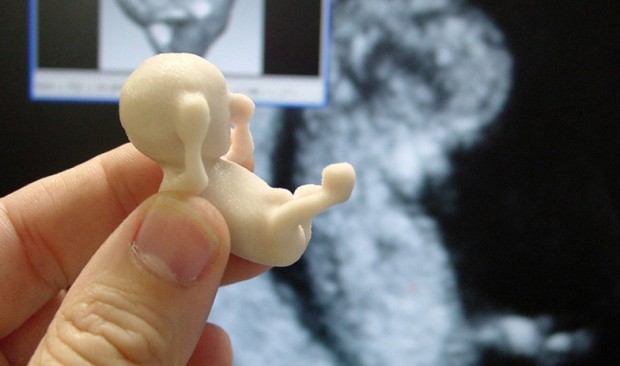
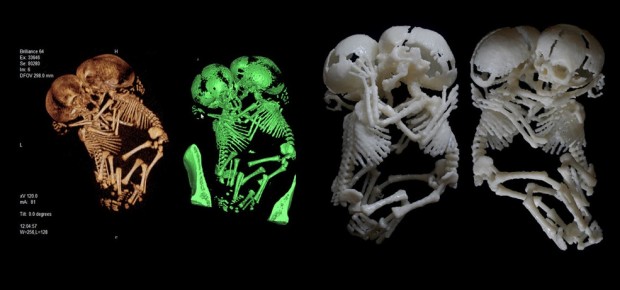
    3D printing is an idea on its own that is yet to be grasped by many. The idea of printing something in 3dimensional form is something that has not been looked upon as a realistic innovation, as though it is something from a movie like Star Wars. However, it is not movie, it is reality, and the things that it can do will soon surpass even our wildest thoughts. Before taking this course on its own, I found it difficult to understand the idea of how exactly a 3D printer even worked. With the world continuously developing and advancing in technology, I found myself amazed to find all of the things that the can be done. Something that struck out most to me was the fact that you can 3D print a fetus. The article explains how women who are pregnant are able to now not only view their baby on a sonogram machine in 3D, but can actually hold the fetus in their hands as a way of knowing what the baby is feeling like. This is primarily being done so in order to get a better understanding of possible problems that there may be with the fetus. In being able to physically hold the model in your hand, medical advances can be made in ways of finding what is wrong, if anything, with the baby. Furthermore, it is also extremely beneficial to those who are visually impaired. The whole birthing process consists, in the initial stages, of first-time glances at the soon-to-be baby. If someone is blind, they are unable to do that as they cannot see anything, only hear the descriptions from others. However, with 3D fetus printing, it now allows for parents visually impaired to be able to feel their child as it develops. This as a whole is an extreme advancement in technology and enabling others to get closer and get a greater feel for the whole birthing process. Though seemingly odd, it proves to be extremely beneficial in that it gives an opportunity to catch possible deformities and evaluate situations from which the baby may be suffering. People may tend to argue that it is somewhat unethical in that you are making a replica of something inside of you- the thought is somewhat disturbing. However, after reading the article and getting a better understanding, it shows how it is in fact extremely beneficial in allowing for others to experience the happiness they could not. Hence, 3D printing can be seen as a huge bonus, especially in regards to medicine as it allows for early diagnosis’ to be made as well as giving the opportunity to others in knowing what their baby feels like.

    Source: http://www.theblaze.com/stories/2013/04/22/3d-printing-gives-blind-parents-a-chance-to-feel-baby-before-its-born/
    3D Fetus

    3D Fetus

  • 3D Printing

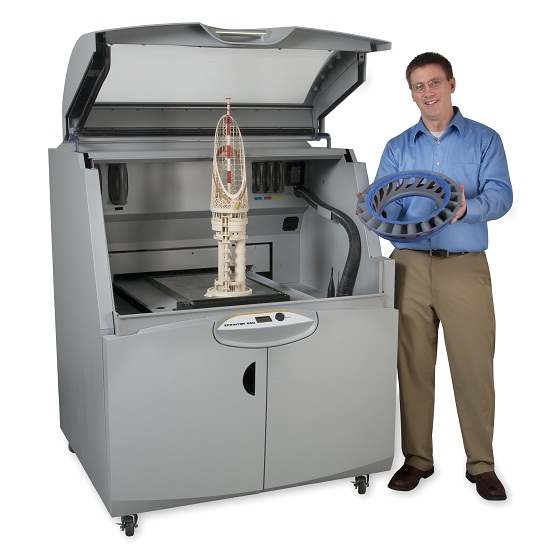
    3D printing is the process of producing a three dimensional object of any shape or form from a digital model. It is done by the utilization of an additive process where successive layers of material are laid down in different shapes. 3D printing has become an essential component of design as it assists in speeding up the process of manufacturing and enables production to be applied on a large scale. On top of that, it dismisses the possibility of human errors as these printers are usually flawless unless a designer types a fallacy into the software. Moreover, it increases innovations as prototypes can be done in a matter of hours, giving designers more time to evaluate their product and make final adjustments and improvements. Additionally, this method reduces the cost of designing as the money spent on traditional prototyping and tooling is no longer required. Although the manufacturing of 3D printers is an enormous step forward for mankind, it still brings some unethical issues upon us. Unfortunately, it has been proven that weapons can be 3D printed. It has therefore become questionable whether companies should continue to produce and sell 3D printers as frequently and casually as before. No more than a week ago, news about a 3D printed handgun that can fire 380 calliber bullets was reported in Texas, USA. Multiple harmful outcomes are currently being predicted about the USA due to the simplified process of obtaining firearm. “If you help people to make terrorist bombs, you are morally and partially responsible for the damage that they do,” warns Kirk O. Hamson, a business ethicist and executive director for the Markkula Center for Applied Ethics at Santa Clara University in California. Such harsh statements have made the usage of 3D printers both socially and ethically unpopular and widely disapproved of. Nonetheless, on another note, 3D printing happens to help eliminate both waste and carbon emissions. It can also potentially lessen transportation impacts and dismiss wasted inventory. Ultimately, 3D printing helps designers work efficiently and produce customer-satisfying products in less time and on a larger scale. In addition, it is environmentally friendly. However, due to the arisen ethical and social issues, it is possible that this method of manufacturing can eventually no longer be viable until numerous modifications and policies are put on the consumption of such printers.

    Sources:
    “Z Corp 3D Printing Improving Design | Z Corporation.” 3D Printers and Rapid Prototyping | 3D Systems. 3DSYSTEMS, n.d. Web. 22 May 2013. .

    Chapman, Ben. “| Sustainability Workshop.” Autodesk Sustainability Workshop Home Page. N.p., n.d. Web. 22 May 2013. .

    Krasny, Jill. “The Ethics of 3D Printers–and the Guns They Can Produce | Inc.com.” Small Business Ideas and Resources for Entrepreneurs. N.p., 15 May 2013. Web. 22 May 2013. .

  • 3D Printing

    3D printing is the process of producing a three dimensional object of any shape or form from a digital model. It is done by the utilization of an additive process where successive layers of material are laid down in different shapes. 3D printing has become an essential component of design as it assists in speeding up the process of manufacturing and enables production to be applied on a large scale. On top of that, it dismisses the possibility of human errors as these printers are usually flawless unless a designer types a fallacy into the software. Moreover, it increases innovations as prototypes can be done in a matter of hours, giving designers more time to evaluate their product and make final adjustments and improvements. Additionally, this method reduces the cost of designing as the money spent on traditional prototyping and tooling is no longer required. Although the manufacturing of 3D printers is an enormous step forward for mankind, it still brings some unethical issues upon us. Unfortunately, it has been proven that weapons can be 3D printed. It has therefore become questionable whether companies should continue to produce and sell 3D printers as frequently and casually as before. No more than a week ago, news about a 3D printed handgun that can fire 380 calliber bullets was reported in Texas, USA. Multiple harmful outcomes are currently being predicted about the USA due to the simplified process of obtaining firearm. “If you help people to make terrorist bombs, you are morally and partially responsible for the damage that they do,” warns Kirk O. Hamson, a business ethicist and executive director for the Markkula Center for Applied Ethics at Santa Clara University in California. Such harsh statements have made the usage of 3D printers both socially and ethically unpopular and widely disapproved of. Nonetheless, on another note, 3D printing happens to help eliminate both waste and carbon emissions. It can also potentially lessen transportation impacts and dismiss wasted inventory. Ultimately, 3D printing helps designers work efficiently and produce customer-satisfying products in less time and on a larger scale. In addition, it is environmentally friendly. However, due to the arisen ethical and social issues, it is possible that this method of manufacturing can eventually no longer be viable until numerous modifications and policies are put on the consumption of such printers.


    Sources:
    “Z Corp 3D Printing Improving Design | Z Corporation.” 3D Printers and Rapid Prototyping | 3D Systems. 3DSYSTEMS, n.d. Web. 22 May 2013. .

    Chapman, Ben. “| Sustainability Workshop.” Autodesk Sustainability Workshop Home Page. N.p., n.d. Web. 22 May 2013. .

    Krasny, Jill. “The Ethics of 3D Printers–and the Guns They Can Produce | Inc.com.” Small Business Ideas and Resources for Entrepreneurs. N.p., 15 May 2013. Web. 22 May 2013. .

  • The 3Doodler

    The 3Doodler (http://www.youtube.com/watch?feature=player_embedded&v=DQWyhezIze4

    The 3Doodler is the first 3D pen that was created, and up to now, still the only one in the world. It is the invention of Peter Dilworth and Max Bogue. It uses thermoplastic that is heated and cooled as it passes through the body of the pen. As one of the creator states: “We wanted to design a 3D printing device that could be used within minutes, without needing any technical knowledge, software or computers. We also wanted it to be affordable as well as fun, so that anyone could 3Doodle!” –  Peter Dilworth, Co-Founder. The creation of the 3Doodler is beneficial for designers and also younger people that would like to have easy access to a 3D printing tool. As the 3Doodler uses electricity to heat up the plastic, it is possible to use it everywhere in the house, without the installation of any software or program in order to make it work, like normal 3D printers require. There are not any problems with the production and use of this invention. However, if we consider the fact that the 3Doodler uses plastic, which is produced from oil, this can lead to consider the relative environmental impact that the pen has. Moreover, as it uses also electricity to produce the 3D sketches, it could lead to an increase in consumption of electricity which will therefore raise the cost of the Bill of the household and also impact the environment as well. Conclusively, as the environmental and social issues that are implied with the use of this new invention are limited, the 3Doodler is the next big step towards using 3D printing and sketching in our everyday life and everyday designs.


    Bibliography:

    The 3Doodler, Peter Dilworth and Max Bogue, 2011. www.the3Doodler.com


    Use of the 3Doodler
  • 3D Printed Bionic Ear

    3D printing is a porcess in which a three-dimensional solid object is made from a digital model. It is differentiated from most typical machining techniques that depend on the process of removing materials by cutting or drilling. It uses a digital technology that works for prototyping as well as distributed manufacturing in fields like industrial design, architecture, engineering and construction (AEC), automotive, aerospace, dental and medical industries, education, geographic information systems and civil engineering.

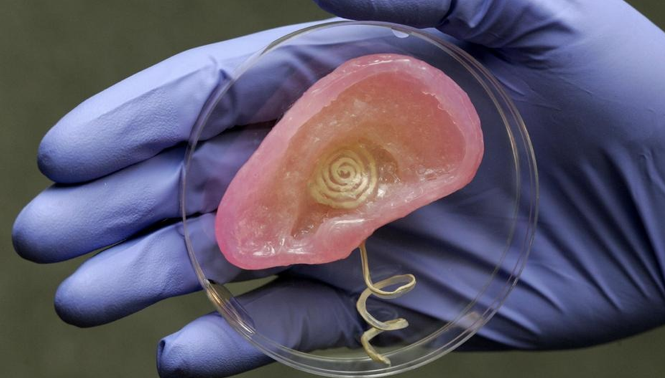
    Scientists at Princeton University have used 3D printing to design a bionic ear that can hear better than a normal human ear can. The printed ear intertwines embedded electronics, as the Princeton researchers 3D-printed nano particles and cells and combined cartilage with a small coil antenna to produce the bionic ear.

    The ear ended up hearing radio frequencies a million times higher than the average human ear. Lead researcher and assistant professor of mechanical and aerospace engineering at Princeton Michael McAlpine reported that “the way that our ear hears now is we pick up acoustic signals and then we convert those into electrical signals that go to our brain. What this ear does is it has this electronic coil on it and it picks up electronic signals directly.” The research team wanted to ask the question of whether it would be possible to grow an organ in a petri dish with intertwined electronics as the organ developed. The successful bionic ear was made using a $1,000 3D printer to print the cells and electronics. Then, the ear was placed in a petri dish to allow the cells culture for 10 weeks into cartilage tissue.

    Professor McAlpine said that his team did not create the bionic ear to help the deaf or those without ears, but rather “The idea of this was: can you take a normal, healthy, average human and give them superpower that they wouldn’t normally have?”

    Works Cited:

    “3D printing – Wikipedia, the free encyclopedia.” Wikipedia, the free encyclopedia. N.p., n.d. Web. 22 May 2013. <http://en.wikipedia.org/wiki/3D_printing>.

    Ramachandran, Vignesh. “3D-Printed ‘Bionic’ Ear Can Hear Beyond Human Ability.” Mashable. N.p., n.d. Web. 22 May 2013. <http://mashable.com/2013/05/24/3d-printed-ear-princeton/>.

  • 3D printed Organs

    3D printed Organs


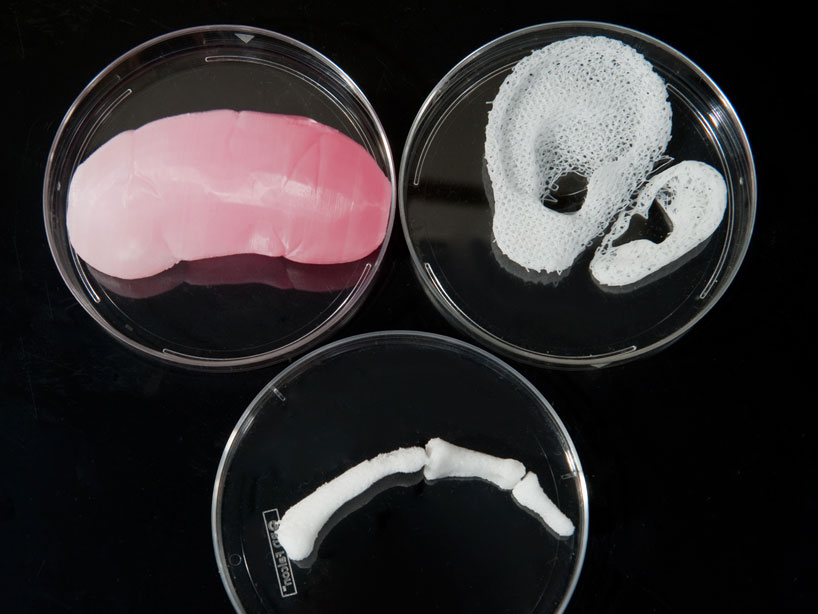
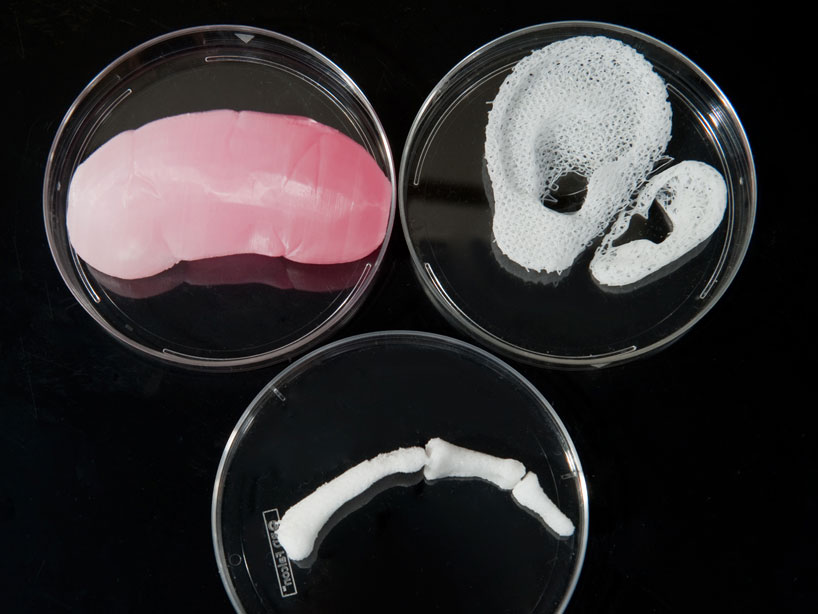
    “Our approach is consistent with other forms of 3D printing because it’s an additive process,” says Renard, “but what is unique is our application of the process in the field of cell biology and tissue engineering.” There is a device revolutionizing creations and medical advancements! The act of 3D printing organs has become a new research topic for many scientists. The idea is to very carefully design and shape certain organs; after the organ is designed it is printed using a 3D printer. The Princeton researchers wanted to build on their knowledge, and so, the team joined up with researchers at Johns Hopkins to build the electronic ear. Their 3D printer combined calf cells with a hydrogen matrix material to form the ear cartilage, and silver to form the antenna coil. During testing, they were able to pick up radio waves in stereo using complimentary left and right side ears. Later on they hope to be able to detect acoustic energy directly using other built-in sensors. Other researchers have used 3D printing of a material called carbomorph to create that change resistance when bent or stressed. These researchers have also been able to print capacitive button sensors to measure changes in capacitance, and even connectors for hooking things together. An alternative to painful rib grafts, which result in ears that neither function well nor look natural, a normal ear is scanned and a mould made by a 3D printer. Collagen is injected into the mould, which acts as a scaffold in the formation of cartilage. The hope is that human trials could take place within three years. 3D printing has been used for pioneering work within foetal medicine, too. In 2009, Brazilian designer and Royal College of Art PhD student Jorge Lopes introduced the use of 3D printing to create models of unborn children within the womb. Lopes used MRI scans “to see inside the belly of a pregnant woman,” he says. 3D printing also has huge potential to help disability. Magic Arms is shortlisted for the Design Museum’s Design of the Year 2013, and enables Emma Lavelle, a child born with arthrogryposis, to use her arms, a function that was previously impossible. Magic Arms is Emma’s nickname for the Wilmington Robotic Exoskeleton (WREX), an assistive device made up of a bespoke butterfly-patterned jacket and arms that are 3D-printed in durable ABS plastic. The design was originally made with CNC technology for patients older than two-year-old Emma, but 3D printing enabled it to be translated into a smaller version that is light enough for Emma to wear and take everywhere. If a piece breaks, her mother can simply photograph the broken element and a new one is printed out and sent through the post. Clearly 3D printed organs have revolutionized both the medical and the engineering advancements, and will, hopefully, continue to do so.

    regenerative01

    “How 3D printing is changing health and medicine.” Dezeen – architecture and design magazine. N.p., n.d. Web. 21 May 2013. <http://www.dezeen.com/2013/05/19/3d-printing-organs-medicine-print-shift/>

    http://www.designboom.com/wp-content/uploads/2013/02/regenerative01.jpg

  • 3D Printed Guns


    At first, the idea of 3D printing was all positive, with ideas ranging from organs to key chains. Recently though, developers have been exploring 3D printed guns. Last week an engineer from Wisconsin printed a 25$ gun from a 3D printer. The gun was used to fire 9 .380 caliber rounds and successfully fired all 9 rounds. The engineer claims that the plastic used in most 3D printers is stronger than the most expensive plastic available, making the printing of 3D guns accessible to most people. The first 3D printed gun, called “The Liberator”, was fired at the beginning of the month for the first time. Even though the gun only fired one shot, it was a significant shot. Following the creation of the gun, many US congressmen have called to ban 3D guns. Many American’s could argue that this is beneficial as it makes guns more accessible but in truth, this idea is extremely dangerous. Giving almost anyone access to a gun is a horrible idea. This not only gives the normal man access to a gun, but it also gives terrorists, murders, etc. access to the gun. Another scary thought is that if people are starting to print 3D guns now, what will they be printing in the future? 3D bombs? The gun is actually so easy to download that any person can go on this website at any time http://defcad.org/liberator/ and download it. There are currently no laws that stop anyone from printing a 3D printed gun at home. Many people are saying that the 3D printer isn’t actually that big of a deal, saying that most people can’t afford a 3D printer to print the gun. One of the main concerns brought up is that 3D printed guns wouldn’t be detectable by metal detectors, meaning that any person with a gun could walk onto a plane, or into a secured place, without any problem. As this problem continues to grow, what will the government do?

  • Sports wear!

    Smart materials have many different uses and are developed to meet needs that are starting to emerge in our modern society. Smart materials can sense and react to environmental conditions and are produced to perform a particular function. Some of them:

    • alter according to external stimulus (change when something happens to them or around them)
    • change when the tempreture changes, either hotter or colder – Thermochromatic
    • are activated by internal or external power sources.


    Some fabrics and textiles incorporate smart materials. For instance there are sanitized fabrics for sportswear that contain anti bacterial properties to combat smell and sweat as well as synthetic fabrics with moisture management properties that can regulate and absorb sweat.

    Nike has a “Dri-fit” line that includes smart materials that absorb sweat.


  • Bare conductive ink

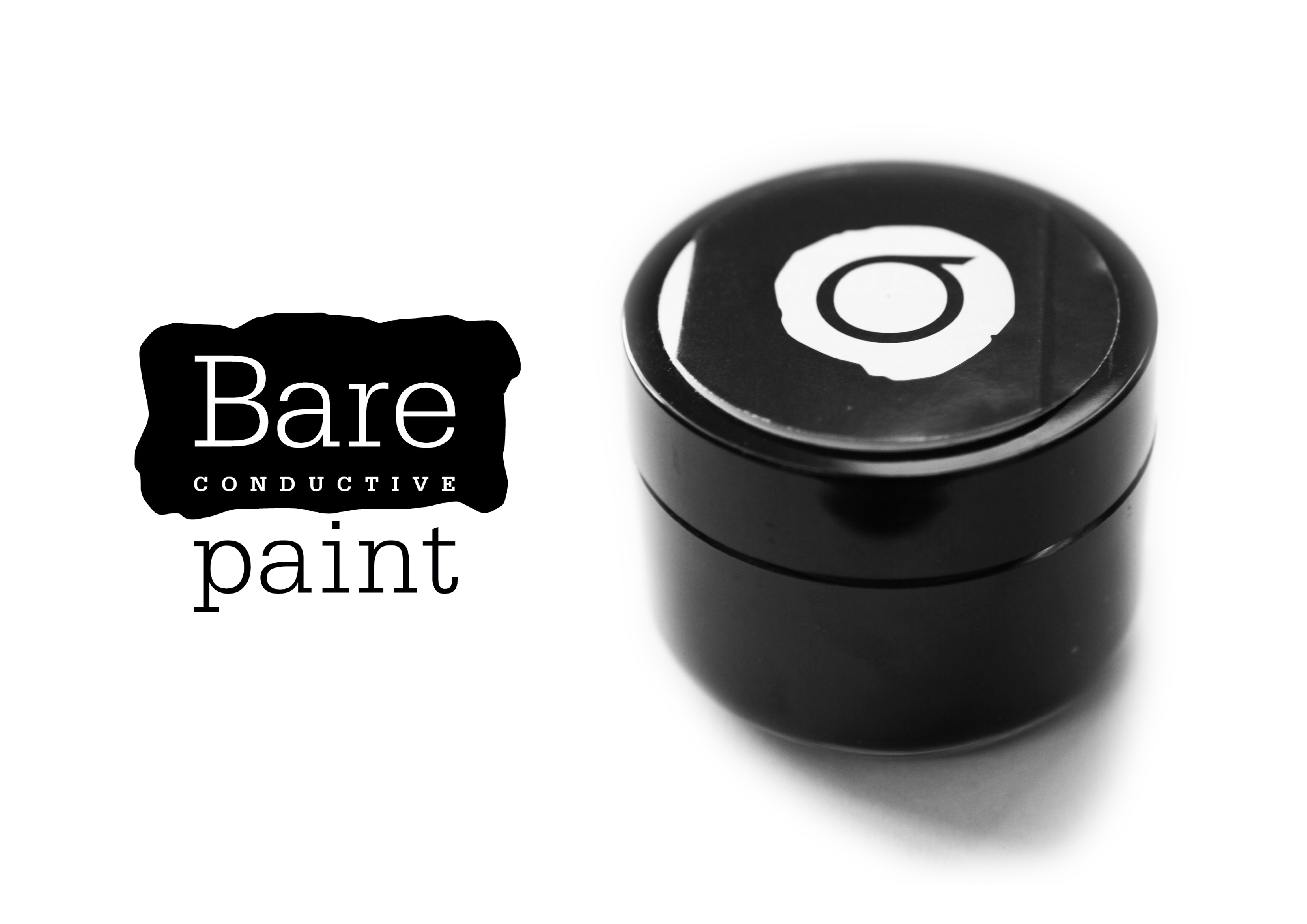
    This material is a type of ink that conducts an electrical current. Developed by art students in university, this material literally lets you draw the current onto something. Of it’s many magnificent abilities, it can also sense when somebody is touching it. When touched, the electrical current is triggered, which makes it function as an on/off switch. The ink only acts as a conductor once it is dry, which means that one can alter the current as long is it is still wet. It comes in a form of a pen, or in a small bucket filled with ink, and it is currently only available in black. The ink has the ability to power lamps, LED lights, and many other devices. This amazing breakthrough has the potential to completely eliminate the use of wires in households, instead, they can be painted onto the surface. Of course, it comes with multiple disadvantages. The ink only has the potential conductivity to power lamps, or a few light bulbs, but it doesn’t have enough electricity to power a computer for example. Also, once drawn, it is difficult to alter the current; one would have to remove the existing lines, and draw new lines instead, whereas a wire can simply be moved to the consumer’s preferences. Though of course, this totally eco-friendly material is the only one of it’s kind in the market today, and with development, it has the potential to eliminate the use of wires in different devices.


    Bare ink video:


  • Reactor light lenses

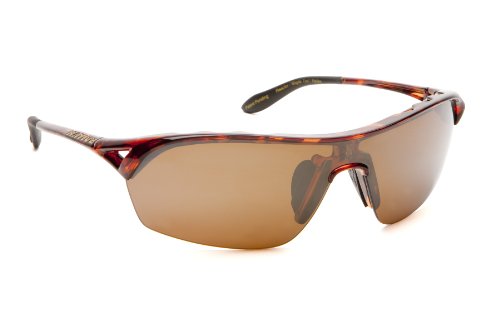
    An Example of a smart material application is with reactor light lenses, also known as photochromic lenses, used in glasses. There are two types of lenses that are used, the glass version and the plastic. The glass version of these lenses uses microcrystalline silver halides, for example silver chloride in the glass. The plastic version of these lenses use organic photochromic molecules, for example oxazines and naphthopyrans. The reason both of these lenses only darken when they are used outside is because they need UV exposure from the sun. When indoors, they are like normal glasses, but when outside, they turn into sunglasses and protect your eyes by sensing the UV rays.