The Design Technology Blog

Category: Innovation

  • Food Industry

    The food industry is a complex, global collective of diverse businesses that together supply much of the food consumed by the world population. Only subsistence farmers, those who survive on what they grow, can be considered outside of the scope of the modern food industry.

    Processed food sales worldwide are approximately US$3.2 trillion. In the U.S., consumers spend approximately US$1 trillion annually on food, or nearly 10 percent of the Gross Domestic Product. Over 16.5 million people are employed in the food industry.

    In the United Kingdom, the food industry is extensive. It employs over half a million people and has a turnover of £70bn. It is the largest manufacturing sector in the UK and represents around 15% of the total manufacturing sector in the UK. Around 13% of the people working in manufacturing in the UK work in the food and drink industry.

    A vast global transportation network is required by the food industry in order to connect its numerous parts. These include suppliers, manufacturers, warehousing, retailers and the end consumers. There are also companies that add vitamins, minerals, and other necessary requirements during processing to make up for those lost during preparation. Wholesale markets for fresh food products have tended to decline in importance in OECD countries as well as in Latin America and some Asian countries as a result of the growth of supermarkets, which procure directly from farmers or through preferred suppliers, rather than going through markets.

    The constant and uninterrupted flow of food products from distribution centers to store locations is a important link in food industry operations. Distribution centers run more efficiently, output can be increased, costs can be lowered, and manpower better utilized if the proper steps are taken when setting up a material handling system in a warehouse.

    With populations around the world concentrating in urban areas, food buying is increasingly removed from all aspects of food production. This is a relatively recent development, having taken place mainly over the last 50 years. The supermarket is the defining retail element of the food industry, where tens of thousands of products are gathered in one location, in continuous, year-round supply. Restaurants, Cafes, Bakeries and Mobile trucks are also ways consumers can purchase food.

    Food preparation is another area where change in recent decades has been evident. Today, two food industry sectors are in apparent competition to top the food industry. The grocery industry sells fresh and largely raw products for consumers to use as ingredients in home cooking. The food service industry by contrast offers prepared food, either as finished products, or as partially prepared components for final . “assembly”.

    Sophisticated technologies define modern food production. They include many areas. Agricultural machinery, originally led by the tractor, has practically eliminated human labor in many areas of production. Biotechnology is driving much change, in areas as diverse as agrochemicals, plant breeding and food processing. Many other areas of technology are also involved, to the point where it is hard to find an area that does not have a direct impact on the food industry. Computer technology is also a central force, with computer networks and specialized software providing the support infrastructure to allow global movement of the myriad components involved.

    www.ibef.org/industry/foodindustry.aspx

    www.indianfoodindustry.net/

    www.food.gov.uk/foodindustry/
  • Processing

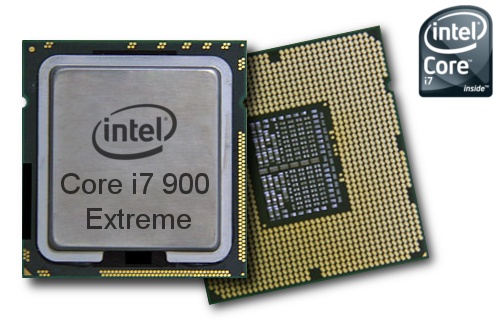
    CPUs or central processing units play a large role in the speed at which computers deal with information and give meaningful output. Today, the fastest running processor on the market is the Intel Core I7 Extreme Edition at 3.47 GHz. Giga Hertz (GHz) are used to measure the performance of a computer in terms of cycles per second. By comparison with past processors such the 486DX/2 66, the fastest desktop processor on the market in the late 1980s which ran at 33 MHz, and the fastest super computer of the late 1980s the Cray Y-MP C90, a modern day low end laptop out performs both at only a fraction of the price. Innovation allows the processing speed of computers to continue increasing while at the same time making faster processors cheaper. Every few years, a new high end processor hits the market that has a higher cycle rate than previous models.

    An interesting development in processors is the rate at which improvements are made. Computers are becoming faster at an increasing rate. The time between each improvement in computer speed is becoming increasingly less. Following data patterns from the 1980s, the difference in processing speed of a top quality desktop to a top quality super computer was about 1:30. Although now the difference is greater, using those trends it is  possible to predict that in 20 years desktop computers will also perform better than today’s fastest supercomputers made by IBM.

    Fastest Processor 2011 on the Market

    Fastest Super COmputer of the late 1980s

    Source:

    http://www.techrepublic.com/blog/classic-tech/the-80s-supercomputer-thats-sitting-in-your-lap/189

    “central processing unit (CPU).” Encyclopædia Britannica. Encyclopædia Britannica Online. Encyclopædia Britannica, 2011. Web. 30 May. 2011. <http://www.britannica.com/EBchecked/topic/102611/central-processing-unit>.

    http://www.inetdaemon.com/tutorials/computers/hardware/cpu/

    http://www.howstuffworks.com/microprocessor.htm

  • Ole Scheeran’s Mahanakhon Bangkok Tower

    The Architectural Design

    “Mahanakhon will be the most ambitious complex of contemporary architecture and design in Thailand and the tallest building in Bangkok.” – Ole Scheeran

    This  great modern architectural building, which began construction in the Fall of 2009, is said to be one of the best designs in the world. The Mahanakhon Bangkok Tower designed by German architect Ole Scheeren is planned to be the tallest construction in Bangkok, Thailand. Ole Scheeren  has unveiled plans for The Tower of Mahanakhon, a 77-story skyscraper. The building is due to be completed by 2012.
    The Architectural Design
    The complex will be 150,000 square meters (approximately 1,6 million square feet) and is a series of components that comprise the new Mahanakhon square, which will be a landscaped outdoor public plaza.  With distinctive sculptural appearance, Mahanakhon has been carefully carved to introduce a three dimensional ribbon of architectural ‘pixels’ that circle the tower’s full height, as if excavating portions of the elegant glass curtain wall to reveal the inner life of the building. The design has been created with purpose of revealing life inside the tower. On the other hand, the building has been following and taking security protocol into great consideration in order to ensure the successful construction of the project.  The building will include luxury retail and dining areas. Its glittering stacked surfaces, terraces and protrusions will simultaneously create the impression of digital pixilation and echo the irregularity of ancient mountain topography. This architectural geography is conceived to convey the energy, intensity and inclusiveness of Thai society and celebrate Bangkok’s emergence as a true global capital, fitting the Thai meaning of the name Mahanakhon, translated as ‘great metropolis’. The building plans to also feature an adjacent freestanding 7-storey building known as The Cube, which will offer multi-level indoor and outdoor terraces. This provides a network of social spaces with an extensive and carefully selected mix of dining and leisure facilities.

    A close up of the tower

    Inside Manakhanon

    The new project is intended as a novel public destination within the city. Manakhanon will include luxury retail space with lush gardens and terraces, a major transportation hub, and a five-star hotel designed by Ian Schrager. It will have multiple levels of restaurants, cafes and a 24 hour marketplace. It also plans on including  Ritz-Carlton residences. Each residence is offering the atmosphere of a sky box penthouse. The project is working in collaboration with Marriott International and renowned hotelier Ian Schrager.

    More about the Project

    “MahaNakhon will be the city’s tallest building, but more significantly it will

    accurately represent the audacity of Bangkok today – the optimism and strength ofThai culture and the value of that culture to Asia and the rest of the world.” –Sorapoj Techakraisri, CEO of PACE Development.

    Homes available at Mahanakhon will range in size from 125 square meters (1,350 square feet) to 830 square meters (8,930 square feet) with ceilings up to 3.5 meters high (approximately 11.5 feet).

    Prices for the residences range from $840,000 USD.

    The Mahanakhon Tower at Night

    Sources Listed:

    http://www.designboom.com/weblog/cat/9/view/7054/omaole-scheeren-mahanakhon-bangkok.html

    http://www.archdaily.com/30025/mahanakhon-ole-scheeren-oma/mahanakhon_copyright_oma_ole_scheeren_v_22/

    http://www.archicentral.com/ole-scheeren-omas-design-for-mahanakhon-unveiled-22616/

  • Water Bobble

    Australian designer, Karim Rashid, has created a revolutionary product that is not only environmentally friendly but extremely convenient.

    “We all love bottled water.In fact, we are obsessed by the convenience of it, but unfortunately, this doesn’t lead to a sustainable future.”

    He has successfully reinvented the water bottle developing the bobble, which takes tap water and filters it into clean water as you drink.

    Research shows, Australians alone spend $544 Million every year on disposable and portable water bottles. Each year, nearly 300,000 barrels of oil are used to make plastic water bottles, most of which are thrown away. Littering our pavements and ending up in landfills.

    Rashid set out to satisfy his desire for fresh, clean, portable water while minimising the considerable costs bottled water imposes on our environment and ourselves. He then invented a recyclable and resilient water bottle which holds low cost and is aesthetically pleasing. The bottle is not only sustainable but also made from recycled plastic, ensuring every aspect of its creation and existence is environmentally friendly.

    Disadvanage: Filter has to be replaced every 2 months or 150 litres.

    http://www.waterbobble.com.au/our-story.html

  • Steve Jobs

    Steve Jobs, born in San Fransisco on 1955, is well know for his original and innovative products. After attending the Cupertino Junior High School, Jobs joined Reed College, but dropped out after only one semester. He continued auditing certain classes, of which one is calligraphy. This calligraphy class soon changed his life dramatically.

    After meeting Steve Wozniak while working for HP in a summer job, Jobs  joined Atari, a manufacturer of popular video games. After acquiring some experience there, Steve Jobs, together with Steve Wozniak and Ronald Wayne founded Apple in 1976. Having been friends with Steve Wozniak for several years now, Steve Jobs was able to convince Steve Wozniak to assemble and sell computers.

    Steve Jobs release the Macintosh in 1984, it was the first commercially successful computer with a graphic user interface (GUI). Not long after, however, an internal power struggle caused the recently hired CEO John Sculley to relieve Steve Jobs of his duties as the head of the Macintosh division.

    Around the same time, Steve Jobs founded another company, NeXT Computer. The company’s focus was to develop high-end computers, and those who could afford it developed a  strong following due to its technical strengths. Just two years later, Steve Jobs bough The Graphics Group, which is a company that is now known as Pixar.

    Several years later, in 1998, Apple bought then NeXT Computer company, bringing Steve Jobs back to the company. He soon became CEO after the board of directors lost confidence in the CEO of that time. Steve Jobs straight away terminated several projects

    such as the Newton project. He also assigned new project leaders and fired several employees. During this time employees developed a fear of encountering Steve

    Jobs while riding in the elevator “afraid that they might not have a job when the doors opened”.

    Since the return of Steve Jobs, Apple has entered several new markets, under which the portable music player market with the iPod in 2001, the phone market with the iPhone in

    2007, and recently the tablet market, with the iPad. Ever since, Steve Jobs has been considered one of the greatest innovators in modern history.

    Fun Fact: Steve Jobs officially earns one dollar a year.

    Sources:

    http://en.wikipedia.org/wiki/Steve_Jobs

    http://www.appleinsider.com/articles/06/03/24/apples_jobs_pays_295m_in_taxes_on_10m_vested_shares.html

  • Green Building

    Green Building

    Sustainable building design

    The process:

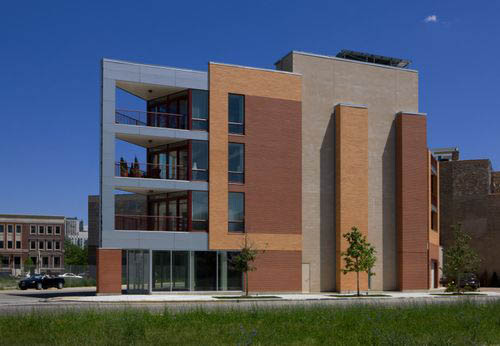
    Green building is an environmentally responsible process that efficiently uses resources and lean production in order to minimize carbon emissions and damage towards the environment. This is a socially responsible practice that takes the effects of building into consideration. The common objective is that green buildings are designed to reduce the overall impact of the built environment on human health and the natural environment by; efficiently using energy, water, and other resources, protecting occupant health and improving employee productivity and reducing waste, pollution and environmental degradation. Green building does not specifically address the issue of the retrofitting existing homes.

    Building’s life-cycle:

    The building life-cycle ranges from design, construction, operation, maintenance, renovation, to demolition. This practice expands and complements the classical building design concerns of economy, utility, durability, and comfort.

    Natural building:

    This is a similar concept which is usually on a smaller scale and tends to focus on the use of natural materials that are available locally. Green architecture and sustainable design are other related topics. Sustainability may be defined as meeting the needs of present generations without compromising the ability of future generations to meet their needs.

    Green Building at CAC:

    The new elementary building at the Cairo American College (CAC) in Egypt was designed while meeting the standards of triple bottom line sustainability, “An expanded spectrum of values and criteria for measuring organizational success: economic, environmental and social.” The school also uses appropriate technology and focuses on sustainable development. This is shown through sustainable building.

    Objectives for sustainable buildings:

    • resource efficiency
    • energy efficiency
    • pollution prevention (including indoor air quality and noise abatement)
    • harmonization with the environment (including environmental assessment)
    • Integrated and systemic approaches (including environmental management systems).

    Video on sustainable buildings:

    watch?v=nAMrtHC2Ev0&feature=player_embedded

    Sources:

    http://www.getloans.com/blog/wp-content/uploads/2010/05/sustainable-building-design.jpg

    http://www.youtube.com/watch?v=nAMrtHC2Ev0&feature=player_embedded

    http://www.ruthtrumpold.id.au/designtech/pmwiki.php

    http://en.wikipedia.org/wiki/Green_building

  • Wake-up Light

    Wake up light

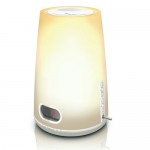
    Philips brought out the wake up light around 2008. This light is a new form of alarm clock.

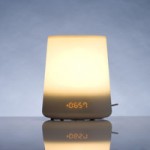
    The light will simulate a sunrise and give the person a pleasant way of waking up, this is because of a natural reaction the user will have towards the sun rise. Nature’s alarm clock is the sun rise and in the past (before technology) people would rely solely on the sun, they go to bed once the sun sets and wake up when it rises. This lamp uses this natural reaction to wake you up very pleasantly.

    The theory behind it is that when the sun rises your body slowly prepares you to wake up by creating fewer hormones which make you sleep (adenosine and melatonin) and will be breaking down the melatonin and adenosine to wake you up again.

    The product was tested in different parts of the world especially where it is dark such as Norway during the winter. After about 6 weeks 98% of the citizens who tested the product wanted to continue. Links 4 and 5 show the results of 60 days as well as after two, four and six weeks.

    The price can range from 109€ to 129€ this is a lot of money but I believe it will make a large difference when used. There are also models where there is an iPod/ iPhone charger dock attached to the light to play your music while using the light.

    1 http://sleep.health.am/sleep/more/what-makes-you-sleep/

    2 http://blog.onlineclock.net/wake-yourself-up-with-light/

    3 http://www.wakeup.philips.com/#/gb_en/the-town/aurora_borealis

    4 http://www.wakeup.philips.com/#/gb_en/the-results

    5 http://www.wakeup.philips.com/#/gb_en/the-people

  • PVC

    The thermosetting resins include phenolic resin and melamine resin, which are thermally hardened and never become soft again. Thermoplastic resins include PVC, polyethylene (PE), polystyrene (PS) and polypropylene (PP), which can be re-softened by heating.

    Usually, thermoplastics are supplied in the form of pelletised material (compounds) with additives (antioxidants, etc.) already blended in it. However, PVC resin is often supplied in powder form and long term storage is possible since the material is resistant to oxidation and degradation. Various additives and pigments are added to PVC during the processing stage, and the blend is then converted into PVC products.
    PVC is sometimes known as ‘Vinyl’ in Europe and predominantly so in North America. In Europe, ‘Vinyl’ usually refers to certain specific flexible applications, such as flooring, decorative sheets and artificial leather.

    PVC_pellets_(Ineos)WEB

    PVC is a thermoplastic made of 57% chlorine (derived from industrial grade salt) and 43% carbon (derived predominantly from oil / gas via ethylene). It is less dependent than other polymers on crude oil or natural gas, which are nonrenewable, and hence can be regarded as a natural resource saving plastic, in contrast to plastics such as PE, PP, PET and PS, which are totally dependent on oil or gas. This chlorine gives to PVC excellent fire resistance: when PVC is set on fire, the flames go out as the fire source is removed due to the material’s self-extinguishing properties.

    PVC is one of the most used plastic materials in the world. At global level, demand for PVC exceeds 35 million tonnes per annum and it is in constant growth (+5% on global average), with higher growth rates in the developing countries.

    It is the most widely used polymer in building and construction applications and over 60 per cent of Western Europe’s annual PVC production is used in this sector.

    PVC is a more economic material
    PVC products make life safer, more comfortable and more pleasurable. And, because PVC has an excellent ratio of economic cost to performance, it allows people of all income levels access to these important benefits. The diversity of PVC applications challenges the imagination. In everyday life, they are all around us, from construction profiles to medical devices, from roofing membranes to credit cards, from children’s toys to pipes for water and gas. Few other materials are as versatile or able to fulfil such demanding specifications. In this way, PVC facilitates creativity and innovation, making new possibilities.

    PVC underpins safety
    Wire and cables sheathed with PVC prevent potentially fatal electrical accidents. In hospitals around the world PVC medical tubing – which does not break or kink – delivers fluids and medicines to the sick. Car components which use very strong PVC can reduce the risk of any injuries being caused in case of an accident. Most PVC products are long lasting – up to and over 60 years. These applications are reliable throughout their service lives and cut down vastly on maintenance or repair. Modern cars, for example, last many years longer simply because PVC protects the underside from water and corrosion.

    PVC enhances our lives
    Functional performance is by no means the whole story. PVC has a distinguished role in beauty and aesthetics. In fashion, furniture and all types of indoor and outdoor accessories, PVC opens up functional and design opportunities that are both visually striking and fundamentally practical. In short, people everywhere benefit from this material. Sometimes invisible but always reliable, PVC products make the difference when it counts.

    References:

    http://www.pvc.org/

  • Solar Powered Clothing

    Solar power is already becoming a mainstream source of energy all over the western hemisphere. At this point however it is used almost exclusively by large corporations which can afford to set up hundreds of cubic meters of solar panels. Most people are still in doubt about whether switching to solar panels for their houses is worth it or not, since it costs quite a lot.

    What about smaller scale uses of solar panels? One smaller scale use of solar panels has already been designed – in clothing.

    The idea is that clothes would be specially outfitted with solar panels, and electronic devices could be charged by just plugging them in to the solar panel’s battery (which is in one of the pockets of the clothing) and walking around in the sun for a while. This would save money by making people use electricity less at home, as well as maybe eventually making batteries obsolete.

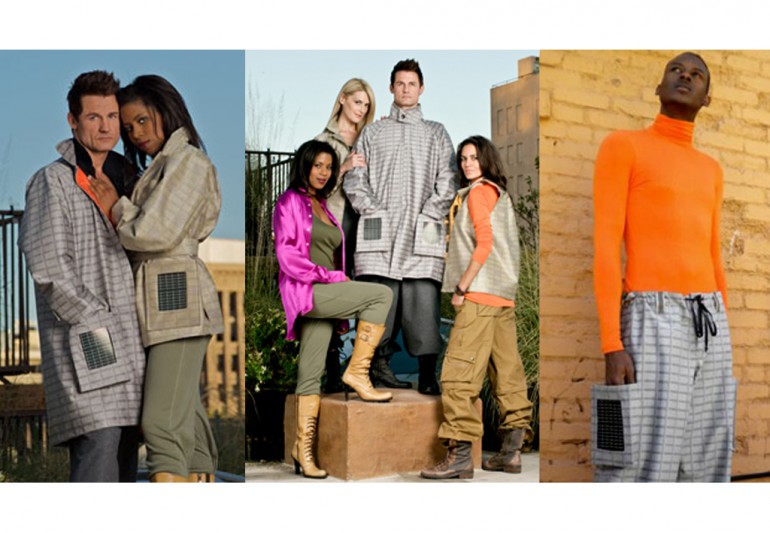
    Silvr Lining has developed a range of clothing items that feature pockets to house solar panels to charge up mobile electronic devices, the theme in their new GO Collection.

    The GO Collection includes a hip-length, Bush-style Director’s Jacket, hooded Utility Vest, 3/4 length Myer’s Topper overcoat and Urban Cargo Pant, letting you have solar powered energy in every possible garment you wear.

    All garments are made from Ultrasuede, a 100 percent polyester fabric that feels like natural suede but is resistant to stains and discoloration, is easy to wash and dry, and is animal-friendly. The clothes (as of now) come in two colors; olive green, or stone gray.

    All articles of clothing in the range feature specially designed pockets to house the independently functioning solar power supply panels, which measure 6 x 8 inches (15 x 20 cm) and output power that is tailored for automatic charging of mobile electronic devices. The chargers can of course be removed from the clothing, and support USB 2.0.

    All the pieces of the GO Collection include two solar panels, while additional units can be purchased separately for the Director’s Jacket, which can accommodate up to four panels.

    Even so – the solar panel jacket isn’t cheap compared to most clothing. The price ranges from US$920 for the Urban Cargo Pant up to $1,260 for the Myer’s Topper. Additional solar panels cost $175 each.

    Of course the GO collection isn’t the only solar powered clothing collection in the market, it reveals the concept of hoe they work however.
    In terms of strength, most clothing solar panels will convert about 5 percent of the light that hits them into electricity, whereas typically solar panels with silicon cells are 16 percent to 20 percent efficient. The actual amount of energy created differs between item.
    The clothes can also be heated up by the solar panels, so people can be warm during the winters.
    Developers believe that the clothing will become mainstream in the next 20 years when solar panels have become cheaper themselves.

    Sources:

    http://news.bbc.co.uk/2/hi/science/nature/2000633.stm

    http://news.cnet.com/8301-11128_3-9891134-54.html

    http://blog.cleantechies.com/2008/10/23/solar-powered-clothing/

    http://www.gizmag.com/go-collection-of-solar-charging-clothing/17323/picture/126538/

  • Brink: Dawn of SMART

    Ever played a war game were you had a small fence or a fallen tree in front of your character, and wondered why your character couldn’t just climb it or just jump over the tree  to get faster to the enemy or skip a long walk. Well, Splash Damage is developing a game, which will be released in 2011, were obstacles are not a problem anymore to you.

    Brink is not just any other first person shooter (FPS), but it’s a game that is going to change the way we know shooting games. The developers of Splash Damage designed a game where you are allowed to move freely through the map, thanks to their program SMART (“Smooth Movement Across Random Terrain”). It allows players to maneuver around complex environments without equally complex input by analyzing their position and judging what they are trying to do. The movement style is that of parkour, similar to that as seen in the Mirror’s Edge and Assassin’s Creed games.

    A little background on the game:

    In Brink, two sides, “Resistance” and “Security”, fight in the previously utopian city known as The Ark, a floating city surrounded by the waters of a flooded Earth. The Ark was designed as a prototype of a perfect city, with renewable resources and no pollution, large enough to support 5,000 residents. However, due to many refugees entering the city from other parts of the world, its population has grown to 50,000, meaning there are not enough resources to go around – resulting in the city being on the brink (hence the name of the game) of a civil war.

    Conclusion:

    In my opinion I think this game will make it far, no other shooting game has tried to approach the genre the way Brink does. I really enjoy playing video games; it’s one of my favorite things to do. And what I have noticed is that control and movement is a very important aspect of a game, because if you don’t have a smooth movement and is hard to control you character, well, you could get killed in the game and have to redo whatever you did before, something that for some people it is really frustrating. It can also make the game so hard that you will get bored of playing it and probably never finish it. So Brink will surely keep you busy for a bunch of hours in front of the TV, and I don’t think anyone will get bored of it, it has a very interesting story line, and it will have a very interesting multiplayer experience. This game is surely an innovation to the shooting genre as we know it.

    Sources:

    http://en.wikipedia.org/wiki/Brink_(video_game)

    http://brinkthegame.com/ark/island/

    http://bethblog.com/index.php/2010/03/04/brink-developer-diary-3-ed-stern/

    http://www.splashdamage.com/brink#/screens_brink/025_tb.jpg