The Design Technology Blog

Author: laura.brash

  • Today’s Plastic Bags = Tomorrow’s Carbon Fiber

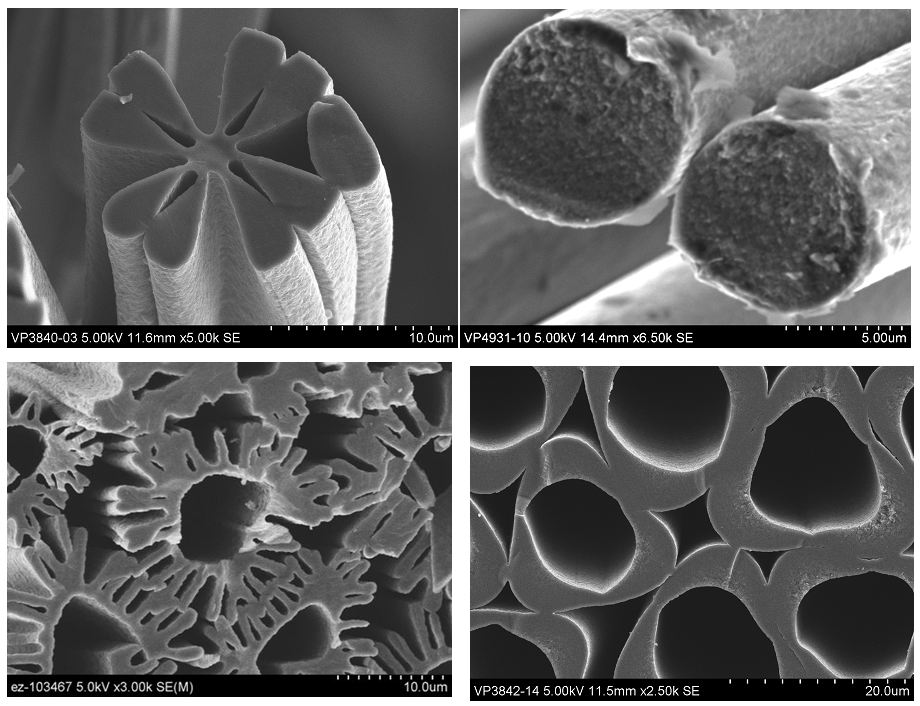
    At the U.S. Department of Energy’s Oak Ridge National Laboratory, research is underway to recycle our unwanted plastic bags and convert them into carbon fiber. Not only that, but the properties of the fibers themselves could be fine-tuned, allowing different types of carbon fiber to be created for specific applications.

    The main scientist on the project, Amit Naskar, began with polyethylene-base fibers which could conceivably come from waste plastic sources, such as shopping bags and carpet backing scraps. Using a “a multi-component melt extrusion-based fiber spinning method,” the surface contours of these fibers can be customized, and their diameter can be manipulated with submicron precision.

    Bundles of these fibers are dipped into a proprietary acid chemical bath. A process known as sulfonation causes the plastic molecules to bond with one another, transforming each bundle of fibers into one joined black fiber.

    When exposed to very high temperatures, these fibers won’t melt but instead, the heat will cause their chemical components to turn to a gaseous state. After the gass has been released, a fiber composed of most carbon is all that remains.

    Due to its tunable porosity, many uses are envisioned for the plastic-derived carbon fiber. Scientist hope the material will be of use to the production of applications such as filtration or energy harvesting, but more importantly it is hoped to be used in the American auto industry, to make tough yet lightweight, inexpensive car parts.

    The process holds great economic value as common material, such as polyethylene used in plastic bags, could be turned into something far more valuable.


    “Our results represent what we believe will one day provide industry with a flexible technique for producing technologically innovative fibers in myriad configurations such as fiber bundle or non-woven mat assemblies
    ” – Amit Naskar
    http://www.gizmag.com/carbon-fiber-polyethylene/21985/
    http://www.democraticunderground.com/112710593

  • The Future of Food

    As a result of the Industrial Revolution, urbanization became a trend and people relied on others growing their food. It was then directly purchased from the farmers or indirectly purchased through manufacturers. Since then food has continued to develop and food production has advanced due to factories and machines speeding up the processing of raw materials. More people moved to the city where farming was scarce and therefore had to rely on farmers for their food. Since then food has been genetically modified in order to preserve it and guarantee the quality of the product. It has gotten to the point where we no longer truly know what we are eating and where the food came from. So what does the future of food look like? In 2004. A film entitled ‘The Future of Food’ was released to highlight the gravity of the situation at hand and investigate the food that ends up in our shops. The film has been used as a key tool in the American and international anti-GMO movement. Genetically modifying the food we eat has always been controversial and remains so today, as many of the large agricultural corporations use the technology of it to lead us to believe they are the answer to the world food crisis. The film exposes the cost of a globalised food industry on human lives around the world, and highlights how international companies are gradually driving farmers off the land and into poverty and famine in many countries. It discusses the rising issue of a global dependence on a limited number of global food corporations which is would be an ecological disaster. This would happen as a result of the loss of biological diversity due to corporate monoculture farming. As the world’s population continues to grow we begin to realise just how finite the resources we have are. At this rate we will not be able to sustain the upcoming rise in population. After World War II, the ‘Green Revolution’ averted worldwide famine. Half a century on, the world needs to be thinking deeper about the situation but we are not. Instead we rely on science to sustain the increase in population, which is impossible without compromising the integrity of the landscape we live in. Agriculture in the future must be environmentally sensitive and above all, sustainable.

    The Future of Food trailer: http://www.youtube.com/watch?v=n9Y_QH_c70s&feature=player_embedded

    http://www.nature.com/nature/food/

  • Water Bobble

    Australian designer, Karim Rashid, has created a revolutionary product that is not only environmentally friendly but extremely convenient.

    “We all love bottled water.In fact, we are obsessed by the convenience of it, but unfortunately, this doesn’t lead to a sustainable future.”

    He has successfully reinvented the water bottle developing the bobble, which takes tap water and filters it into clean water as you drink.

    Research shows, Australians alone spend $544 Million every year on disposable and portable water bottles. Each year, nearly 300,000 barrels of oil are used to make plastic water bottles, most of which are thrown away. Littering our pavements and ending up in landfills.

    Rashid set out to satisfy his desire for fresh, clean, portable water while minimising the considerable costs bottled water imposes on our environment and ourselves. He then invented a recyclable and resilient water bottle which holds low cost and is aesthetically pleasing. The bottle is not only sustainable but also made from recycled plastic, ensuring every aspect of its creation and existence is environmentally friendly.

    Disadvanage: Filter has to be replaced every 2 months or 150 litres.

    http://www.waterbobble.com.au/our-story.html

  • Factor 10 House, Chicago

    Factor 10 House Chicago

    The Factor 10 House, designed in 2003, gets its name from its philosophy. The designer, Marc L’Italien, claims that the structure consumes one-tenth of the environmental resources. In other words, it minimises the ecological footprint by a “factor of 10.”

    The designer had the following initial goals in mind:
    – The occupant’s health
    – Efficiency of the energy
    – Efficiency of the resources
    – Environmental responsibility
    – Affordability

    Primary four features include:

    – Size reduction
    – Improved efficiency
    – Extended life span
    – Impact reduction
    Using these four strategies, the F10 house is a long awaited solution to the issue of buildings. They consume 42% of all energy, 30% of all raw materials and create 40% of all air pollution. Factor 10 house not only reduces the environmental impact but also decrease living expenses.

    F10 House demonstrates to the general public that sustainable design doesn’t have to look any different than traditional housing. It also motivates surrounding neighbourhood citizens to make improvements to their own homes.
    (more…)

  • Glass

    Laminated  glass is a safe type of glass that manages to hold together when shattered. The material shatters but does not break due to the interlayer, typically PVB, between the sheets of glass. Laminated glass is what is used to make bullet proof glass. When shot at, the layer of PVB in between the sheets of glass holds them together.

    Toughened glass or tempered glass is useful when strength, thermal resistance and safetyare factors to consider. In the event of breaking, this material shatters into hundreds of fragments that are not particularly sharp. Toughened glass is physically and thermally stronger than regular glass. To create this strong glass the internal stresses are balanced.

    Combined Use

    Much thought has gone into the creation of car windows, no one every stops to think what type of glass is used in each one. The windshield of a car is made out of laminated glass for many reasons. Primarily it is made this way to limit breakage. When a stone flicks up at the window, due to the toughness of the material, it cracks instead of shattering. The side windows of a car are made out of toughened glass but it is not a tough material, if an object were to hit them they would shatter into tiny pieces. A sound knowledge of the specific characteristics of each glass could help you in real life situations. If you were to drive your car into a frozen lake and happened to have a hammer in the car, you could break your way out and swim to safety by shattering the side windows. If you were to hit the windshield it would only crack and due to the pressure from the outside pushing in you would not be able to escape.

    References

    Pictures:

    http://ecosmartwindshieldrepair.com/images/laminated_20glass_1__zlnf.jpg

    http://www.upvcwindowsthailand.com/images/toughened_zone_tempered_glass.jpg

    http://2.bp.blogspot.com/_m3_tnoFJG_k/TROy8q5yh0I/AAAAAAAABKE/ZGnd3JThzIc/s1600/DSC_0020.JPG