The Design Technology Blog

Author: Basil_Zibdawi

  • Silicon Nanowires – New Age Efficiency

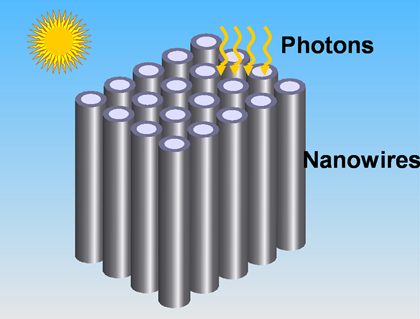
    Currently, millions of tons of fossils fuels are combusted to produce energy through converting thermal energy to electric energy or kinetic energy in an inefficient way. Fossil fuel engines run at approximately 40% efficiency, with the other 60% being lost to the environment. A recent discovery has been made by scientists at Stanford University in the application of silicon nanowires as producers of electricity. A current property of thermoelectric materials is the conduction of electricity when one end of the material is warmer than the opposite end, generating electricity. However, in most cases producing such a material is either very expensive or requires considerable costs to keep one end warmer than the other as since many materials that conduct electricity well also conduct heat well and so near equal temperature is established at both sides. The break through to this dilemma comes with the development of silicon nanowires. These tiny wires have the intriguing property of electrical conductivity but highly reduced thermal conductivity, allowing for significantly increased efficiency in thermoelectric applications. The idea is that the energy lost to the environment primarily to heat escaping, can be converted into electrical energy, increasing the efficiency of fossil fuel usage.
     http://spie.org/Images/Graphics/Newsroom/Imported/1087/1087_fig1.jpg


    The applications for this discovery are far reaching, as it affects nearly all electronic products, any engine using fuel to evolve thermal energy, and even the efficiency of batteries. A further benefit of the application of this technology comes with the fact that the silicon industry is already well established and so integration of procedures to produce silicon on the nano scale for wiring can be done faster and in a more feasible fashion. In addition, silicon is not considered a rare material, like platinum or gold, but actually exists in a vast quantity in Earth’s crust.


    Source: http://www.stsm.ir/resources/10302-16101387085210silicon%20nanowire%20thermoelectrics.pdf

  • Aeration of Whipped Cream

    Authentic whipped cream is a classic and popular colloid used in various drinks and deserts worldwide. It is a prime example of a processing technique known as aeration. Real whipped cream, as opposed to bottled & pressurized whipped cream, actually involves whipping, or placing air in between molecules of cream by folding or mixing.

    Authentic whipped cream starts out with heavy whipping cream (at least 30%) and possibly a sweetener such as sugar and a flavoring agent such as vanilla. All ingredients and the materials used to mix and contain the cream are chilled, but not frozen. Then the cream is whisked and sugar and flavoring are added in slowly. While whisking, air bubbles can be seen forming on the top of the cream, this same occurrence is happening in the cream, but is not directly seen. Instead of the bubbles going to the surface and leaving the cream, they remain dissolved into the cream forming a colloid. As more and more air molecules are put into the cream, the volume of the cream increases dramatically. However, with time the trapped air will leave the whipped cream and become a liquid again. The process of air leaving is accelerated with an increase of temperature.

    Cream that has been whipped gains new organoleptic properties that act to give whipped cream its pleasant fluffy and light texture. Interestingly, cream by itself has a thick and heavy taste that generally is not found appealing by itself. The added benefit of using homemade whipped cream is that it can be flavored and mixed to the consistency and taste of the maker. While using bottled whipped creams generally involves a neutral gas and other chemicals, as well as hydrogenated oils and fats, homemade whipped cream involves using pure ingredients.

    Popularly enjoyed whipped cream

    Bottle Whipped Cream                                                                         Authentic Whipped Cream

    How to make whipped cream video:  http://www.youtube.com/watch?v=f2fFcjwvTWs

  • Quality vs Quantity

    In designing a product for large scale manufacturing, a designer must make certain choices that affect the rate of production. Different production techniques take varying amounts of time to complete, however, at the same time the results produced may also vary. The decisions made have to reflect constraints affecting the situation including the amount of available materials, time of demand, production time, and quality of the end product. In a famous example from World War Two, the German army produced high quality tanks that could go longer and were armored better than any other tank on the battle field. However, these high quality tanks were produced slowly relative to Russian tank production. Factories in Russia produced lower quality tanks that were known to regularly breakdown or hurt occupants in large numbers. Although German tanks were superior, they were greatly outnumbered by Russian tanks and resulted in a German defeat on the eastern frontier.

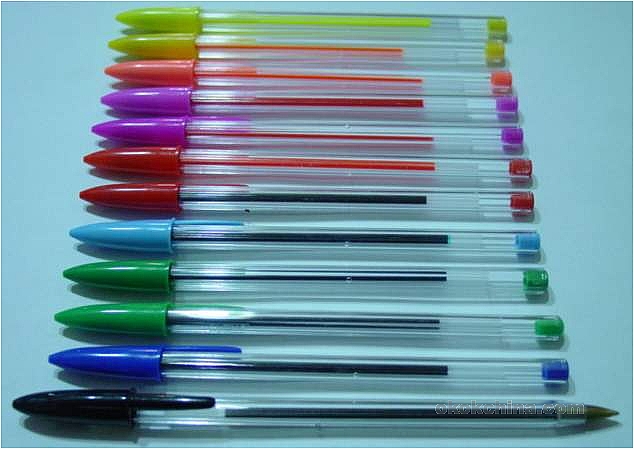
    Similarly, the market for pens can be examined in disposable pens versus refillable ink pens. Demand on the market exists for pens that are to be used in everyday settings. A large number of people require some sort of reliable writing implement to be used for some reason or another, thus creating a demand for writing implements. A pen designer then has to make a choice; make lower quality pens on a large scale quickly to supply the demand or make higher quality pens slowly. The situation that reflects the target market must be taken into account when making a design and making possible alteration for manufacturing. The higher quality pens may yield a greater profit per pen but the lower stock results in fewer pens to sell, while a vast amount of lower quality pens can be sold for a greater net profit.

    Yet, not all situations favor vast numbers of low quality products. Such an example is with super computers. Some programs, software, or calculations require processing power greater than the regular desktop can provide. In this case a high quality, but few in number, super computer is required to run the calculation.

  • High Quality German Tank (Tiger II)
  • T-34 (Russian Low Quality Tank)
    Cheap, Disposable Pens (Large Stock)

    Sources:

    <http://www.britannica.com/EBchecked/topic/1057539/panzer>

    http://www.okokchina.com/Files/upp

    ic19/Disposable%20Ball%20Pen%20A110001B%20%2812%20colors_%20fluorescent%29295.jpg

    http://www.fas.org/man/dod-101/sys/land/row/t-34-DNST8601537_JPG.jpg

    http://www.ruthtrumpold.id.au/designtech/pmwiki.php

    http://answers.yahoo.com/question/index?qid=20110426155002AA8m3gj

  • Cellular Phone Impact On Humans

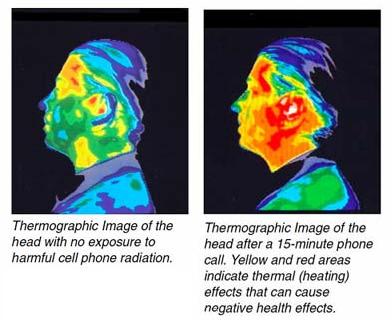
    Cellular phones or mobile phones are used today for long periods of time, often with people unaware of the degree and impact mobile phone radiation has. Reports from various sources achieve different conclusions about damage to human health; some stating that no conclusive evidence is available while others establish a direct correlation between brain tumors and health conditions to extended exposure to mobile phone radiation. However, these are the facts about cellular phone radiation.

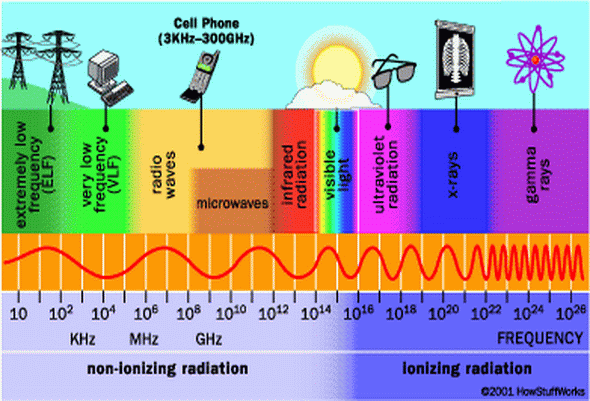
    Cellular phones use radiowaves, wavelengths on the longer end of the electromagnetic spectrum, in the band of about 800 to 900 MHz (megahertz, [frequency]). Unfortunately, the human body is known to absorb the output radiation produced by cell phones in a measurement known as the  Specific Absorption Rate (SAR). The SAR measures the amount of energy absorbed by the body from handset radiation. The energy absorbed by the body decreases  with increases in distance as radiation is dissipated into the environment. The United States government regulates the maximum legal SAR for a handset to be 1.6 watts per kilogram. In the European Union, the maximum SAR is 2.0 watts per kilogram. The Unites States government measurement of SAR involves only testing the absorption of energy from talking on the phone and does not compensate the SAR for other radios waves from such sources as wifi, bluetooth, etc. These add to increased energy output in from the radiowaves. In addition, smart phones in particular produce increased amounts of radiation due to their internal components.

    Data exists that directly proves that exposure to radiation causes harm to cells, especially over long periods of time, in greater doses. Mutations, cancer, and even brain tumors have been a result of exposure to radiation with a more adverse or a quicker effect occurring at greater amounts of exposure.

    It is important to remember that modern day phones generally produce less radiation than those of the late 1980s and that steps are being taken to attempt to lessen hazards associated with cellular communication.

    Sources:

    http://reviews.cnet.com/cell-phone-radiation-levels/

    <http://www.britannica.com/EBchecked/topic/101609/cell-phone>

    http://electronics.howstuffworks.com/cell-phone1.htm

    http://transition.fcc.gov/cgb/sar/

    http://en.kllproject.lv/wp-content/uploads/2009/02/cell-phone-radiation-spectru.gif

  • Processing

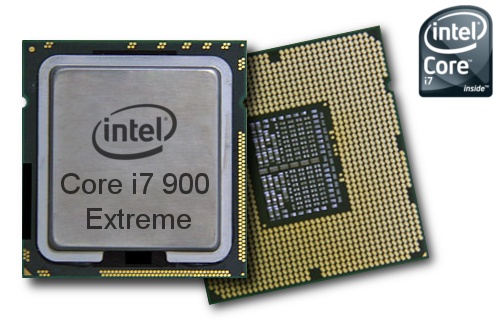
    CPUs or central processing units play a large role in the speed at which computers deal with information and give meaningful output. Today, the fastest running processor on the market is the Intel Core I7 Extreme Edition at 3.47 GHz. Giga Hertz (GHz) are used to measure the performance of a computer in terms of cycles per second. By comparison with past processors such the 486DX/2 66, the fastest desktop processor on the market in the late 1980s which ran at 33 MHz, and the fastest super computer of the late 1980s the Cray Y-MP C90, a modern day low end laptop out performs both at only a fraction of the price. Innovation allows the processing speed of computers to continue increasing while at the same time making faster processors cheaper. Every few years, a new high end processor hits the market that has a higher cycle rate than previous models.

    An interesting development in processors is the rate at which improvements are made. Computers are becoming faster at an increasing rate. The time between each improvement in computer speed is becoming increasingly less. Following data patterns from the 1980s, the difference in processing speed of a top quality desktop to a top quality super computer was about 1:30. Although now the difference is greater, using those trends it is  possible to predict that in 20 years desktop computers will also perform better than today’s fastest supercomputers made by IBM.

    Fastest Processor 2011 on the Market

    Fastest Super COmputer of the late 1980s

    Source:

    http://www.techrepublic.com/blog/classic-tech/the-80s-supercomputer-thats-sitting-in-your-lap/189

    “central processing unit (CPU).” Encyclopædia Britannica. Encyclopædia Britannica Online. Encyclopædia Britannica, 2011. Web. 30 May. 2011. <http://www.britannica.com/EBchecked/topic/102611/central-processing-unit>.

    http://www.inetdaemon.com/tutorials/computers/hardware/cpu/

    http://www.howstuffworks.com/microprocessor.htm

  • Materials Blog- Super Conductors

    Super Conductors

    Have you ever been annoyed by the speed of your internet connection or the processing power of your computer? Did you ever consider what could be done to improve the quality of both? Well, a possibility lies in the development of superconductors.

    The definition of a super conductor comes from the term “superconductivity” which relates to the electrical resistance a material exhibits. In a superconductor, or a material with superconductivity, this resistance is zero ohms or very near zero.  Generally, this involves the cooling of a material to ultra low temperatures, such as below 20°K (-253°C). The cooling temperature varies between materials and is known as the transition temperature.

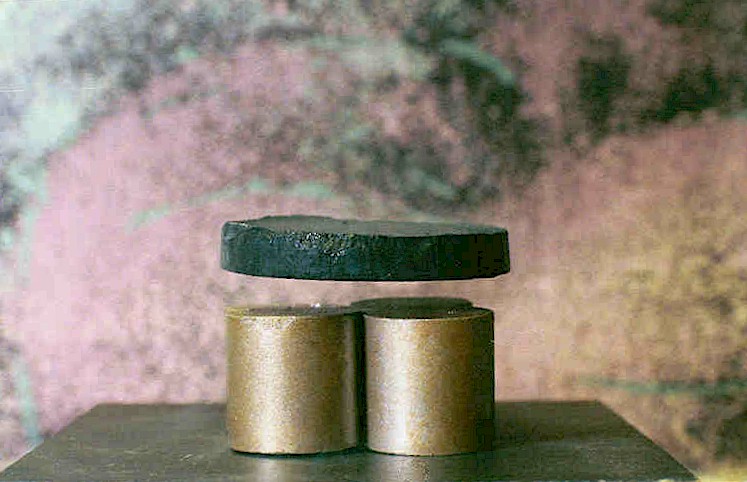
    The extremely low electrical resistance of super conductors allow for several unusual, yet useful, properties unique to or exemplified by the super conductor. Among these are the Meissner effect, or the property of materials, when cooled to become super conductors, to gain influence on a magnetic field and repel the field, the flux trapping effect, or the establishment of attraction between a powerful magnet and a super conductor, and the resulting magnetic levitation/suspension effect. The simultaneous attraction and repulsion of a super conductor and a magnet allow for the magnet and super conductor to maintain a fixed distance away from each other in a very stable manner. In other words, the magnet, or in turn the superconductor, can float above the other while staying in place with very little friction. This is especially useful in the development of transportation; minimal friction levitation allows trains, or other  modes of transportation, to move at maximum speeds in a noiseless manner. See the video below for more information. Other useful applications of the properties of super conductors include extremely efficient electrical wiring. Super conductors quickly and without resistance transport electricity, even if carrying only a minimal voltage. This allows for very sensitive equipment to be manufactured which can measure the most minute of electrical or magnetic discharges, changes, or disruption. Such machines are needed in the field of medicine for uses including brain examination and magnetic imaging. Super conductors, therefore, are useful in the manufacturing of more efficient and powerful motors, transformers, computer parts, and generators. A further suggested use is in a new energy storage medium: the magnetic energy-storage.

    How Superconducting Levitation Works

    The first documented research of super conductors came with the experiments done by in 1911 by the Dutch physicist Keike Kamerlingh Onnes with mercury wires. He discovered that mercury loses its electrical resistivity at below (4°K). Ensuing research made by scientists led to the development of higher and higher temperature super conductors. Super conductors were developed that consisted of multiple elements or were even metallic. The majority of super conductors in existence today are either alloys or ceramics. The highest temperature super conductors are actually ceramics with Hg2Ba2Ca2Cu3O8 at just above 130 degrees Kelvin. Today, multiple universities and companies around the world, work to produce cheaper and higher temperature super conductors. Unfortunately, most superconductors are expensive to produce, utilizing rare elements.

    Sources:

    “superconductivity.” Encyclopædia Britannica. Encyclopædia Britannica Online. Encyclopædia Britannica, 2011. Web. 06 Mar. 2011.

    qwest.net