Many people have heard of Sony’s very successful PlayStation Portable. The product is known to have been the best portable gaming device on the market at the time competing with the Nintendo DS. Although the DS attracted a different market, it’s graphics capabilities did not match that of the PSP at the time of its release. Furthermore, the PSP attracted multiple markets where as the DS did not.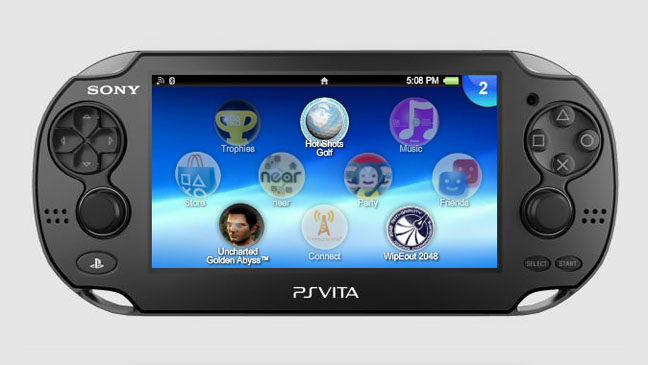
Since then the Sony PSP has developed into the PSP Go, which sadly was not as a great a success. Issues with how the device stored games and the fairly expensive price led people away from the product. However, Sony has tried to push back from their last market failure with the PS Vita. This new portable gaming console competes with the 3DS and is part of the eighth generation of gaming consoles.
The PlayStation Vita comes with a number of new functions. For starters, the console has a new multi-touch screen that provides a new style of game play for the user. This 5″ OLED screen happens to be larger than either the PSP or PSP Go and displays approximately over 16 million different colors.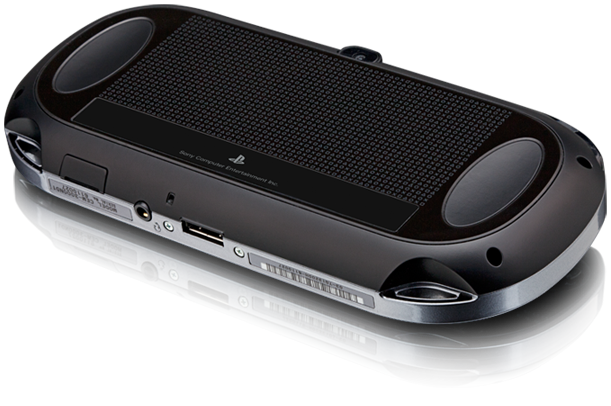
Of course the idea of touch screen gaming is nothing new (courtesy of Apple), but the PS Vita’s usage of “touch” within game play goes further with the incorporation of a rear touch pad on the back of the console. This touch pad provides the same usage as the front touch screen, but instead of having the user block part of the screen withtheir hand while using the touch pad they may now use the touch pad on the back. This can be very important within intense boss fights and other tricky challenges while in game.
The original PSP systems used UMD discs to store games, however these disks could only store 1.8 GB of memory. The PSP Go did not have any form of game storage other than digital files, which had to be downloaded from the PlayStation Network store. This bothered gamers a great deal since they could not play their old PSP games on their new PSP Go. Furthermore, the PSN store only sold so many games. However, with the PS Vita came the use of NVG cards to store games. This proprietary flash card format is similar to the Nintendo 3DS game cards. The cards hold initially 2-4 GB of data, which is substantially bigger than that of the prior UMD disks, with plans for bigger cards for bigger games in the future.
The console also has front and rear view cameras, which are incorporated with player ranking and other gaming uses. Pictures and videos can also be taken with the two cameras. Furthermore, the PS Vita is the first portable gaming console to have Dual analog sticks. This provides the user with the same control capability as when playing a PS3 or PS2 as well as provides room for game developers to further enhance the game play of games for the user. Such improvements are quite noticeable in first person shooters.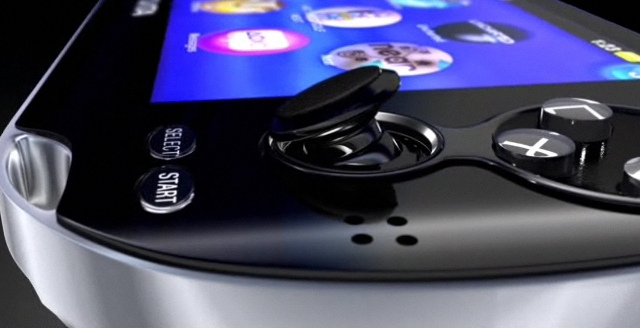
Cross platforming is also available on the PS Vita. This refers to the ability to play games interchangeably between consoles, such as the PS3 and PS Vita in this case. This allows the user to be play one game on their PS3, pause the game on the PS3, and then continue it on the PS Vita. This function also allows PS Vita users and PS3 users to play against each other online, thus increasing the number of users of gaming servers. This makes it easier for people to connect to matches due to the increased number of people online.
Six axis motion sensors have also been added to the PS Vita. Six axis motion sensors are known for their use in PS3 controllers. They provide the user with the ability to tilt the console in order to control the game play. This feature is also common in products such as the iPod Touch, but is new to strict portable gaming consoles such as those made by Sony and Nintendo.
The PS Vita’s starting price is at $249, but there is a second model for $300. This is the PS Vita 3G/Wi-Fi system and is powered by AT&T’s Mobile Broadband Network. On this console, users can receive and post scores and game ranking wherever they are as well as carry on in multiplayer game sessions, and cross game text messaging in parties. A GPS system is also available on the 3G/Wi-Fi models that allows the user to locate and play with friends.
Sony’s new console has raised the bar for portable gaming and although it’s starting price may seem a little high for a portable console (costing about just the same as a PlayStation 3) it is not for bad reasons. The console brings forward the use of new technology and pushes it to its maximum capabilities. Gamers can only wait to see what fantastic games the console will produce.
http://us.playstation.com/psvita/features/#psvita-rear-touch
http://www.techradar.com/reviews/gaming/handheld-consoles/ps-vita-1061138/review


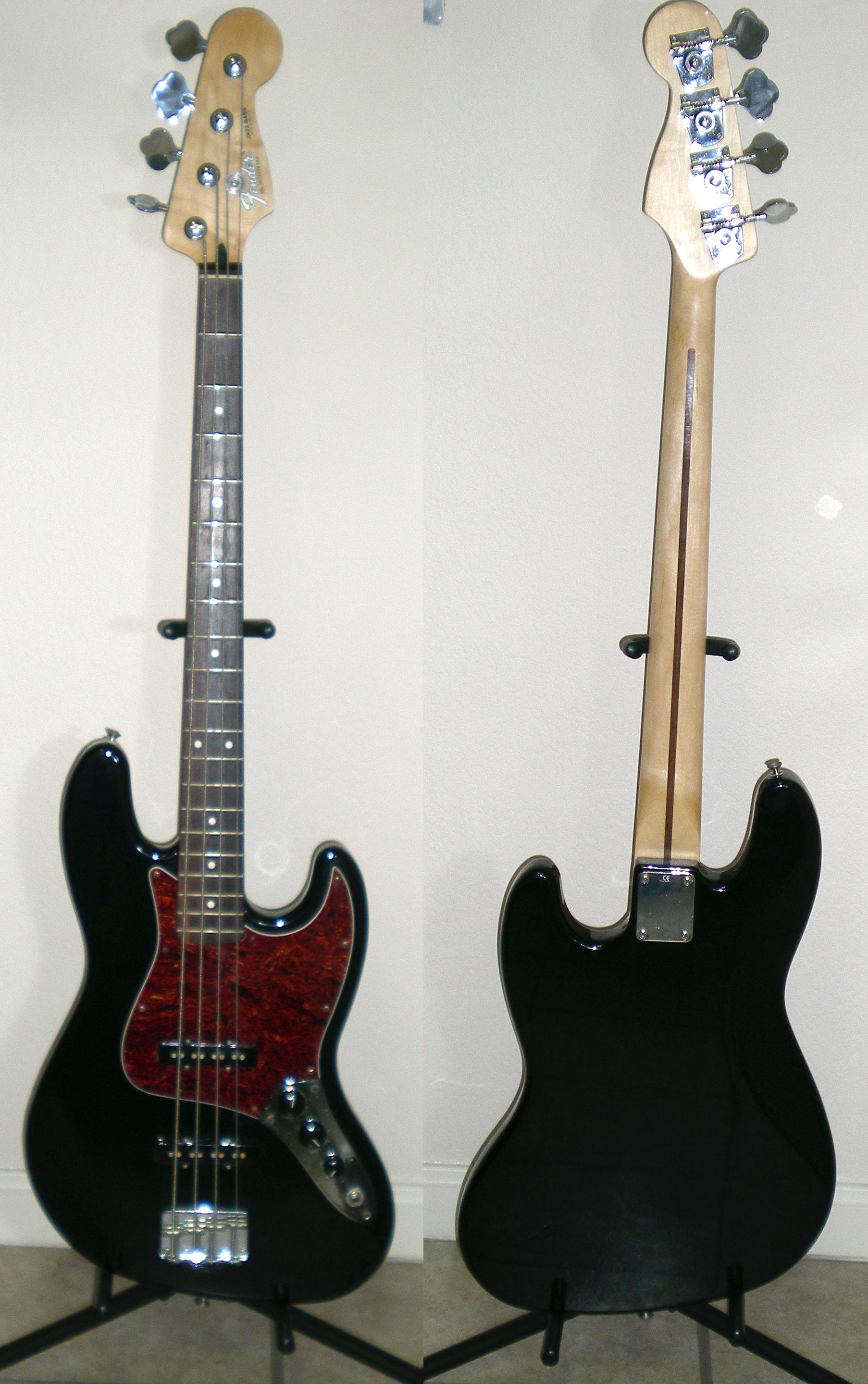
 The body of a bass is usually made out of wood, but other materials including graphite have been used before. Many different types of wood may be used to make the body, neck, and fretboard of a bass. However, the most common type of wood used for the body of a bass is alder. For the neck, maple wood is commonly used and for the fretboard, rosewood is preferred. Mahogany, maple, ash, and poplar are other commonly used woods for the body of the bass. Mahogany for the neck is also used and maple or ebony for the fretboard.
 Strings types include all-metal strings and strings with different coverings. All-metal strings include roundwound, flatwound, halfwound, found wound, and pressure wound. Two examples of different string coverings include tapewound and plastic-coatings. This variety of materials used in strings allows bass players to have a range of tonal options. In the 1950s and early 1960s, the most commonly used string used by bassists was flatwound strings with a smooth surface. These strings had a smooth, damped sound similar to that of a double bass. In the late 1960s and 1970s, roundwound bass strings became popular, but flatwounds continued to stay popular as well. These roundwound strings were similar to those of guitar strings at the time. Comparing the two string types, roundwounds have a brighter timber (quality of a musical note) with greater sustain (amount of time it takes for the sound of the string to become silent) than that of flatwounds.
