The Design Technology Blog

Tag: invention

  • Innovative Work- Earphone Alarm

    Earphone Alarm

    The Earphone Alarm, also known as a Anshinkun-2 is a new Japanese gadget that works as a small timer, worn just like an earphone. It’s very light, so it does not cause discomfort, and small so it’s not unattractive, nor does it get in the way. Its’ portable, and runs on batteries so it does not need to be plugged in or charged. This gadget is very useful for multiple things, such as if you’re on a train for example and fall asleep, the timer will go off to wake you up so you don’t miss your stop. Another bonus about the Anshinkun-2 is because it’s in your ear, it won’t disrupt other people, and only you can hear it. Other situations it would be useful in would be if you need to work for a certain amount of time, just set it to go off when you need to stop. It’s handy when cooking because you can time your food and walk around the house or go out and not miss the alarm on the cooker, for example. Another big selling point about it is its waterproof, so you can use in when showering or skiing. It’s manufactured by the Japanese company Honda Tsushin Kogyo, and sells on the market for 11 dollars.

    Though it is a great product, there are also environmental factors to take into consideration. An example of this would be the manufacturing that takes place, the use of the product and the disposal of the packaging and batteries that it needs to function, which are bad for the environment while being made, and if they are not recycled properly. Also, the actual making of the gadget is not environmentally friendly, because like many, if not all factories, the smoke and chemicals released while the product is being made are bad for the atmosphere. When the earphone alarm is actually made, it then has to be shipped to other various countries which will be selling the product. The shipping not only costs money, but the shipment also has to be disposed of once the product is in its designated area, or should be recycled properly which is no guarantee. Then once it has actually reached the destination in which it will be sold, its packaging has to be taken care of properly, or it’ll just be thrown away and regarded as waste. We also should take into consideration what will happen with the actual product or earphone alarm when the buyer has finished with it. It could be recycled for parts, but will most likely just be thrown away.


    Citations-

    – “i-store guide: 10/23/09.” i-store guide. N.p., n.d. Web. 9 Dec. 2012. <http://i-storeguide.blogspot.com/2009_10_23_archive

    – “Coolest New Inventions from Japan: Earphone Alarm – BusinessWeek.” BusinessWeek Slide Shows and Multimedia. N.p., n.d. Web. 9 Dec. 2012. <http://images.businessweek.com/ss/09/09
     

  • The Telephone

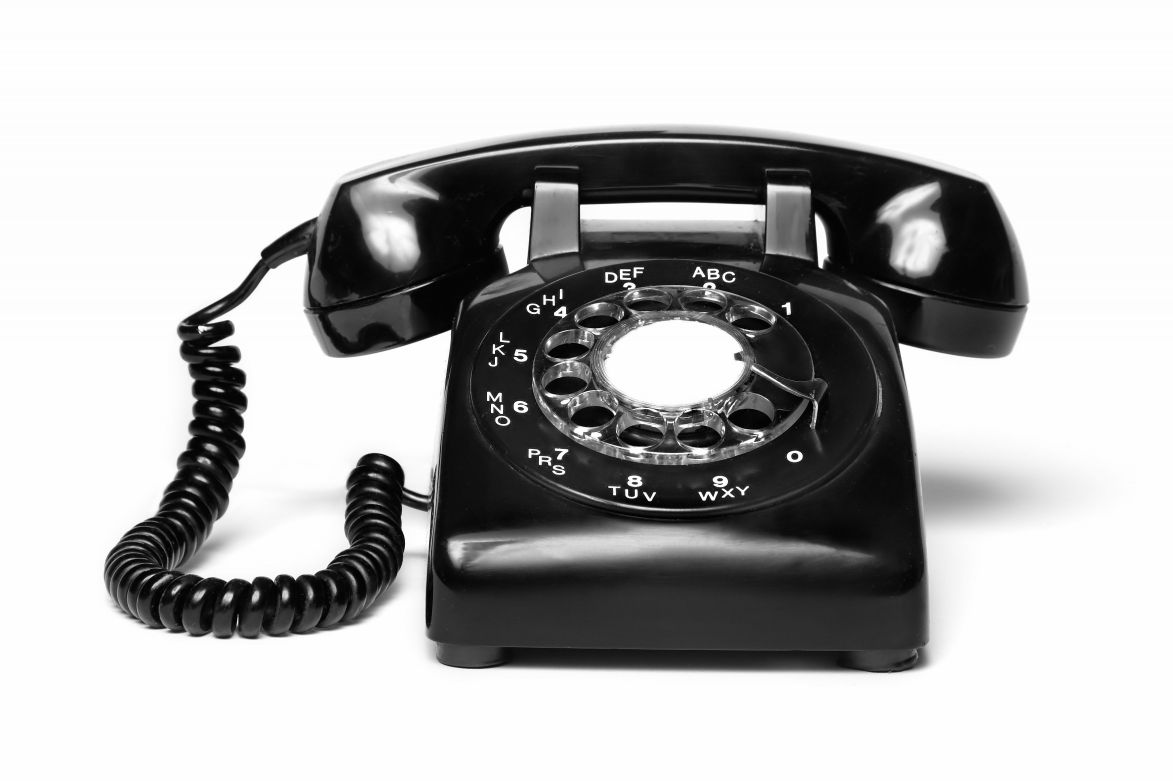
    The Telephone

    Invented in the mid 1870s by Alexander Graham Bell, the telephone revolutionized communication and has brought the world closer together.  Modern telephones have a microphone to speak into, an earphone or speaker that reproduces the voice of the other person, a ringer which makes a sound to alert you when a call is incoming, and a keypad to enter the telephone number of the telephone you are calling. The microphone and earphone are usually built into a handset which is held up to your face to talk. The keypad may be part of the handset or of a base unit to which the handset would be connected. Although originally designed for simple voice communications, most modern telephones have many additional capabilities. They may be able to send and receive text messages, take and display photographs, play music, and surf the Internet. These days’ Smartphone’s also integrate all computing needs.

    Environmental impact of cell phones

    There are 6.7 billion people on this planet and 61 percent have a cell phone subscription, that’s 4.1 billion. The average consumer will use their cell phone for less than a year, during that year it will use 4,221 mega joules of energy, the equivalent of 32 gallons of gas, and emit 112 kilograms of C02. Transferring 1 GB of data over a 3G network will use 939 mega joules of energy, the equivalent of 7.3 gallons of gas, and emit 17kg of C02. An unused but plugged in charger still draws about half a watt. If everyone left their charger plugged in ALLDAY, it would waste enough electricity to power 28,000 homes. 140,000,000 cell phones (4 per second) will end up in landfills this year. Leeching 80,000 lbs of lead into the earth, in that landfill is 4.7 tons of gold worth $56 million and 49 tons of silver worth $8.4 million. For every 515 cell phones recycled, it saves enough energy to power one home for a year. If all these thrown away cell phones were recycled, it would save enough energy to power 272,000 homes. To charge every cell phone in use on earth would require the equivalent of 584,000 gallons of gas and produce 35,000,000 pounds of carbon dioxide, imagine that every day, if we all charged our phones half as often it would be the equivalent of taking a million cars off the road. Although mobile phones only make up a small percentage of the e-waste mountain, manufacturers are aware of the need to address the issue. Leading makers, including Motorola, LG, Sony Ericsson and Philips, have all implemented eco-design aspects into their production lines, including reducing the amount of hazardous substances used in their products. Nokia, the world’s largest mobile phone manufacturer, produces a handset every nine seconds. It has decided to implement requirements set out in the EU Restriction of Hazardous Substances Directive in all 10 of its factories around the globe. The RoHS Directive bans six substances (lead, cadmium, mercury, hexavalent chromium, PBB and PDBE) from products that are either made or sold in the EU.