
The Design Technology Blog

Blog

  • Smart Skis

    smart skis are skis that utilize piezoelectric materials to reduce rough vibrations in the skis. Piezoelectric materials are materials that react to bending or change in structure by emitting a electrical charge. When vibration occurs in the ski the piezoelectric material creates a small electrical current that is sent do a logic circuit that  induces the movement of the material in the opposing direction in relation to the vibrations effectively and quickly cancelling them out.


    This technology cannot help the world in skis alone but with this idea of vibration reduction  vehicles and other products that normally undergo a lot of stress can have that stress reduced possibly allowing for use of slightly weaker but more eco friendly materials.

  • Light Bending Materials

    A soldier sneaks up to an enemy camp, completely unseen. It isn’t the dark, or his oppositions’ bad eye-sight that conceals him, it his is innovative camouflage.

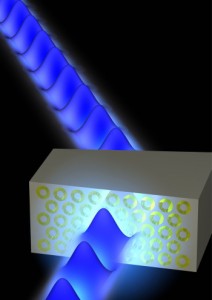
    It has been a dream of sci-fi writers and military leaders alike to be able to have invisible soldiers  to gain that advantage ontheir foes.  Now scientists at the California Institute of Technology have developed a smart material that does just that. The way it works is that as light hits this new material,negative index
    metamaterial (NIM) ,it doesn’t just bounce back as it usually does in materials. Instead light passes through this in adjustable way. While this is not a new idea or a completely new technology, the way they get the light to bend is a little more innovative and effective; as it works specially well in the sun. The new thing that makes this material so much more interesting is the fact that it is tunable in the sense that you can change how drastic the change is.  It also has light harvesting capabilities since it absorbs light at a large variety of angles and it is easy to move around and to make


    Negative Index Metamaterials could have multiple applications however; not just ones for the military. For example, it could be used as an effective cover for cars of things in a yard to avoid ugly covers while making it blend in a little more naturally into your environment. Since what it shows is constantly changing, they could be  used as a dynamic fabric for clothing.  Since it absorbs a lot of solar energy, scientist are also talking about it’s uses in clothing or other places for collecting sunlight as a form of energy.

  • shape memory alloys in Aircrafts

    Shape memory alloys have several uses in today’s world such as being used in eye glasses and the original use of water piping. In today’s world people everywhere use airplanes to travel easily and safely across the world. However flying can be a nuisance as turbulence often annoys and even scares passengers, therefore designers have designed a type of wing which uses shape memory alloys in order to stop the turbulence.


    With its unique combination of  titanium, nickel and copper the wing is able to bend in a way so that it does not snap and is able to keep the plane upright much more then traditional wings.


    However more importantly Shape memory alloys will be used in a variety of different ways that can benefit humanity. There are examples of SMAs used in safety devices which will save lives in the future. Anti-scalding devices and fire-sprinklers utilizing SMAs are already on the market.

    In conclusion SMAs can be used in a variety of useful ways that can surely benefit mankind.

  • Heat Sensitive Colors in Ceramics

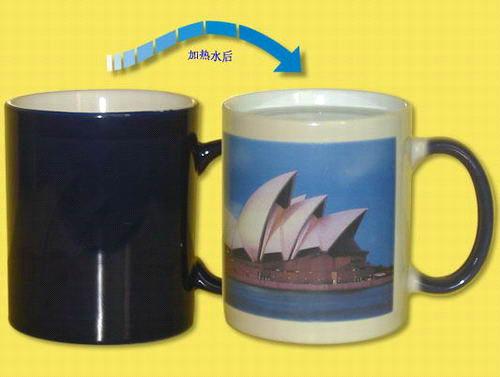
    Thermochromism in ceramics or ceramics that change color with change in temperature can be used in many places. A casual use of this technology is in mug’s made of ceramic. When hot tea or cofee etc. is poured into it the image appears on the surface of the mug. The heat of the liquid causes the thermocromism of the ceramic to take affect.

    As you can see here the handle of the mug hasn’t changed color. This is most likely because it is further away from the hot liquid content of the mug and therefore not affected by it’s heat.

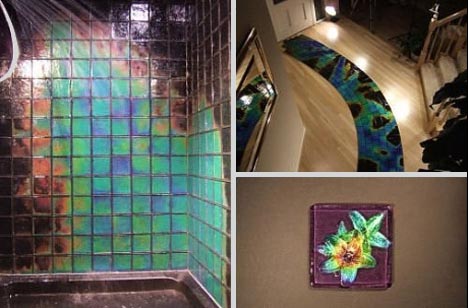
    Another nice application for thermochromic ceramics can be tiles. Tiles can be used for flooring or walls in bathrooms or kitchens. This can be very useful in some cases because you can tell where someone has been if they touch thermocromic tiles along their pathway. This can be applied in high-security buildings. Below are some images of more casual uses; shower tiling, flooring etc.

    image 1 from: http://www.ecvv.com/product/3052896.html

    image 2 from: http://dornob.com/hot-or-cool-color-changing-chameleon-tiles/

    other sources: http://en.wikipedia.org/wiki/Thermochromism

  • Smart Glass

    One of the most fascinating products that has been invented in my opinion is called “Smart Glass”. Smart Glass was created by a New York based research company called Research Frontiers. This invention may appear just like any normal glass, but in reality it isn’t. Smart Glass can regulate the level of incoming light and can control temperature levels for a range of environments.

    Smart-Glass-for-Meeting-Room.jpg

    How does it work?

    Well, in Smart Glass there are microscopic particles that absorb the light to prevent it from passing through the film. When electrical current is added to the film, that allows sunlight to enter the room the glass is protecting. (The higher the current–> the more arranged the particles are–> the more light is allowed through the glass.) When the current is switched off however, the particles begin to scatter and separate which inhibits any light to penetrate. Users or owners can control the transparency of the window.

    A comment by the CEO of Research Frontiers:

    Joseph Harary, CEO of Research Frontiers, sees great potential for SPD-SmartGlass in several areas. “With regard to aesthetics, there are expanded opportunities for building designs that are elegant, sleek, and modern. In addition, having the ability to utilize, when desired, very dark window tinting can reduce air conditioning costs for tenants and building operators.”

    (http://thefutureofthings.com/news/7144/smart-glass-controls-lighting-and-temperature.html)

    How do you control it?

    There are controllers that owners and users can use to adjust the glass to whichever preference they have. There are options of both manual switches and automated methods.

    What are the advantages of owning Smart Glass?

    By owning Smart Glass, you are saving yourself the cost of various products that many people own today including heating or air-conditioning and lighting. An individual could also avoid the cost of installing and maintaining motorized light screens, blinds, and/or curtains.

    Which Smart Glass technologies are included? 

    There are mainly 4: electrochromic devices, suspended particle devices, micro-blinds and finally liquid crystal devices.

    Commercial for Smart Glass:

    Links: 

    http://en.wikipedia.org/wiki/Smart_glass

    http://thefutureofthings.com/news/7144/smart-glass-controls-lighting-and-temperature.html

    http://image.made-in-china.com/2f0j00RBcaUJQtqskf/Smart-Glass-for-Meeting-Room.jpg

  • Bendable Eyeglasses

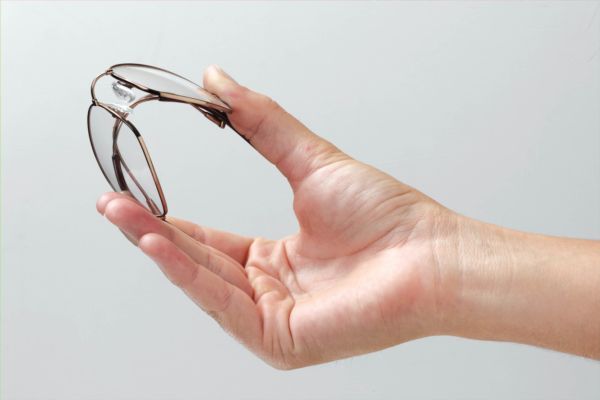
    Marchon Eyewear have developed a range of eyeglass frames featuring a revolutionary new material. The frames are made from a shape memory alloy of titanium under the trademark name, Flexon. Frames made from this alloy are noticeably lighter and more flexible than other frames. The eyeglass frame can be bent, twisted and contorted in many ways but will always spring back to its original shape, as seen in the following video:
    Flexon Bendy Glasses Frame

    Regular eyeglasses will often become bent and not sit straight on their user’s face after daily use and it can prove very difficult to return them to their original shape. However, this is no longer a problem with frames made from Flexon as it is not possible to permanently distort their shape.

    Marchon Eyeglasses has designed glasses appealing to a range of men, women, and children whilst expanding its designer portfolio to include such names as: Calvin Klein, Fendi, and Valentino.

    Eyeglasses,however, are not the only useful utilization of shape memory alloys (SMA) of titanium, such as Flexon. Nitinol is a  SMA with similar properties to that of Flexon and can be used in the underwire of bras, golf clubs, and novelty products (magicians bending spoons). Some of its more beneficial uses are in medical situations in which it can be used to locate/mark breast tumors, stents (a collapsed stent is inserted into a vein and then heated so it returns to its original shape and helps to improve blood flow), and also in orthopedic implants as it is highly bio-compatible.

    As seen above, despite its value to daily life in the form of resilient glasses frames, this SMA also has many other worthy uses in medical situations.

  • Haute Couture Meets High End Technology: The Future of Fashion

    THE PIEZING DRESS: EVERY WOMAN’S DREAM


    Although the world continues to change due to the constant improvements in technology,  none is more fascinating then the idea of technology influencing the world of fashion.  Diana Eng is an example of an extraordinary designer who was able to combine the worlds of technology and art to create remarkable pieces. Eng is one of several up-and-coming technophiles who take fashion as seriously as technology. Her delicate silk chiffons stand apart from the hardware that makes up most of our gadgetry, yet they allow the customer to make technology an integral part of their wardrobe.According to the designer Amanda Parkes, among the most important functions of technologically enhanced designer wear are power generation and storage. Parkes designed the Piezing, a dress that uses piezoelectric discs and film to harness the body’s movement for electrical power, which is stored in a battery near the belly button. (Piezoelectric materials use vibrations from movement to generate electricity.) The battery can then be used to charge a favorite device. Elena Corchero’s exquisite parasols and fans are adorned with intricate embroidery. But solar cells, conductive thread, and batteries give her old-school style a modern twist: Corchero’s Light Gown is a beautiful piece that integrates the world of art and technology as this timeless piece made out of piezoelectric materials has the ability to turn into a night-light when hung on its charger-hook. The creation of these dresses made out of piezoelectric material is fascinating as not only is it innovative as well as aesthetically pleasing but it also has a wide variety of functions with the combined affect of human motion and piezoelectric effect. The entire mechanism involves the storage of generated electricity in small storing battery for further use conditions. The main highlight of this product is, the produced electricity, generated after the result of mechanical motion in the area encircled around elbow joints and hip potion of the dress.

    THE FUTURE

    The remarkable idea of technology and art being combined in the world of fashion is truly revolutionary and allows us to ponder on what the future will be as we ask ourselves questions such as  what happens when these tools are part of our second skin—when instead of carrying our technology, we inhabit it, the way we inhabit a T-shirt? The use of piezoelectric materials in fashion is truly revolutionary and as the idea spreads and more designers begin to incorporate it within their work not only will their works be characterized as being unique but truly extraordinary as they have the ability to  solve the problems surrounding our world by finding unique solutions therefore having the ability to entirely redefine our world.


    sources:

    http://www.ecofriend.com/entry/10-innovative-eco-friendly-products/

    http://www.crunchwear.com/?s=piezoelectric


  • Smart Underwear

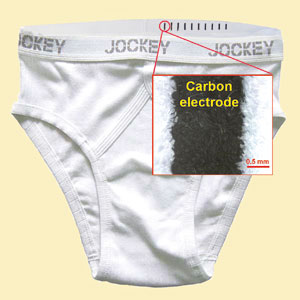
    The expenses attributed with hospital treatments has generated a growing demand for “home based healthcare management”. As a result Joseph Wang and his colleagues at the University of California San Diego, have developed underwear that uses piezoelectric power  to monitor a person’s blood pressure, heart rate, and other vital signs. This allows 24/7 at-home surveillance thus reducing the load on hospitals and reducing one’s expenses.


    The mechanics of the biosensors on the elastic bands

    In order to form the sensors, the scientist placed “screen-printed carbon electrode arrays directly onto the elastic bands”. Thus the skin tight pressure on the skin, from the elastic bands, allows hydrogen peroxide and the enzyme NADH to be monitored.


    Similar Products 

    In 2009 Canadian scientists created underwear that deliver mild electrical currents to paralyzed muscles in order to prevent ulcers and other similar problems. They will contain sensors that detect increased pressure and lack of oxygen in the buttocks muscles of people bound to a wheelchair. When the pressure gets to a certain level, the electric underwear will emit a jolt of electricity for seven to 13 seconds that will clench the muscles as in exercise and recirculate the blood. In addition another major problem many adults suffer from is the issue of incontinence. Incontinence is the problem of involuntary urination, but with revolutionary underwear one could receive a text  message to warn wearers if their incontinence protection is leaking.


    Plans for the Future 

    In the future Professor Wang hopes to develop more advanced sensors in order to detect alcohol levels in drivers or stress levels in soldiers and athletes. The designers also hope that one day the underwear can release drugs to relieve pain and treat wounds. Wang goes on to say, “We envision all the trend of personalized medicine for remote monitoring of the elderly at home, monitoring a wide range of biomedical markers, like cardiac markers, alerting for any potential stroke, diabetic changes, and other changes related to other biomedical scenario,’ said Wang. Wearable biosensors can also provide valuable information to athletes or even measure blood alcohol levels.”


    Richard Compton at the University of Oxford, UK comments, ‘electrochemical sensors are widely used in niche applications and it is timely for a greater diversity of sensors to emerge, given the sensitivity and low cost of electrochemical measurements. I have full confidence in this idea coming to fruition.’


    FOR MORE INFO 

    Biosenors in Briefs – http://www.youtube.com/watch?v=Rs9R3JJ6LjM


    SOURCES

    http://www.businessweek.com/lifestyle/content/jun2010/bw20100622_476361.htm

    http://www.rsc.org/Publishing/ChemTech/Volume/2010/05/biosensors_in_briefs.asp

  • Food Product Development Stages

    Food development

    Development starts with a brief and market research. The design specification is tested and a manufacturing specification is written for production. There also need to be quality-control checks, part of a process called quality assurance.

    Foods are developed in a number of stages. They need to be tested and evaluated throughout these stages to ensure they are meeting requirements.

    Brief

    The first stage of food development is the brief, which is the problem that needs to be solved. For example, developing a lasagne for health conscious consumers.

    Market research

    Market research means finding out information about what people want from a product. It includes studying market trends and shopping habits. This can be done by conducting surveys, questionnaires, and telephone interviews. For example, would people buy a low fat lasagne?

    Design specification

    The design specification is the first attempt at listing the needs of the product. It includes:

    • size
    • shape
    • shelf life
    • weight
    • sensory characteristics (taste, texture, appearance, etc)
    • costs
    • ingredients (with quantities)
    • equipment

    Shortlisting and testing

    Initial ideas are generated following the design specification. These are then shortlisted based on concept screening, where five or six ideas are chosen, based on which ideas best meet the design specification.

    Sensory testing

    It is essential to test sensory qualities. The results are analysed so that the product can be improved or changed. This is called sensory analysis.

    Ranking tests

    Similar products are tested for a specific characteristic, for example saltiness. Samples are given randomly coded names, and testers sort the products from most to least salty.

    Rating tests

    Products are tested for a specific characteristic to find out if there is a noticeable difference between two products. For example, manufacturers can test a new low fat version of a product to see if it is similar to the original

    Manufacturing specification

    The manufacturing specification lists information a manufacturer needs to produce the product. The specification records the stages of the production process, with details of all the characteristics (shape, size, texture, colour, flavour etc) required in the final product.

    It also lists where standard components can be used. A standard component is a pre-prepared ingredient used in the production of a food product, like pizza bases or ready-made sauces.

    Quality control

    Quality assurance (QA) guarantees that food meets a clear, consistent set of standards. At key stages in production there should be quality control checksso manufacturers are alerted to any problems. The results of these checks are recorded. Checks can be done by hand or by computer.

    Quality control checks will normally include:

    • weight checks to make sure the product is the required weight
    • visual checks to make sure it looks the way it should
    • temperature checks to make sure it is being kept at an appropriate temperature
    • pH checks to make sure the food has the correct acidity/alkalinity
    • microbiological checks to make sure bacteria are not at harmful levels
    • chemical checks to guard against chemical contamination
    • metal checks to guard against contamination by metals (usually at the packing stage, using a metal detector)
    • organoleptic checks to check flavour, texture and aroma by sampling the food product

    Why is ‘Food Product Development’ important to us?

    Product Development can be crucial for boosting food industries in the country like India, for example, the world’s second largest producer of fruits and vegetables. Food safety and consumer protection measures either in shape of mandatory food laws or Total Quality Management require much investment in R & D, thus barring small scale industries and entrepreneurs to enter into the trials of new recipes. But there are simple and scientific methods, for example sensory evaluation techniques, which when applied to new concept of recipes or to less popular regional fruits and vegetables products can prove to be revolutionary.

    Key to Innovation Success

    Tomorrow’s winning companies will be those that understand and accept these challenges, and find ways to address them through processes and solutions focused on new product innovation. New product success requires excellence in three areas:

    (1) reducing product development cycle time

    (2) increasing product development innovation,

    (3) reusing company knowledge assets.

    In the twenty-first century, the ability to innovate better and faster than the competition trumps all other areas of competitive advantage.

    Sources:

    http://www.dmflavors.com/product_innovation_group.htm

    http://www.bbc.co.uk/schools/gcsebitesize/design/foodtech/productdevelopmentrev1.shtml

    http://www.techno-preneur.net/information-desk/sciencetech-magazine/2009/june09/Product-Development.pdf

    http://www.product-lifecycle-management.info/white-papers/kalypso/PLM-White-Paper-Kalypso-8-CPG-21st-Century-Product-Development-Processes-PLM-Emerges-as-Key-Innovation-Driver.pdf

  • Development of the Food Industry

    As animals, humans have the natural ability to know what their body needs and how much of it they need. With these skills we were able to survive our early stages of development as cavemen and evolve and grow into the modern day humans we have become. As our knowledge grew so did our understanding of food and we began to grow our own crops. Instead of having to search for food, humans had the knowledge needed to grow the food they desired. Thus is how the farming industry developed. However, due to the industrial revolution, how one receives their food has advanced from traditional methods. The food industry has grown and has become the largest industry in the world. Now instead of having everyone raise their own crop, most people rely on others to do the job for them. Before the Industrial Revolution, food commonly would be raised and eaten by the same people. Now people visit supermarkets or hypermarkets to purchase their food. This is one of the most noticeable changes made by the Industrial Revolution.

    The development of the food industry came with a push for urbanization by many farmers and other rural workers. As more workers traveled to the cities two problems began to form:

    1)    A majority of people no longer could farm their own food and had to rely on the crops of others for their nutritional needs

    2)    The amount of people unemployed increased and employment was needed

    The food industry turned to be a very positive solution to the problem for it answered all these problems while keeping the role of the farmer intact. Now there are several ways for people to gain their food, the most common one being to buy it from a food retailer. With the addition of food manufactures and food retailers, an increase in available job positions developed as well thanks to the need for workers within markets and factories.