The Design Technology Blog

Category: Food

  • Development of the Food Industry

    As animals, humans have the natural ability to know what their body needs and how much of it they need. With these skills we were able to survive our early stages of development as cavemen and evolve and grow into the modern day humans we have become. As our knowledge grew so did our understanding of food and we began to grow our own crops. Instead of having to search for food, humans had the knowledge needed to grow the food they desired. Thus is how the farming industry developed. However, due to the industrial revolution, how one receives their food has advanced from traditional methods. The food industry has grown and has become the largest industry in the world. Now instead of having everyone raise their own crop, most people rely on others to do the job for them. Before the Industrial Revolution, food commonly would be raised and eaten by the same people. Now people visit supermarkets or hypermarkets to purchase their food. This is one of the most noticeable changes made by the Industrial Revolution.

    The development of the food industry came with a push for urbanization by many farmers and other rural workers. As more workers traveled to the cities two problems began to form:

    1)    A majority of people no longer could farm their own food and had to rely on the crops of others for their nutritional needs

    2)    The amount of people unemployed increased and employment was needed

    The food industry turned to be a very positive solution to the problem for it answered all these problems while keeping the role of the farmer intact. Now there are several ways for people to gain their food, the most common one being to buy it from a food retailer. With the addition of food manufactures and food retailers, an increase in available job positions developed as well thanks to the need for workers within markets and factories.
  • Organic or Genetically Modified?

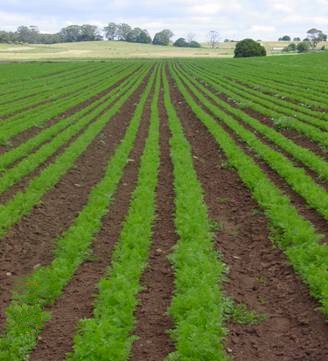
    Genetically modified food are foods that are derived from genetically modified organisms; products that contain specific changes to their original DNA. Organic products do not contain any genetic modifications. They are foods that are produced naturally without modern enhanced plantation methods such as the wide spread use of pesticides and chemical fertilizers. A lot of controversy exists over the use of genetically modified products and over the years many people have returned to the fruits and vegetables that are produced using organic means. But what truly are the dangers associated with modifying food? Perhaps it has more benefits than weaknesses?

    The Old and the Healthy

    Organic food has always been thought to be the healthier alternative. Various pesticides have been identified by the EPA as cancer causing and dangerous for humans.  Organic products restrain from using such chemicals and as a result provide for a healthier lifestyle. Vegetables and fruits that are grown organically are able to sustain many of their natural nutritious values from minerals, vitamins and anti-oxidants. In the end, the toxic chemicals are not put out into our natural environment. Organic farming allows people to sustain harmony with the world we live in. Keeping our environment as it is is essential for its survival. But contrasting such benefits of an organic production are several negative sides to the whole “story”. Organic products are generally inefficiently produced and at a much slower rate than genetically modified ones.  Such inefficiency leads to increased costs of the organic crops and makes them more unattractive to the local customers. Such foods also have a shorter self-life. Genetically modified crops can last much longer after the harvest than organic foods.

    Leaps in Technology seem attractive

    Genetically modified foods however also pose as an attractive alternative. Farmers are able to grow crops that are resistant to pretty much everything. The local pests and rodents no longer pose any harm. Weeds need not be picked as they are tolerated by the crop. Different forms of bacteria or fungus can do nothing. Extreme environmental changes can be accepted by the crop without majorly affecting its quality. Whether it’s a drought or cold winter, the plant can continue growing. It is important however to keep in mind that genetically modified products do have a negative impact on the environment. Altering the natural existence of organisms (changing the DNA composition) can never have a positive result on the  surrounding ecosystem. The chemicals and pesticides kill and pollute the local plants and may also negatively affect the human digestive system.  It inevitably causes us to question what we are truly eating. Genetic engineering can truly alter a particular crop into something different.

    So…

    Whether organic or genetically modified, both routs have their benefits and disadvantages. However I believe that the question we need to ask ourselves is what we are trying to achieve. I reason that we are trying to receive a product that is of the best quality possible. The cost in most cases is irrelevant. We are entering a new era that promotes a sustainable lifestyle. Organic products are therefore a much better solution for all. They are a healthier choice for the us and our planet.

    Sources of Information

    http://en.wikipedia.org/wiki/Genetically_modified_food

    http://www.thcarson.co.uk/whyorganic.htm

    http://www.csa.com/discoveryguides/gmfood/overview.php

    http://carthageagriculture.pbworks.com/w/page/15315791/Organic%20Farming%20Days%2024

    http://foodandorganic.com/disadvantages-of-organic-food.html

    http://wanttoknowit.com/disadvantages-of-genetically-modified-food/

  • The Development of Aspartame in the Food Industry

    Aspartame has been the main ingredient of commonly applied sweeteners for more than thirty years. However, it is one of the most dangerous chemical compounds added to nourishment. Aspartame was discovered by accident in 1965 during research that contributed to medical findings for ulcers. In 1981, it was initially added to dried food as it was a “dietetic” alternative to ordinary sugars and it was cheaper than sweeteners that were typically used. It could be manufactured at factories in any quantity.

    Soon enough, by 1983, carbonated drinks were being sugared with aspartame although on December 5th, 1974, the American Food and Drug Agency overrode its permission  for use of the substance. However, after producers presented research proving that aspartame was totally safe, the food industry began utilizing the

    Aspartame Chemical Structure

    ingredient once again. Until this day, aspartame has been the subject of many controversies since its approval by the US Food Agency.
    Aspartame consists of three compounds: aspartic acid, phenylalanine and methanol. The most harmful is methanol because it decomposes to form acid and formaldehyde, which is a highly toxic neurotoxin. An excess of aspartic acid causes the death of some neurons in the brain because it causes the constant inflow of calcium into the cells.
    Sources of aspartame in food are:  sugarless chewing gum, instant cocoa,  yogurts, jellies, fruit and milk drinks, dietetic drinks, instant coffee and tea, purgatives, and frozen desserts.

    Aspartame accounts for over 75 percent of the adverse reactions to food additives reported to the FDA. A few of the 90 different documented symptoms listed in the report as being caused by aspartame include: Headaches/migraines, dizziness, seizures, nausea, numbness, muscle spasms, and weight gain.

    Aspartame is marketed under the names Equal® and Nutrasweet®. Some children’s sugar-free snacks and beverages may contain aspartame. It is now estimated that over 6,000 food and drink products worldwide contain this popular artificial sweetener. Aspartame’s components separate when heated over time, resulting in a loss of sweetness. If a food containing aspartame was inadvertently heated, it would still be safe, but would simply not provide the desired sweetness

    http://aspartame.mercola.com/

    http://www.healthynutritionguide.info/interesting.htm#aspartam

  • The Effects of Pesticide on Humans


    What we don’t know about Pesticides


    What is a pesticide? 

    Pesticides are substances or mixture of substances intended for preventing, destroying, repelling or mitigating any pest. (epa.gov) 

    A pesticide may be a chemical substance, biological agent (such as a virus or bacterium), antimicrobial, disinfectant or device used against any pest. Although it is well noted that pesticides certainly have their benifits, they do come with strong drawbacks and problems, such as toxicity and chemical harm that can be examined in humans and animals. 

    Why are they dangerous? 

    These are Pesticide Farmworkers

    There are two types of dangers to be considered when discussing the risks of pesticides on humans, first one is direct exposure to pesticides, and the second one would be indirect exposure. In either case it is notable that pesticides are a major contributor to anything in the range of simple irritation of the skin and eyes to more severe effects such as affecting the nervous system, mimicking hormones causing reproductive problems, and also causing cancer. (http://www.epa.gov/opp00001/health/human.htm). Further research determined a correlation between Hodgkin lymphoma and leukemia, 2 major worldwide diseases, with excessive exposure to pesticides. 

    What is the difference between direct and indirect exposure? 

    Direct exposure when it comes to pesticides is simple, it occurs to the people who work on the farms and are applying the pesticides to the plantations. They’re effects are typically more severe and quicker in developing, and it is noted by the World Health Organization and the UN that 18,000 people die each year of pesticide posioning in developing countries (does not include highly poverty stricken regions or developed countries) , with a further 3 million agrarian workers suffering from mild poisoning. Indirect exposure can happen in two different ways. The first one occurs when the food is contaminated by poor pesticides and results in the food being altered in either taste or biological make up. The harm obviously comes from the biological make up as such alterations in the food can result in neurological, skeletal or other organ problems in humans.  On the defence of pesticides, most pesticides are designed in a way to not in anyway effect the taste or other properties of the plant. (Benefits of Pesticides: A story worth telling, Purdue.edu). The other way that pesticides impact humans indirectly is through the environment. The problem with pesticides is they can sometimes be caught in the wind contaminating the air and also transported to nearby water sources. The contamination of the water and air can lead to distrarous effects on human health, especially in undeveloped regions whose water is already contaminated. People who live nearby farms are likely to suffer air contamination because the wind transports it in the air and is then breathed by the people.  Another problem is contamination of the soil, which overtime damage or destroy the farming potential of the plot. In total the US spent 9.6 Billion dollars on human health and environmental cost from pesticides. (Pimentel, David. “Environmental and Economic Costs of the Application of Pesticides Primarily in the United States.”) 

    What are alternatives? 

    Alternatives to pesticides are available and include methods of cultivation, use of biological pest controls (such as pheromones and microbial pesticides), genetic engineering, and methods of interfering with insect breeding. Application of composted yard waste has also been used as a way of controlling pests. These methods are becoming increasingly popular and often are safer than traditional chemical pesticides. In addition, EPA is registering reduced-risk conventional pesticides in increasing numbers. Another important aspect of the alternatives is that studies have shown that they are equally, if not better, than traditional pesticides. 

    Personal Recommendation 

    I say that it is probably best to use the alternatives as the start up costs may be greater but in the end will save money greatly on health costs and also cause a better image for the farm or company. 


  • Increase in Organic Food Sales

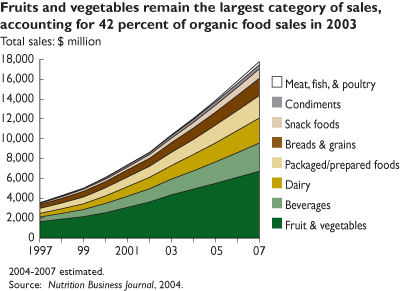
    People are starting to buy more natural and organic foods rather than normal foods that are sold in the markets. The reasons are simple, normal foods contain hormones and preservatives and other chemicals, an example is chicken, which is injected with hormones so that it will develop faster and grow fatter, then the chickens can be sold faster and when they are sold they look fatter and bigger and more “delicious”, but the big amount of hormones that the chicken has in it can have serious consequences to little kids that eat it. One of the consequences is early puberty in girls which accounts for a higher chance in breast cancer. But in many occasions no one has been able to conclude whether meat with high levels of hormones cause young puberty, breast cancer, or a higher breast development on kids. That is why people have started to trust more organic products rather than normal dairy products. People believe that organic foods are healthier, safer, tastier, and more environmental friendly than normal products.

    Some people might not know but there is a difference between organic and natural foods. Food can only be labeled as “natural” if it follows certain requirements; those are:

    “(1) The product does not contain any artificial flavor or flavoring, coloring ingredient, or chemical preservative (as defined in 21 CFR 101.22), or any other artificial or synthetic ingredient; and

    (2) The product and its ingredients are not more than minimally processed. Minimal processing may include:

    (a) Those traditional processes used to make food edible or to preserve it or to make it safe for human consumption, e.g., smoking, roasting, freezing, drying, and fermenting, or

    (b) Those physical processes which do not fundamentally alter the raw product and/or which only separate a whole, intact food into component parts, e.g., grinding meat, separating eggs into albumen and yolk, and pressing fruits to produce juices.”1

    Organic food refers to food produced by a farmer that uses environmental friendly farming techniques, such as the “conservation of soil and water, the use of renewable resources and use of natural fertilizers and conventional pesticides. The food will come from animals that are given no antibiotics or growth hormones.”1

    In other words natural and organic foods are “fresh” and less or not altered at all compared to the normal products that undergo many chemical processes before going into the market. That is why every year more and more people are buying organic and natural foods.

    Sources:

    1) http://www.wikinvest.com/concept/Natural_%26_Organic_Foods_Consumption\

    2) http://envirocancer.cornell.edu/factsheet/diet/fs37.hormones.cfm

  • Aeration of Whipped Cream

    Authentic whipped cream is a classic and popular colloid used in various drinks and deserts worldwide. It is a prime example of a processing technique known as aeration. Real whipped cream, as opposed to bottled & pressurized whipped cream, actually involves whipping, or placing air in between molecules of cream by folding or mixing.

    Authentic whipped cream starts out with heavy whipping cream (at least 30%) and possibly a sweetener such as sugar and a flavoring agent such as vanilla. All ingredients and the materials used to mix and contain the cream are chilled, but not frozen. Then the cream is whisked and sugar and flavoring are added in slowly. While whisking, air bubbles can be seen forming on the top of the cream, this same occurrence is happening in the cream, but is not directly seen. Instead of the bubbles going to the surface and leaving the cream, they remain dissolved into the cream forming a colloid. As more and more air molecules are put into the cream, the volume of the cream increases dramatically. However, with time the trapped air will leave the whipped cream and become a liquid again. The process of air leaving is accelerated with an increase of temperature.

    Cream that has been whipped gains new organoleptic properties that act to give whipped cream its pleasant fluffy and light texture. Interestingly, cream by itself has a thick and heavy taste that generally is not found appealing by itself. The added benefit of using homemade whipped cream is that it can be flavored and mixed to the consistency and taste of the maker. While using bottled whipped creams generally involves a neutral gas and other chemicals, as well as hydrogenated oils and fats, homemade whipped cream involves using pure ingredients.

    Popularly enjoyed whipped cream

    Bottle Whipped Cream                                                                         Authentic Whipped Cream

    How to make whipped cream video:  http://www.youtube.com/watch?v=f2fFcjwvTWs

  • Food Industry

    The food industry is a complex, global collective of diverse businesses that together supply much of the food consumed by the world population. Only subsistence farmers, those who survive on what they grow, can be considered outside of the scope of the modern food industry.

    Processed food sales worldwide are approximately US$3.2 trillion. In the U.S., consumers spend approximately US$1 trillion annually on food, or nearly 10 percent of the Gross Domestic Product. Over 16.5 million people are employed in the food industry.

    In the United Kingdom, the food industry is extensive. It employs over half a million people and has a turnover of £70bn. It is the largest manufacturing sector in the UK and represents around 15% of the total manufacturing sector in the UK. Around 13% of the people working in manufacturing in the UK work in the food and drink industry.

    A vast global transportation network is required by the food industry in order to connect its numerous parts. These include suppliers, manufacturers, warehousing, retailers and the end consumers. There are also companies that add vitamins, minerals, and other necessary requirements during processing to make up for those lost during preparation. Wholesale markets for fresh food products have tended to decline in importance in OECD countries as well as in Latin America and some Asian countries as a result of the growth of supermarkets, which procure directly from farmers or through preferred suppliers, rather than going through markets.

    The constant and uninterrupted flow of food products from distribution centers to store locations is a important link in food industry operations. Distribution centers run more efficiently, output can be increased, costs can be lowered, and manpower better utilized if the proper steps are taken when setting up a material handling system in a warehouse.

    With populations around the world concentrating in urban areas, food buying is increasingly removed from all aspects of food production. This is a relatively recent development, having taken place mainly over the last 50 years. The supermarket is the defining retail element of the food industry, where tens of thousands of products are gathered in one location, in continuous, year-round supply. Restaurants, Cafes, Bakeries and Mobile trucks are also ways consumers can purchase food.

    Food preparation is another area where change in recent decades has been evident. Today, two food industry sectors are in apparent competition to top the food industry. The grocery industry sells fresh and largely raw products for consumers to use as ingredients in home cooking. The food service industry by contrast offers prepared food, either as finished products, or as partially prepared components for final . “assembly”.

    Sophisticated technologies define modern food production. They include many areas. Agricultural machinery, originally led by the tractor, has practically eliminated human labor in many areas of production. Biotechnology is driving much change, in areas as diverse as agrochemicals, plant breeding and food processing. Many other areas of technology are also involved, to the point where it is hard to find an area that does not have a direct impact on the food industry. Computer technology is also a central force, with computer networks and specialized software providing the support infrastructure to allow global movement of the myriad components involved.

    www.ibef.org/industry/foodindustry.aspx

    www.indianfoodindustry.net/

    www.food.gov.uk/foodindustry/