The Design Technology Blog

Author: timmykhalifa

  • 3D Printed Guns


    At first, the idea of 3D printing was all positive, with ideas ranging from organs to key chains. Recently though, developers have been exploring 3D printed guns. Last week an engineer from Wisconsin printed a 25$ gun from a 3D printer. The gun was used to fire 9 .380 caliber rounds and successfully fired all 9 rounds. The engineer claims that the plastic used in most 3D printers is stronger than the most expensive plastic available, making the printing of 3D guns accessible to most people. The first 3D printed gun, called “The Liberator”, was fired at the beginning of the month for the first time. Even though the gun only fired one shot, it was a significant shot. Following the creation of the gun, many US congressmen have called to ban 3D guns. Many American’s could argue that this is beneficial as it makes guns more accessible but in truth, this idea is extremely dangerous. Giving almost anyone access to a gun is a horrible idea. This not only gives the normal man access to a gun, but it also gives terrorists, murders, etc. access to the gun. Another scary thought is that if people are starting to print 3D guns now, what will they be printing in the future? 3D bombs? The gun is actually so easy to download that any person can go on this website at any time http://defcad.org/liberator/ and download it. There are currently no laws that stop anyone from printing a 3D printed gun at home. Many people are saying that the 3D printer isn’t actually that big of a deal, saying that most people can’t afford a 3D printer to print the gun. One of the main concerns brought up is that 3D printed guns wouldn’t be detectable by metal detectors, meaning that any person with a gun could walk onto a plane, or into a secured place, without any problem. As this problem continues to grow, what will the government do?
  • The Telephone

    The Telephone

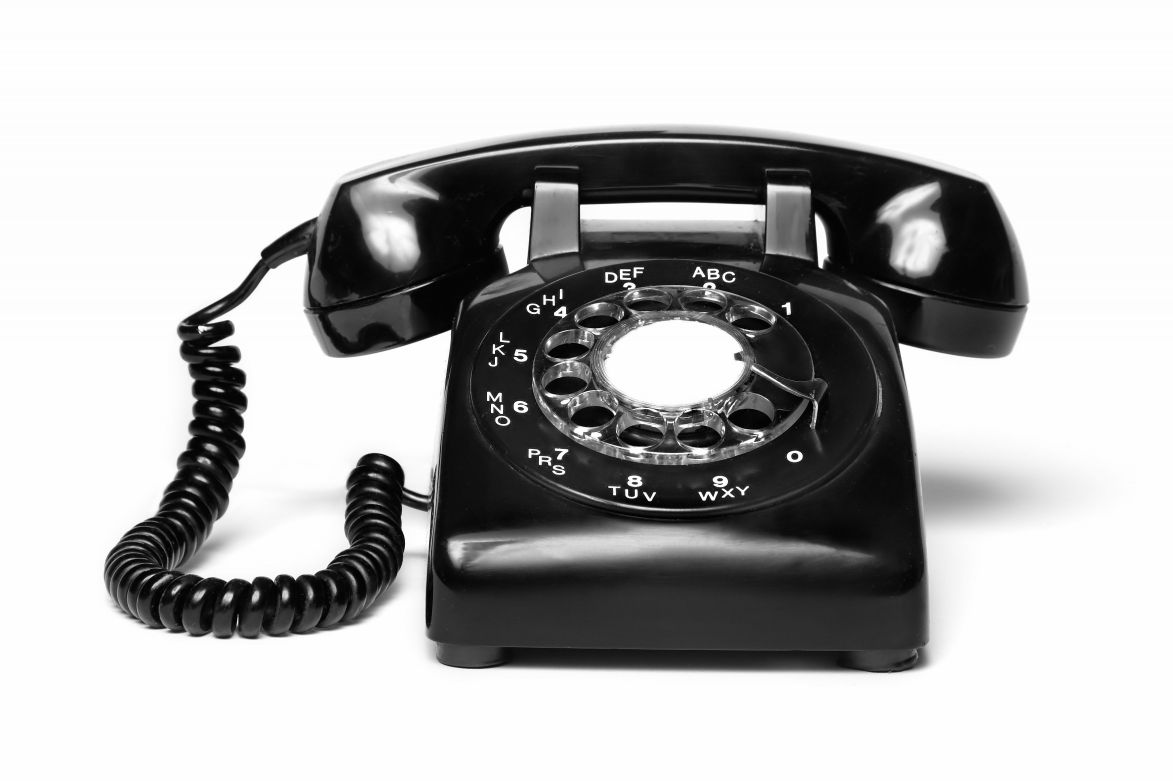
    Invented in the mid 1870s by Alexander Graham Bell, the telephone revolutionized communication and has brought the world closer together.  Modern telephones have a microphone to speak into, an earphone or speaker that reproduces the voice of the other person, a ringer which makes a sound to alert you when a call is incoming, and a keypad to enter the telephone number of the telephone you are calling. The microphone and earphone are usually built into a handset which is held up to your face to talk. The keypad may be part of the handset or of a base unit to which the handset would be connected. Although originally designed for simple voice communications, most modern telephones have many additional capabilities. They may be able to send and receive text messages, take and display photographs, play music, and surf the Internet. These days’ Smartphone’s also integrate all computing needs.

    Environmental impact of cell phones

    There are 6.7 billion people on this planet and 61 percent have a cell phone subscription, that’s 4.1 billion. The average consumer will use their cell phone for less than a year, during that year it will use 4,221 mega joules of energy, the equivalent of 32 gallons of gas, and emit 112 kilograms of C02. Transferring 1 GB of data over a 3G network will use 939 mega joules of energy, the equivalent of 7.3 gallons of gas, and emit 17kg of C02. An unused but plugged in charger still draws about half a watt. If everyone left their charger plugged in ALLDAY, it would waste enough electricity to power 28,000 homes. 140,000,000 cell phones (4 per second) will end up in landfills this year. Leeching 80,000 lbs of lead into the earth, in that landfill is 4.7 tons of gold worth $56 million and 49 tons of silver worth $8.4 million. For every 515 cell phones recycled, it saves enough energy to power one home for a year. If all these thrown away cell phones were recycled, it would save enough energy to power 272,000 homes. To charge every cell phone in use on earth would require the equivalent of 584,000 gallons of gas and produce 35,000,000 pounds of carbon dioxide, imagine that every day, if we all charged our phones half as often it would be the equivalent of taking a million cars off the road. Although mobile phones only make up a small percentage of the e-waste mountain, manufacturers are aware of the need to address the issue. Leading makers, including Motorola, LG, Sony Ericsson and Philips, have all implemented eco-design aspects into their production lines, including reducing the amount of hazardous substances used in their products. Nokia, the world’s largest mobile phone manufacturer, produces a handset every nine seconds. It has decided to implement requirements set out in the EU Restriction of Hazardous Substances Directive in all 10 of its factories around the globe. The RoHS Directive bans six substances (lead, cadmium, mercury, hexavalent chromium, PBB and PDBE) from products that are either made or sold in the EU.