The Design Technology Blog

Author: Sana Sufi

  • 3D Printing- Fetus


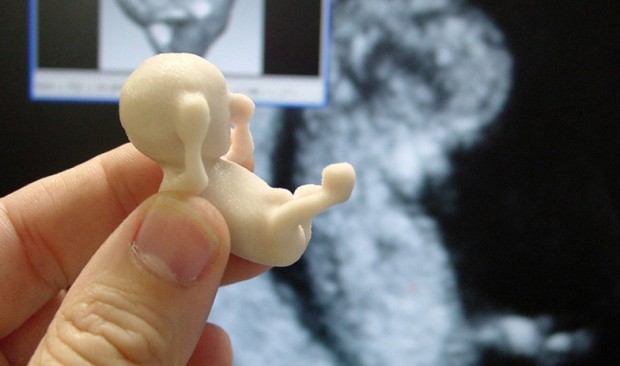
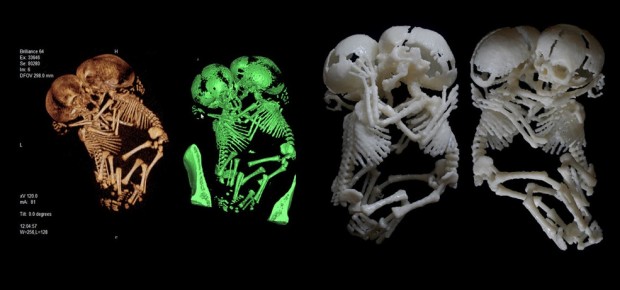
    3D printing is an idea on its own that is yet to be grasped by many. The idea of printing something in 3dimensional form is something that has not been looked upon as a realistic innovation, as though it is something from a movie like Star Wars. However, it is not movie, it is reality, and the things that it can do will soon surpass even our wildest thoughts. Before taking this course on its own, I found it difficult to understand the idea of how exactly a 3D printer even worked. With the world continuously developing and advancing in technology, I found myself amazed to find all of the things that the can be done. Something that struck out most to me was the fact that you can 3D print a fetus. The article explains how women who are pregnant are able to now not only view their baby on a sonogram machine in 3D, but can actually hold the fetus in their hands as a way of knowing what the baby is feeling like. This is primarily being done so in order to get a better understanding of possible problems that there may be with the fetus. In being able to physically hold the model in your hand, medical advances can be made in ways of finding what is wrong, if anything, with the baby. Furthermore, it is also extremely beneficial to those who are visually impaired. The whole birthing process consists, in the initial stages, of first-time glances at the soon-to-be baby. If someone is blind, they are unable to do that as they cannot see anything, only hear the descriptions from others. However, with 3D fetus printing, it now allows for parents visually impaired to be able to feel their child as it develops. This as a whole is an extreme advancement in technology and enabling others to get closer and get a greater feel for the whole birthing process. Though seemingly odd, it proves to be extremely beneficial in that it gives an opportunity to catch possible deformities and evaluate situations from which the baby may be suffering. People may tend to argue that it is somewhat unethical in that you are making a replica of something inside of you- the thought is somewhat disturbing. However, after reading the article and getting a better understanding, it shows how it is in fact extremely beneficial in allowing for others to experience the happiness they could not. Hence, 3D printing can be seen as a huge bonus, especially in regards to medicine as it allows for early diagnosis’ to be made as well as giving the opportunity to others in knowing what their baby feels like.

    Source: http://www.theblaze.com/stories/2013/04/22/3d-printing-gives-blind-parents-a-chance-to-feel-baby-before-its-born/
    3D Fetus

    3D Fetus

  • New “smart” material could help tap medical potential of tissue-penetrating light

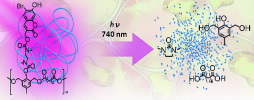
    Scientists are collaborating to try and create what may become the first type of light that can penetrate up to four inches in to the human body. They are developing and receiving successful initial results with the use of the smart materials. The discovery, if successful has the potential of being able to diagnose diseases as well as even create new human tissues. Experts say that the near-infrared (NIR) light is able to go 4 inches in to the human body, giving it immense potential for diagnosing as well as treating diseases. Though seemingly an immense advancement in medicine, there are still problems associated with its development. Currently, the materials that are being tested on are those requiring low-power NIR. This is because this level of power does not damage the body tissues as it passes through. However, the materials being used do not really respond as would hope, as they do not give the most accurate results. What is required is smart materials that can endure high-power NIR, though that does not seem like the best of solutions, as high-power NIR damages cells and tissues. This is why researchers have set their minds to creating a new polymer material that is capable of responding properly to low-power NIR light. With this advancement, the new material is such that it is able to separate in to small pieces that are resulting in signs showing that it is nontoxic to surrounding tissues. The researchers intend to place the polymer in hydrogel (water-containing flexible material that is used for forming tissues as well as drug delivery). This would enable the new polymer to be able to release the medications or agents in to the body when hit with low-power NIR, and so also eliminating/reducing the risk of damaging tissues. Though seemingly appearing as a dangerous substance, if developed as scientists are hoping, it will be a significant step in the field of medicine.


    http://portal.acs.org/portal/acs/corg/content?_nfpb=true&_pageLabel=PP_ARTICLEMAIN&node_id=223&content_id=CNBP_028638&use_sec=true&sec_url_var=region1&__uuid=7d9395c9-0827-4786-ac43-d41662763a59

  • iPad

    Innovation: iPad- changes over the years

    iPad

    Introduced through apple, the iPad has become an extremely successful product. It is like a laptop where almost anywhere you can get instant internet access through 3G connection and sync it to all your personal and business related work. Its size is very convenient, allowing you to carry it anywhere without it being a burden as it is not heavy. This innovation was first introduced in 2010 and has since undergone multiple constructive discontents, now having five variants: original, iPad 2, third generation, fourth generation and the iPad mini. With each new release, there are improvements in many aspects which include size, weight, and the actual features. It is like a tablet which is completely touch screen, only having one button which takes you back to the home screen. The iPad is used entirely through the use of the hands where you can control each move proving to be extremely convenient.

    Environmental Effect:

    Though it is a revolutionary innovation, the Apple company tries to pose as though they are extremely environmentally friendly. However, parts used to make the ipad contain rare earth metals, toxic components and carcinogens. The way that the product is produced and the manner in which they are gotten in fact leads to horrible toxins released in to the environment. One of the greatest concerns pertaining to the production of these apple products is the mining of rare earth minerals. These parts are used not only in apple products, but are also needed for a wide variety of modern electric components such as circuits, GPS receivers, LCD screens as well as computer processors. These rare earth minerals can be found all over the world, however they are usually mined in China. The mining of these minerals leads to great environmental damage as most of them are put in miniscule quantities such as natural ore- this, requiring toxic refining process in order to get the pure product. The refining processes of these then leads to extremely toxic chemicals being thrown in to the environment. Though something that everyone may love, as can be seen the production of the iPad is causing great harm to the environment.

    References: