The Design Technology Blog

Author: oliviaajarvis

  • Suspension Bridges


    Generally built over wide waterways, suspension bridges can prove beneficial to modern societies economically as their enable trade to occur more efficiently between countries. Suspension bridges span a large gap without restricting water travel of large ships belong them.

    Suspension bridges are efficient forms of transporting large loads as their form enables an equilibrium balance of forces that enable them to support the large load.  They are meticulously engineered to ensure that this equilibrium is present as otherwise an instability could lead to their destruction. The added flexibility of suspension bridges allows them to flex under the power of winds and earthquakes. During construction, temporary central supports do not need to be built, and access to the construction is not required from beneath. This means busy roadways and waterways do not need to be disrupted.

    However, a suspension bridge often entails a large opportunity cost to the country as it costs them billions of dollars to build, usually acquired through taxation.


  • Planned Obsolescence- Light Bulbs

    Planned Obsolescence is a trend started in the 1920’s by the Phoebus Cartel, a group of light bulb manufacturing companies, in which the product is intentionally designed to become obsolete and require replacement.

    After more than 100 years Thomas Edison’s early light bulbs still glow in the museum where they are kept. Clearly the technology exists to keep lightbulbs glowing for centuries but then why do our lightbulbs never last more than a year or two? This is because lightbulbs have been intentionally designed to die after 1000 hours, in a scheme to increase profits for the manufacturer.

    Advantages for the manufacturer:

    • generates long term sales which turn into profits
    • increases the demand for the lightbulbs, if the lightbulb had a life-time guarantee then the consumer would only ever demand one lightbulb
    • can use low-quality, non-durable, cheap materials which reduces the cost of production
    • not designed to last so construction can be fast, simplified and efficient which also ultimately decreases the cost of production

    Advantages for society:

    • the increased demand places pressure on the manufacturer to increase output which provides more job opportunities
    • promotes new innovation, as times are progressing demand for new and improved products is high
    Disadvantages for society:
    • creates waste which creates negative externality, it usually ends up in illegal dumps in third world countries
    • exploits consumers as they are constantly spending their income on a product that they could buy once
    • decreases the quality of the product as it is not designed to last
    The manufacturer has the technology and the ability to lengthen the life span of lightbulbs through their selection of materials, production technique, and the repairability of the produt. Yet they choose to exploit consumers and harm the environment all in the interest of maximizing profit! Does that really seem far? There are a number of ways that we as consumers can attempt to overcome the manufacturer-enforced problem of planned obsolescence. In the case of lightbulbs we can consider buying longer lasting lightbulbs such as LED and florescent bulbs. These may cost more initially (unfair for the consumer) but down the line they will prove to be a better investment and save a lot of energy which benefits the environment. Most importantly, we can keep our lights turned off as often as possible as the less bulbs are on the less energy they use and the longer they will last.
  • Schukra Adjustable Lumbar Back Support

    Adjustable Lumbar Back Support

    Schukra Adjustable Lumbar Back Support

    This back support is ergonomically friendly for the user as it comes with an adjustment knob that adjusts the degree of the curve. The adjustment knob allows for it to individually support a wide range of users efficiently. The back support is also portable so the user can strap it onto any chair to ensure their back is always well supported. Additionally, in comparison to other back supports on the market, Schukra’s product has a relatively thin profile so doesn’t take up a significant portion of the seatpan.

    In this technological age we find ourselves spending a vast amount of time sitting in front of computers. Spending such a large span of time in an uncomfortable chair, most likely not sitting with correct posture, will soon begin to take a toll on our backs. This back support provides a solution to this problem, providing our backs with sufficient support around the clock with it’s portable feature. The most beneficial of its features is its ergonomic design that provides it with the ability to adjust to the individual user and support their back perfectly, ensuring an all around better support.

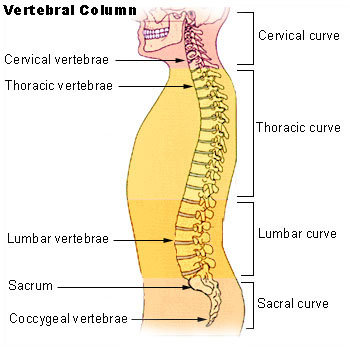
    File:Illu vertebral column.jpg

    The back support provides support for the lower portion of the vertebrae, know as the lumbar. In the United States, lower-back and lumbar strains are the most common cause of missed work days. This statistic shows an obvious need for better back support for the lower back region whenever possible. Strain on the back from constant bad posture and no back support when spending hours a day on a computer can cause a severe, constant pain in the lower back.  Bad posture specifically adds strain to muscles and puts stress on the spine which can change the anatomical characteristics of the spine over time.

  • DiGORO

    DiGORO is known as the ‘Learning Robot’ as it is able to remember actions that have been shown to it several times by humans then reciprocate them itself. For instance, if a person demonstrates to DiGORO how to place a ball in a bucket it will then be able to repeat the action. What is remarkable though is that it is able to reciprocate the action of putting the ball in the bucket with an unknown object. By imitating the actions of the human, DiGORO is able to learn the action and repeat it on command at another period in time. To do this, DiGORO must be told what each item is, for example you hold up a bottle and say ‘DiGORO this is a bottle.’ If you repeat this action with a bucket you will then be able to instruct DiGORO to place the bottle in the bucket.

    DiGORO is also capable of remembering people’s faces and voices simultaneously by identifying patterns of the person’s face and recognizing their colours and shapes which can prove useful for people suffering from senile dementia.

    DiGORO has a number of other useful abilities.  If words are not in its database it is able to extract them from the person’s speech and convert the word to it’s own voice. Also DiGORO can generate maps and estimate it’s location, even in places it had not been before so that it is incapable of getting lost.

    Based on the information it remembers, DiGORO can take action autonomously.  It is capable of handling tasks freely and make decisions on its own accord.

    With an increase in numbers of elderly people it has become a primary need to provide more carers and staff to care for them in their old age. When elderly people lose their ability to maneuver around with ease and perform simple tasks they begin to become reliant on other people. DiGORO provides a solution to this problem as after it has been programmed it is capable to performing tasks such as opening cans or turning the lights on which would have required a great deal of  effort from the elderly person. Although, one problem that can be foreseen with the use of robots to care for the elderly is the loss of human contact. With no human beings caring for them the elderly person will come to rely on the robot for company which raises a number of questions about the ethical implications of such a thing.

  • Bendable Eyeglasses

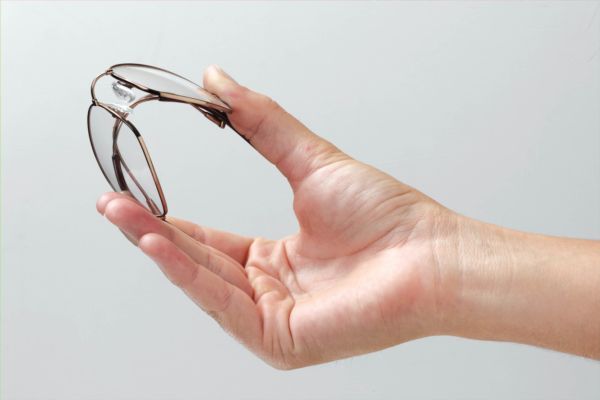
    Marchon Eyewear have developed a range of eyeglass frames featuring a revolutionary new material. The frames are made from a shape memory alloy of titanium under the trademark name, Flexon. Frames made from this alloy are noticeably lighter and more flexible than other frames. The eyeglass frame can be bent, twisted and contorted in many ways but will always spring back to its original shape, as seen in the following video:
    Flexon Bendy Glasses Frame

    Regular eyeglasses will often become bent and not sit straight on their user’s face after daily use and it can prove very difficult to return them to their original shape. However, this is no longer a problem with frames made from Flexon as it is not possible to permanently distort their shape.

    Marchon Eyeglasses has designed glasses appealing to a range of men, women, and children whilst expanding its designer portfolio to include such names as: Calvin Klein, Fendi, and Valentino.

    Eyeglasses,however, are not the only useful utilization of shape memory alloys (SMA) of titanium, such as Flexon. Nitinol is a  SMA with similar properties to that of Flexon and can be used in the underwire of bras, golf clubs, and novelty products (magicians bending spoons). Some of its more beneficial uses are in medical situations in which it can be used to locate/mark breast tumors, stents (a collapsed stent is inserted into a vein and then heated so it returns to its original shape and helps to improve blood flow), and also in orthopedic implants as it is highly bio-compatible.

    As seen above, despite its value to daily life in the form of resilient glasses frames, this SMA also has many other worthy uses in medical situations.