The Design Technology Blog

Author: LauranceT

  • The Effects of Pesticide on Humans


    What we don’t know about Pesticides


    What is a pesticide? 

    Pesticides are substances or mixture of substances intended for preventing, destroying, repelling or mitigating any pest. (epa.gov) 

    A pesticide may be a chemical substance, biological agent (such as a virus or bacterium), antimicrobial, disinfectant or device used against any pest. Although it is well noted that pesticides certainly have their benifits, they do come with strong drawbacks and problems, such as toxicity and chemical harm that can be examined in humans and animals. 

    Why are they dangerous? 

    These are Pesticide Farmworkers

    There are two types of dangers to be considered when discussing the risks of pesticides on humans, first one is direct exposure to pesticides, and the second one would be indirect exposure. In either case it is notable that pesticides are a major contributor to anything in the range of simple irritation of the skin and eyes to more severe effects such as affecting the nervous system, mimicking hormones causing reproductive problems, and also causing cancer. (http://www.epa.gov/opp00001/health/human.htm). Further research determined a correlation between Hodgkin lymphoma and leukemia, 2 major worldwide diseases, with excessive exposure to pesticides. 

    What is the difference between direct and indirect exposure? 

    Direct exposure when it comes to pesticides is simple, it occurs to the people who work on the farms and are applying the pesticides to the plantations. They’re effects are typically more severe and quicker in developing, and it is noted by the World Health Organization and the UN that 18,000 people die each year of pesticide posioning in developing countries (does not include highly poverty stricken regions or developed countries) , with a further 3 million agrarian workers suffering from mild poisoning. Indirect exposure can happen in two different ways. The first one occurs when the food is contaminated by poor pesticides and results in the food being altered in either taste or biological make up. The harm obviously comes from the biological make up as such alterations in the food can result in neurological, skeletal or other organ problems in humans.  On the defence of pesticides, most pesticides are designed in a way to not in anyway effect the taste or other properties of the plant. (Benefits of Pesticides: A story worth telling, Purdue.edu). The other way that pesticides impact humans indirectly is through the environment. The problem with pesticides is they can sometimes be caught in the wind contaminating the air and also transported to nearby water sources. The contamination of the water and air can lead to distrarous effects on human health, especially in undeveloped regions whose water is already contaminated. People who live nearby farms are likely to suffer air contamination because the wind transports it in the air and is then breathed by the people.  Another problem is contamination of the soil, which overtime damage or destroy the farming potential of the plot. In total the US spent 9.6 Billion dollars on human health and environmental cost from pesticides. (Pimentel, David. “Environmental and Economic Costs of the Application of Pesticides Primarily in the United States.”) 

    What are alternatives? 

    Alternatives to pesticides are available and include methods of cultivation, use of biological pest controls (such as pheromones and microbial pesticides), genetic engineering, and methods of interfering with insect breeding. Application of composted yard waste has also been used as a way of controlling pests. These methods are becoming increasingly popular and often are safer than traditional chemical pesticides. In addition, EPA is registering reduced-risk conventional pesticides in increasing numbers. Another important aspect of the alternatives is that studies have shown that they are equally, if not better, than traditional pesticides. 

    Personal Recommendation 

    I say that it is probably best to use the alternatives as the start up costs may be greater but in the end will save money greatly on health costs and also cause a better image for the farm or company. 
     

  • Bugatti Veyron

    Bugatti Veyron

    Introduction to the Bugatti Veyron:

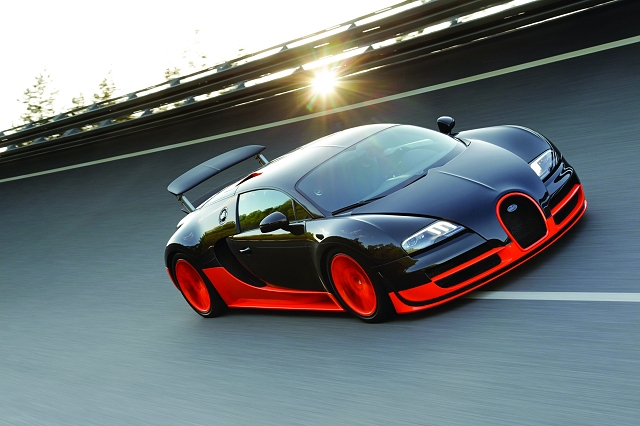
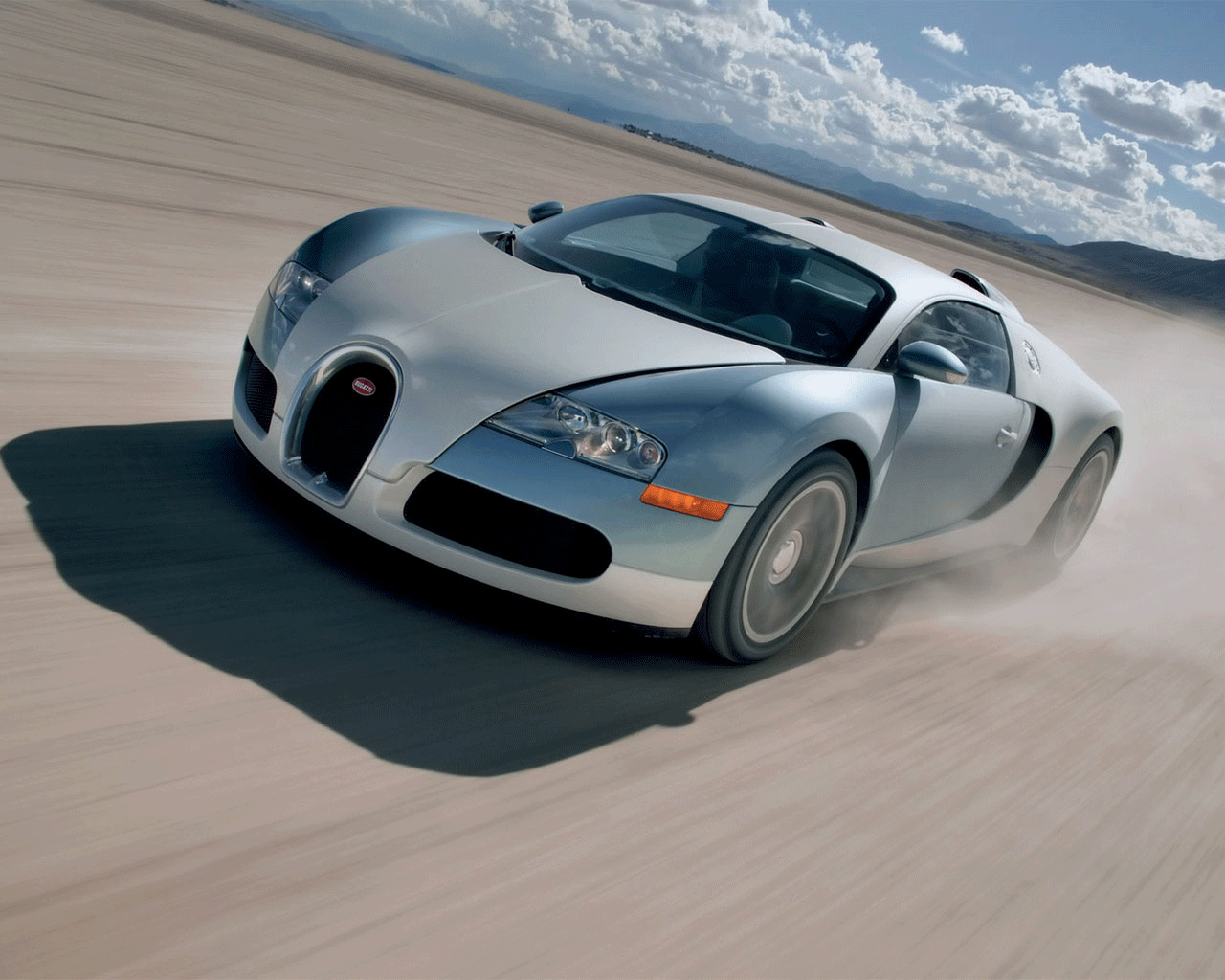
    The Bugatti Veyron EB 16.4 is a mid engined grand touring car. It is the most expensive modern car in the world at USD $2,600,000. The Super Sport version is the fastest road-legal car in the world, with a top speed of 431.07 km/h (267.85 mph). The original version has a top speed of 408.00 km/h (253.52 mph). Designed and developed by the German Volkswagen Group and produced by Bugatti Automobiles SAS at their headquarters in Château St. Jean in Molsheim (Alsace, France), the Veyron’s chief designer was Hartmut Warkuss, and the exterior was designed by Jozef Kabaň of Volkswagen, with much of the engineering work being conducted under the guidance of former Peterbilt engineer and now Bugatti Engineering chief Wolfgang Schreiber.

    Specifications and Statistics:

    • 1,200 metric horsepower engine output
    • Top speed:  431.072 km/h
    • It can break from max speed to rest in 10 seconds
    • It can reach top speed in 50 seconds
    • Also clocking 0-100 km/h in under 2.5 seconds
    • It takes on average 10 miles to the gallon
    • Only 291 have been delivered but more ordered
    • Customization has been offered since 2010
    • 4.462 m long
    • 2.710 m wheel base (distance from one wheel to the start of the other)
    • 1.998 m wide
    • 1.159 m tall
    • 1,888 kg heavy
    • 4 wheel drive
    • Transmission is a 7 speed DSG sequential
    • Bugatti has 10 radiators; 3 heat exchangers, 3 engine radiators, 1 for the AC, 1 transmission oil radiator, 1 differential oil radiator, 1 engine oil radiator.
    • At top speed it consumes 45,000 litres of air a minute (the equivalent to 5760 humans)
    • The Veyron’s brakes use cross drilled, radially vented carbon fibre reinforced silicon carbide composite discs, manufactured by SGL Carbon, which have a much greater resistance to brake fade

    Why is it a super car?

     All the above statistics makes this the ultimate car, as the combination of such a powerful engine, cleverly placed along with the finest new technology of radiators, transmission, brakes, tires, materials (such as aluminium and carbon fibre to minimize the weight), clutch, gearbox, spoiler and suspension systems, the car achieves an optimum performance and smooth drive. James May on the famous british Top Gear is quoted in saying that he “nearly got out the car but he realized it was still travelling at 100 km/h.”

    Aesthetics

    The catchy design for the Veyron is a major contributor to its popularity, because its paved the way for a futuristic design for further cars. The design of the Veyron honors a great heritage without drifting off into retro style. Every detail of the classic two-tone color scheme, a quote from the 1920s and 1930s, has been carefully thought out, resulting in the typical Bugatti profile with the classic, contrasting ellipsis – the stylistic element used by Ettore Bugatti himself. The “crest line”, which runs uninterrupted from the hood to the only 1.21-m-high roof, is a proud homage to the Veyron’s forebears. Thus, the Veyron’s classic paintwork and harmonious design connect this state-of-the-art super sports car to the glorious heritage of Bugatti automobiles. With its classic look, the large radiator grill – adorned with the hand-enameled Bugatti emblem – represents the grandness of the Veyron. The sports car’s distinctive front is defined by the harmonious contrast of its broad headlights and majestic grill. The rear end, 1.99 m wide, features the formidable retractable spoiler and generously designed fenders. The Veyron perfectly fulfills the main design objective governing the development of the new Bugatti: an uncompromising combination of highest elegance and state-of-the-art technology.

    Websites:

  • Jabulani Ball

    Jabulani Ball

    History

    Throughout the history of football, people have been searching year after year for the perfect ball. It has been a quest to improve and improve a ball that is used in the most widespread sport in the world. World Cup after World Cup has seen new footballs with incremental changes in material between each one. In 1836, Charles Goodyear patented vulcanized rubber, he spent nearly 20 years in attempting to create a ball for football and finally he invented the first vulcanized rubber football in 1855. In 1862, H.J. Lindon developed one of the first inflatable rubber bladders for balls. “By the 1900’s bladders were made with stronger rubber and could withstand heavier pressure.  Most balls produced by that time used rubber bladders. The balls were made from inner tubes covered with heavy brown leather.  These balls would bounce easier and yet could be kicked. Most balls had a tanned leather cover with eighteen sections stitched together arranged in six panels of three strips each.” (soccerballworld.com). Throughout the next 70 years, leather balls were the only ones in the game and then in the 1970 world cup in Mexico, a revolutionary ball was introduced to the 32-Panel Adidas Telstar ball.

    The 2006 World Cup Ball, Teamgeist Ball

    This football was made from synthetic leather patches sewn together in a design based on the ‘Buckminster Ball’ or known as the Buckyball. For the next 36 years Footballs were made in this style with minimal change. In 2006, the Teamgeist. The introduction of a 14-panel construction method means that the number of three-panel touch points is reduced by 60% (60 to 24) and the total length of the panel lines falls by over 15% (400.5 cm to 339.3 cm). Building on the introduction of thermal bonding technology in 2004.
    Introduction Of Jabulani

    The ball is made from eight spherically molded panels and has a textured surface intended to improve aerodynamics. Nevertheless, the ball received extensive criticism from players and coaches before and during the World Cup who said that the path of the ball through the air was unpredictable.

    “The ball was constructed using a new design, consisting of eight (down from 14 in the last World Cup) thermally bonded, three-dimensional panels.

    The 2010 World Cup Ball, Jabulani

    These then are spherically molded from ethylene-vinyl acetate (EVA) and thermoplastic polyurethanes (TPU). The surface of the ball was textured with grooves, a technology developed by Adidas called “Grip ‘n’ Groove” that is intended to improve the ball’s aerodynamics. The design has received considerable academic input, being developed in partnership with researchers from Loughborough University, United Kingdom.” (Wikipedia). This table shows that the moulding technique means the ball retains its shape, and the lack of seaming means there is essentially zero water retention, which will reduce sluggishness of the ball.

    Personal Experience

    Through personal experiences I have been able to conclude that the unpredictability of the ball is both a good and a bad thing. As the unexpected behavior can trick a goal keeper, whilst at the same time, the speed makes control of the ball quite difficult.

    Resources

    http://www.jabulaniball.com/

    http://en.wikipedia.org/wiki/Adidas_Jabulani

    http://www.soccerballworld.com/Jabulani_2010.htm

    http://www.adidas.com/campaigns/football/content/products.aspx?collection=OMB

    http://en.wikipedia.org/wiki/Adidas_Teamgeist

    http://www.soccerballworld.com/History.htm

  • The Nike Mercurial Superfly II Elite (in depth analysis)

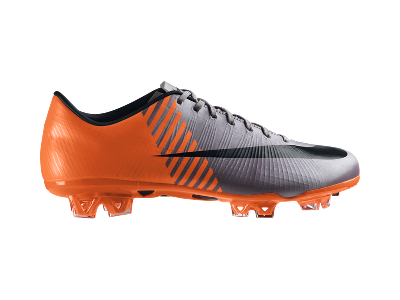
    The Nike Mercurial Vapor Superfly II Elite

    Original Color for Superfly II Elite

    Personal Point of View on the Shoes

    Theses shoes over the past few weeks have left somewhat of a great impression on me. I’ve looked at them, held them and been given a quick trial with these shoes. I have a love hate relationship with these boots from personal experience alone, but completely understand why these are the top and newest shoes on the market right now. I wouldn’t call them the perfect shoe for me, I’ve tried somewhere over 20 football shoes in the past 5 years and I’ve come to learn that all shoes have advantages and disadvantages and depending on the person, the shoe could suit different people in different ways. These shoes from my own knowledge are by far the lightest I’ve ever tried. The lightness of these shoes contributes to why they are so popular, it made me run faster and accelerate quicker, and in a sport which is played so quickly, speed is of a high priority. I personally think that these shoes have been well designed in the aspect of visual attractiveness, because when I walked into the shop they were the first shoes that came into my view. Certainly they are attention grabbers, and being in the middle of the field it’s quite important that my teammates know where I am.

    Nike’s Stated Benefits of the Shoes

    • Flywire for ultra light-weight and support

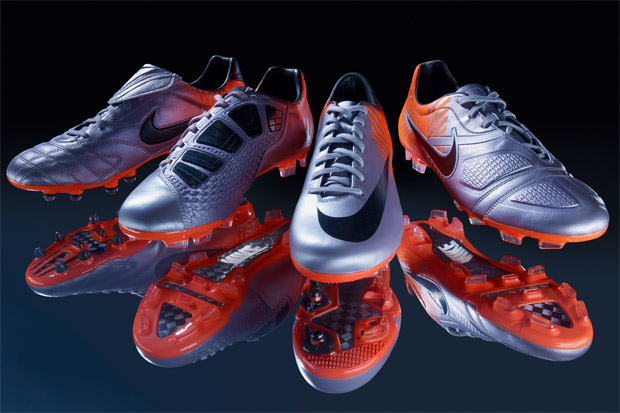
      All four shoes of the Nike Elite series introduced for the Fifa World Cup 2010
    • Revolutionary traction for extra grip
    • Traction pattern for cutting and instant acceleration
    • Includes exclusive shoe bag and box
    • Firm-ground (FG) Bladed and conical cleats for use on short grass fields.

    Nike’s revolutionary traction in Nike’s opinion is the top reason for the shoe’s popularity. The traction in this shoe is

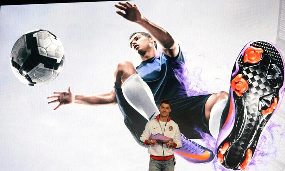
    Cristiano Ronaldo endorsing the new football shoes

    what is called ‘adaptive traction’ that activates a cleat in the forefoot that extends when enough pressure is exerted, it extends when needed for the “relentless grip and acceleration the game demands.” Along with the injected stud, the traction in the vapor allow for effortless acceleration. The shoe also includes toe off traction for instantaneous bursts of speed.

    All fields of the aesthetics and materials were carefully chosen and for specific reasons. The Vapor Superfly II Elite features innovative Flywire. Flywire is made of nylon fibers, these fibers are sturdier than older materials and help hold the foot in position. Another advantage to Flywire is that the mass of the material is a lot lighter than older materials. The Flywire also provides better control of the ball and adjust to the foot a lot better. The most minimizing factor of weight in the unparalleled lightness of these shoes is the carbon-fiber chassis, which makes the shoe lighter but also at the same time maximizes strength. The final major contribution to making these shoes such a success was the perforated sockliner which presents low profile cushioning and support whilst also lessens the cleat stress. The total weight of this pair of shoes is an amazing and currently unmatched 370g (13 oz). This boot is favored by wingers or strikers who feel that speed is the most important asset in their game. As a publicity stunt, Nike got Olympic Gold Medalist sprinter, Asamfa Powell, to run 100 meters in these football shoes and on the first attempt he covered the entire distance of the football field in less than 10 seconds, four tenths of a second slower than the track world record.

    Part of Nike Elite Series

    After spending nearly 2 hours in the store I came to the conclusion they weren’t the shoes for me. Instead I chose the T90 Laser III, also from the same elite series. The new revolutionizing elite series consists of 4 shoes. The first, as I have discussed previously in depth because they have been the biggest success and most sophisticated technology, was the Superfly II. Secondly was the shoes I purchased, based upon personal preference, the T90 Laser III. Thirdly, the Tiempo III, these boots are more intertwined with the classical designs of the previous years, but still incorporates much of the revolutionary technology. The final pair is the CTR360, which is the sturdiest of all the shoes, and as the name of the shoe states it optimizes control of the ball. As I have said before the choice goes down to preference but all these shoes have their given benefits and a choice of any of these would be a choice of a football shoe that has left its mark in revolutionizing the football industry.

    Sources and Further Readings:

    http://store.nike.com/us/en_us/?l=shop,pdp,ctr-inline/cid-1/pid-337913/pgid-301857

    http://www.studs-up.com/2010/08/nike-mercurial-vapor-superfly-2-elite-review/

    http://www.designboom.com/weblog/cat/8/view/9325/nike-mercurial-vapor-superfly-ii.html

    http://www.prodirectsoccer.com/prodinfo.asp?PID=PDS-002-009-C17&DEPT=2&BRAND=9&SS=1&PROFILE=Speed

    By Laurance Townsend

    Class: Design Technology SL I

    Teacher: Mr Mark Trumpold