The Design Technology Blog

Author: Farida El Sayed

  • PPR Revolutionizing Fashion One Carbon Emission At A Time…

    PPR is a French multinational which develops a worldwide brand portfolio for luxury brands such as Gucci and Yyves Saint Laurent. Moreover it has has just announced its five-year plan to reduce CO2, waste, the use of water and the sourcing of raw materials and hazardous chemicals. It will involve all of PPR’s labels such as Yves Saint Laurent,  Alexander McQueen, Balenciaga, and Stella McCartney.
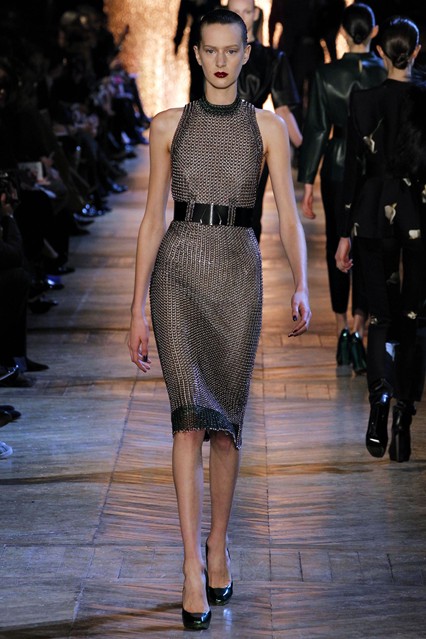
    According to The Guardian, PPR wants to “ultimately implement efficient and innovative initiatives to reduce the environmental impacts from the sourcing of raw materials, processing, manufacturing, and distribution of the Group’s products”.
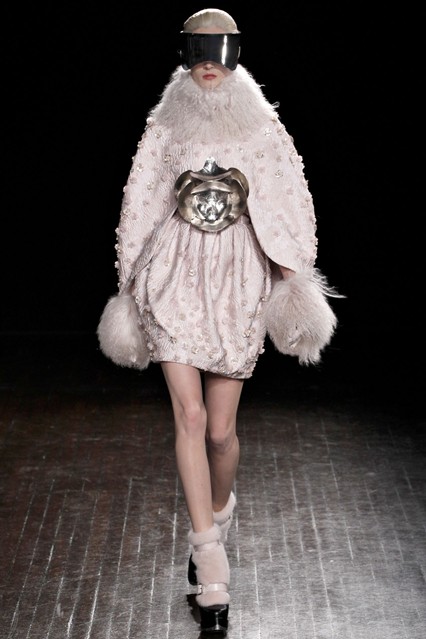
    “Our pursuit of operating on a more sustainable level across all areas of our business is integral to our business plan and to the longevity of our businesses. The next five years are pivotal and we now have a clear view of what we want to achieve, and the actionable targets we need to make to get us there,” said Francois-Henri Pinault , chairman and CEO of PPR.

    FUTURE OF FASHION 

    One thing the company is keen to work on, though, is the visibility and traceability of the snake market.

    “We are confident that this type of innovative, sustainability-driven approach will ultimately generate new business revenues from sustainable products and services and create new business models for us as a group.”

    Marks & Spencer is becoming proactive and is beginning to think sustainably – by shwopping. The chain is launching a new “buy one, give one back” campaign in collaboration with Oxfam in a bid to change the shopping behaviour of consumers. Customers are invited to leave their old or unwanted clothes at Marks & Spencer stores, where they will then be given to Oxfam. The charity will then either re-sell them through its network of stores, re-use them in international markets (for example as summer clothing in Africa, warm clothing in Eastern Europe), or recycle them into new materials.


    Bibliography: 

    • http://www.vogue.co.uk/blogs/the-green-style-blog/
    • http://www.safedenim.com/
    • http://www.ppr.com/en


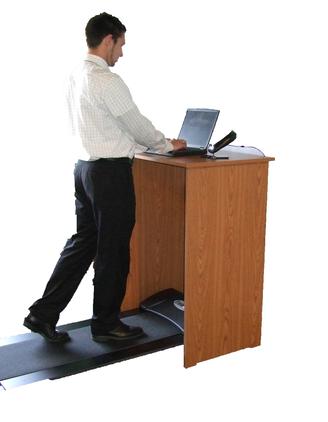
  • Ergonomically Friendly Stand-Up Desks

    Ergonomics, is the “scientific discipline that seeks to understand and improve human interactions with products, equipment, environments and systems.” As a result ergonomics extends across our work, our leisure and other aspects of our daily lives.

    http://standupdesks.com/

    Sitting for extended periods of time is unhealthful. As more people are becoming aware of this, standing workstations are becoming popular. In the pursuit of solving this problem the stand-up desk has been designed. In order to get a stand-up desk that fits is to ensure that the measurements are correct in accordance to the user’s height, epitomizing the true definition of ergonomics. It is recommended that a prospective user create a temporary  stand-up desk setup, with boxes and books, to get a better idea of the personal comfort zone while standing. As it is a one off product, it stars at $1,000.

    Stand-up desks offer many advantages over conventional desks. Many who have back problems simply cannot endure the stress that prolonged sitting at a desk creates. Therefore mental blocks, fatigue, pain, all occur while sitting at desks. As a result this design product is

    Bibliography:

    http://www.justluxe.com/lifestyle/home-decor/feature-1638675.php

  • Scientific Robot: Adam

    ROBOT

    According to the Princeton Dictionary a robot is “a machine capable of carrying out a complex series of actions automatically, esp. one programmable by a computer”

    Ross King http://news.nationalgeographic.com/news/bigphotos/79820742.html

    ADAM

    More recently in 2010 Ross King of Aberystwyth University in Wales, UK created a new scientific robot called ADAM. It is officially the first  robot to independently gather scientific information. “Normal robots just do what you tell them, but ADAM is different, because it can hypothesize and try to solve a problem itself,” King said. It is able to carry out independent experiments without human guidance. Testing the robot, King and his team gave ADAM the task of discovering more about a specific genome. After creating around 20 hypotheses and carrying out several experiments ADAM eventually identified the genes involved. King was able to verify ADAM’s results.

    ADAM & HUMANKIND

    David Waltz of the Center for Computational Learning Systems at Columbia University states that “ADAM will inspire other scientists they’ll realize they can automate more of the process than they currently have. They can explore a wider range of possibilities without doing it all by hand.” More robots like ADAM will began working with scientists to help productivity because some topics are so complex that more scientists are needed. They could assist in drug design and screening. King is currently working on a new robot scientist called EVE to help treat tropical diseases. “While robots are better at coordinating thousands of experiments,” King said, “humans are better are seeing the big picture and planning the overall experiment.”

    Sources:

    1.  http://scienceblogs.com/notrocketscience/2009/04/enter_adam_the_robot_scientist.php
    2. http://singularityhub.com/2010/03/16/adam-the-robot-scientist-makes-its-first-discovery/
    3. http://www.aber.ac.uk/en/cs/research/cb/projects/robotscientist/
    4. http://www.google.com/webhp?rlz=1C1CHNU_enEG340EG340&sourceid=chrome-instant&ix=ieb&ie=UTF-8&ion=1#hl=en&rlz=1C1CHNU_enEG340EG340&q=robot&tbs=dfn:1&tbo=u&sa=X&ei=TFlXT9fvHc_44QT-sKnGDw&ved=0CCYQkQ4&bav=on.2,or.r_gc.r_pw.r_qf.,cf.osb&fp=95e6f5d098e4da22&biw=1680&bih=959&ix=ieb&ion=1


  • Smart Underwear

    The expenses attributed with hospital treatments has generated a growing demand for “home based healthcare management”. As a result Joseph Wang and his colleagues at the University of California San Diego, have developed underwear that uses piezoelectric power  to monitor a person’s blood pressure, heart rate, and other vital signs. This allows 24/7 at-home surveillance thus reducing the load on hospitals and reducing one’s expenses.


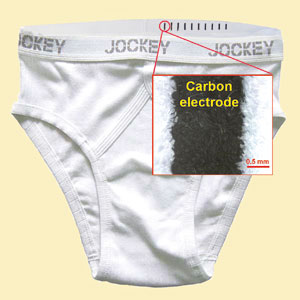
    The mechanics of the biosensors on the elastic bands

    In order to form the sensors, the scientist placed “screen-printed carbon electrode arrays directly onto the elastic bands”. Thus the skin tight pressure on the skin, from the elastic bands, allows hydrogen peroxide and the enzyme NADH to be monitored.


    Similar Products 

    In 2009 Canadian scientists created underwear that deliver mild electrical currents to paralyzed muscles in order to prevent ulcers and other similar problems. They will contain sensors that detect increased pressure and lack of oxygen in the buttocks muscles of people bound to a wheelchair. When the pressure gets to a certain level, the electric underwear will emit a jolt of electricity for seven to 13 seconds that will clench the muscles as in exercise and recirculate the blood. In addition another major problem many adults suffer from is the issue of incontinence. Incontinence is the problem of involuntary urination, but with revolutionary underwear one could receive a text  message to warn wearers if their incontinence protection is leaking.


    Plans for the Future 

    In the future Professor Wang hopes to develop more advanced sensors in order to detect alcohol levels in drivers or stress levels in soldiers and athletes. The designers also hope that one day the underwear can release drugs to relieve pain and treat wounds. Wang goes on to say, “We envision all the trend of personalized medicine for remote monitoring of the elderly at home, monitoring a wide range of biomedical markers, like cardiac markers, alerting for any potential stroke, diabetic changes, and other changes related to other biomedical scenario,’ said Wang. Wearable biosensors can also provide valuable information to athletes or even measure blood alcohol levels.”


    Richard Compton at the University of Oxford, UK comments, ‘electrochemical sensors are widely used in niche applications and it is timely for a greater diversity of sensors to emerge, given the sensitivity and low cost of electrochemical measurements. I have full confidence in this idea coming to fruition.’


    FOR MORE INFO 

    Biosenors in Briefs – http://www.youtube.com/watch?v=Rs9R3JJ6LjM


    SOURCES

    http://www.businessweek.com/lifestyle/content/jun2010/bw20100622_476361.htm

    http://www.rsc.org/Publishing/ChemTech/Volume/2010/05/biosensors_in_briefs.asp