The Design Technology Blog

Author: emiller

  • Concentrated Solar Power

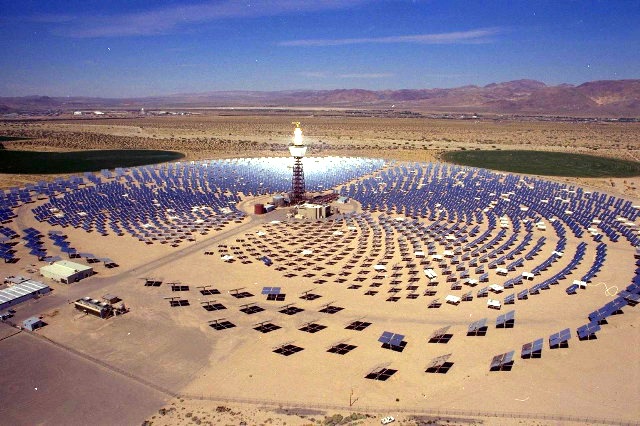
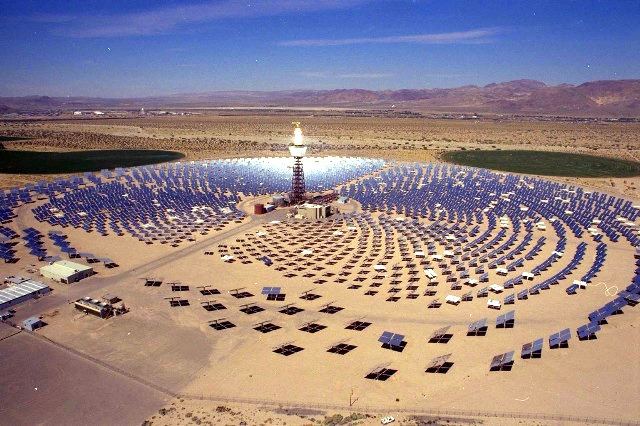
    Solar power has been around for a good amount of time now.  Solar panels are effective green sources of energy, but they don’t harness much power and they are very expensive.  The average house uses around 3.85 kw a day (http://www.solarpoweristhefuture.com/how-many-solar-panels-does-it-take-to-make-one-kilowatt.shtml) and you need around 5 panels to generate this power which cost around 280 dollars each according to (http://www.dmsolar.com/solar-module-1.html).  This may not seem too expensive, but if you consider powering thousands of houses through one solar plant then the space needed and the amount of panels needed increases.  With the increased panels comes an increased cost and it just isn’t practical considering the amount of power that comes from other sources of power.  However, concentrated sun power does require space, but cuts costs because it uses mirriors instead of a vast amount of panels to direct beams of sunlight to a central sun tower.  This slashes costs and utilizes the power of the sun more efficiently.

    CSP (Concentrated Solar Power) creates power from a steam turbine usually.  The directed sunlight is converted to heat energy which allows a heat engine to spin a steam turbine.  According to wikipedia (http://en.wikipedia.org/wiki/Concentrated_solar_power) a typical concentrated solar plant can produce power at about $2.50-$4.00 per watt.  Therefore a typical plant producing around 250 megawatts costs around $600 million to $1 billion dollars to manufacture.  This for of power is a competitor for the transition from fossil fuel for multiple reasons.  One is that the power from the sun is free and unlimited if the plant is placed in strategic areas.  Another comparison that wikipedia mentions is that CSP plants can produce “12 to 18 cents per kilowatt-hour” which can be compared to a nuclear plant in Arizona which produce “1.65 cents per kilowatt-hour.”  The nuclear plant still more efficiently produces power, but the solar plant can be judged as a competitor in the green power category.  With continued advancement in CSP it could be possible to make them even more efficient and less expensive, but they are still much more valuable than the typical solar plant that doesn’t concentrate the sun’s power.

    Concentrated Solar power can be the wave of the future in the power industry.  All that need to be done is that it must become cheaper and more cost effect.  CSP is starting to pave the way to this much needed improvement to allow for the complete harnessing of the suns power and true renewable energy.

    Sources:

    http://en.wikipedia.org/wiki/Concentrated_solar_power

    http://www.dmsolar.com/solar-module-1.html

    http://www.solarpoweristhefuture.com/how-many-solar-panels-does-it-take-to-make-one-kilowatt.shtml

    Image soure: http://blog.hasslberger.com/img/concentrated-solar-power.jpg
  • The LCD Screen

    By Evan

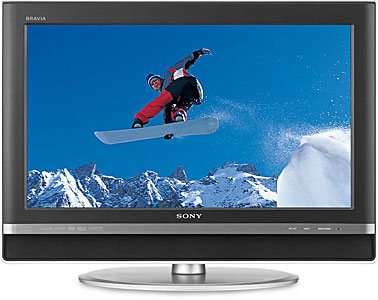
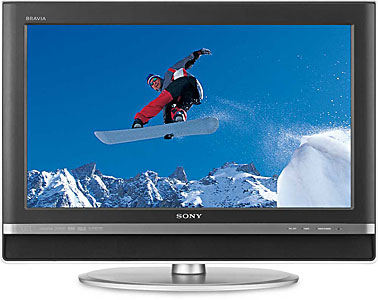
    You may think that a screen can only be just that a screen.  Something made from glass that will reflect as soon as the sun hits it.  This was the case until the remarkable material of liquid crystals was discovered for LCD screens or liquid crystal display.  Until LCD came around most screens were cathode rod tubes that are reflective and not quite as energy efficient as LCD screens.   LCD screens contain molecules that are between two transparent electrodes and also two polarizing filters.  These screens are used in various objects like laptops and TVs and pretty much anything else with a screen.  The break through of the LCD TV made people go to buy that particular TV over a plasma screen in some cases depending on what room they desired their TV to be in.  The material liquid crystal allowed the sun to hit the TV with out causing a reflection that would impair the picture coming from the TV.  The LCD panels don’t actually produce light so they require another light source that usually is behind the display.  In some displays LED lights are used behind the LCD to create a picture with intense bright and dark colors while still remaining unaffected by any light attempting to reflect off the screen.

    The inventor of the LCD is George Heilmeier in the 1960s.  He was a Ph.D student that worked in an RCA laboratory.  In that laboratory he researched liquid crystals and came up with the LCD.

    The LCDs also have a wide variety of viewing angles.  These screens are becoming so advanced that they actually can have a 180-degree viewing angle meaning you can see the screen even if you are all the way to the side of screen. The refresh rates and colors in these screens have also become more advanced over the years.  They have become so fast that they can have a 120hz refresh rate meaning that you can almost realistically see every movement that that is happening in real life on your television.  The color contrast ratios very from screen to screen and from TV to TV, but for the most part are high and contain many colors giving the screen a realistic display.  Liquid crystals have given screens a whole new look through the LCD by making the pictures and videos they show realistic and unaffected by reflective light.

    http://www.lcd-television-repair.com/sony%20lcdtv.jpg

    sources:

    http://www.invent.org/2009induction/1_3_09_induction_heilmeier.asp

    http://en.wikipedia.org/wiki/Liquid_crystal_display

  • The Chevy Volt leading the way to a practical transition from fossil fuels

    Chevy Volt: By Evan

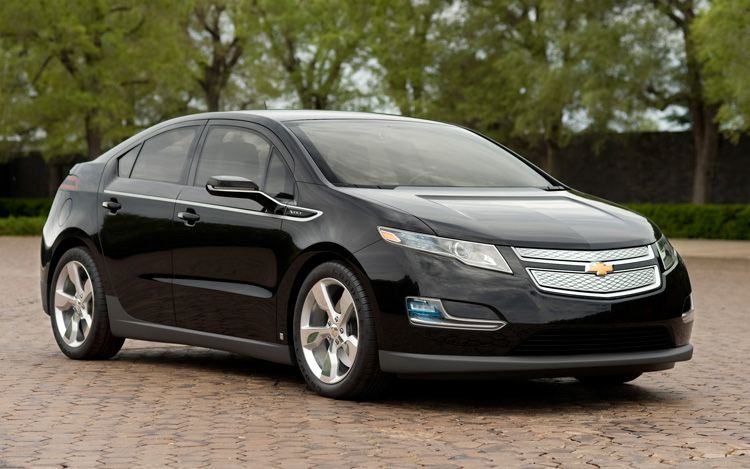
    The Chevy Volt is a car that Chevy hopes will begin to lead to more green cars.  The Chevy volt in turn has been named the green car of the year 2011.  This car presents a more practical solution to a mix between electric and gas powered cars.  Chevy claims that this car is able to drive for around 35 miles completely gas free and on a single charge.  After 35 miles or so a gas motor will turn on and take the driver of up to around 340 miles more on a single tank of gas.  This car is not completely gas independent, but for most comuters in urban and suburban areas it could prove to be virtually if not all electric.  The concept of an automobile like the Chevy Volt will begin the transition away from fossil fuel in cars all together.  This car proves to have the same luxuries as every other car that is not quite so electricity dependent.  Chevy even claims specifics such as, “10 hour charge time on a 120 volt line” and “4 hours on a 240 volt line.”  This charge time suggests you can plug the car in overnight and wake up and drive around 35 miles gas free the next day.  Chevy even claims that “$1.50” will be the price of a gas free commuter to drive this car a day.  This remarkably inexpensive price makes this car appealing to the public while it still remains green and more environmentally sound than any other car competitor out on the market that still remains an average price range.  The price of the Volt seems to be around $32,780 according to the Chevy Website.  This price puts the car in an average price range compared to other cars on the market.

    My personal feeling about this car is that it is a remarkable break through.  We have had the technology to do this for a while, but the car companies had to make these cars seem practical and affordable to the public and it seems like Chevy has accomplished this.  I think that as Americans we have perfected electric power more than fossil fuel extraction and in turn we have a more abundant supply of resources for electricity on the homeland than resources like oil, which we must trade will nations such as Saudi Arabia.  The idea of being able to plug a car in overnight and wake up the next day and drive 35 miles with out gas is very appealing to me and the consumers of the car industry. 

    My final conclusion is that this car proves to be an excellent green car that offers the owner with a cheaper cost per drive due to the lack of independence the Volt has on gasoline.  The car has a very average price, so it is not out of the price range of the common public consumers in the automobile industry.  It even proves to be much more practical than other attempts at a mix between gas and electric engines.  For example, the Hybrids don’t use gas if you go under a certain speed and then turns the gas generater on whenever it goes above that speed or runs out of electricity.  This process is somewhat effective, but Hybrids are still gas dependent on highways and usually anywhere with a speed limit about 35 miles per hour or over.  Where the Volt will be gas independent for around 35 miles with no limitation created due to the users speed.  This car seems to pave the way to the future, while still remaining practical to the public.  I know when this car comes out I will want to purchase it and envy everyone who has it.

    Work Cited

    “2011 Chevy Volt | Electric Car | Chevrolet.” 2011 Cars, SUVs, Trucks, Crossovers & Vans | Chevrolet. Web. 08 Jan. 2011. http://www.chevrolet.com/volt/.