The Design Technology Blog

Author: cmlav14

  • 3D printed car- Chayse Lavallais

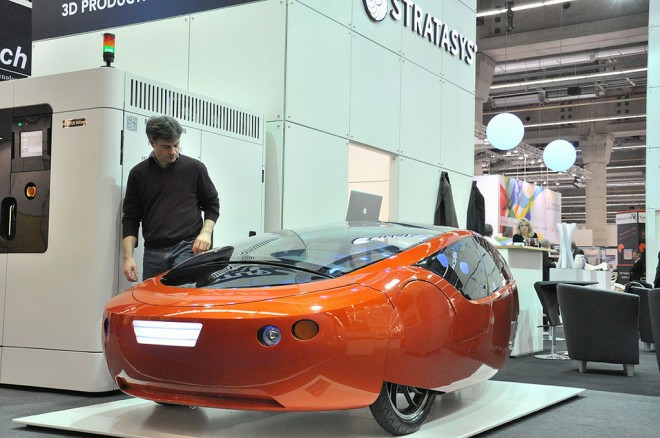
    One idea that 3-d printing is being used for is the 3-d printed car. The Urbee 2 is a car, which is being mad entirely out of a 3-d printer. The car is very light from the materials that it uses from the printer, which is called ABS plastics. This means it will have a very efficient gas mileage, hence a positive impact on the environment. The prototype of this car so far only weighs about 1200 pounds. The car is produced with the concept “lights of construction”. This is the idea he just uploads the parts to the printer and leave as it is produced. It takes about 2500 hours to make an entire car. Safety is also considered for the car, which can use this light material to make just as qualified parts. As well, the car will have a metal cage around the driver, similar to a NASCAR, and putting added shock absorbers to help with any sort of impact. The plastic can give each part a specific thickness and shape at each spot, keeping the durability. At the same time it is also light, which makes it more efficient.  As a result of all this, the car is very aerodynamic, only having .15 coefficient of drag while driving.  For the engine, it is going to be made from metal instead of plastic. However, it will be made with a hybrid engine, which plans on using an electric engine while the car is going between 0-40mph, and changing to a diesel engine on faster speeds.  One concern is that many of the parts are one big piece. This means if a part breaks, you will have to replace the whole giant part, which would be expensive. The car overall will cost about 50,000 dollars. However, it will not be available to the public for a while.
    erf


    George, Alexander. “3-D Printed Car Is as Strong as Steel, Half the Weight, and Nearing Production.” Wired.com. Conde Nast Digital, 25 Feb. 0013. Web. 23 May 2013.


  • Chevy Corvette’s new smart material

    Chevy in releasing their new 2013 corvette created a new smart material to try and making the car lighter. This material replaces the heavier motorized actuator to open and close the hatch vent that releases air from the trunk with a new smart metal alloy. This allows the trunk lid to close more easily than on the previous models where trapped air could make the lid harder to close. It does this using smart memory alloys, made from copper aluminum and nickel. In the new Corvette, the shape memory alloy wire opens the hatch vent whenever the deck lid is opened, using heat from an electrical current s. When activated, the wire contracts and moves a lever arm to open the vent, allowing the trunk lid to close. Once the trunk lid is closed, the electrical current switches off, allowing the wire to cool and return to its normal shape, which closes the vent to maintain cabin temperature. This new material is about 2 pounds lighter than its predecessor. As well, this material is cheaper to produce, which saves the company money. In terms for the environment, it is beneficial because it uses less energy to maintain temperature in the car, which saves on lots of energy when you consider all the amount of cars that would be sold.

  • Innovative technology-OLED’s


    A technology that could be considered innovative are organic light-emitting diode, or OLED’s. These are organic compounds that will emit a color light if electricity is allowed to flow through them. These OLED’s are used in the digital display of many technologies, like phones, televisions, and handheld gaming consoles. Compared to LCD, they are better in many ways. OLED’s doing consume nearly as much power as a LCD, making the battery efficiently of them longer. The refreshing rate for OLED’s is much faster allowing the OLED’s to respond faster. Even though process of making OLED’s is more expensive than producing LCD’s, OLED’s can be made much cheaper, for instance if OLED screen printing becomes used for mass production. Finally, the brightness and clarity of OLED’s are much higher compared to LCD’s. They don’t need to have glass to be built with it, which would absorb some of the light. OLED’s are also multi-layered, which makes the picture clearer. In addition to being better, they are friendlier on the environment. First off, they do use as much electricity as the other two. This makes them cheaper than the other two to use. As well, less energy is needed to power them, which affects the overall energy output of power plants, lowering their pollution.  Additionally, when compared to LCD, is that LCD lights have mercury. Mercury is toxic to both the environment and to people, which is one of the negative effects of them. OLED’s do not use mercury, which allows them to be safer, as well as cheaper in terms of recycling cost. With LED’s, OLED’s are both built with the same materials. However, OLED’s need fewer materials to build the same color scheme. This allows OLED’s to be made with fewer materials, making less waste that might have to recycle later. Finally, OLED’s can be used longer compared to the other two. This allows as well less waste to be recycled, because there is less that you would have to recycle.

    References

    Freudenrich, Craig. “How OLEDs Work.” HowStuffWorks. N.p., 2012. Web. 09 Dec. 2012

    G, Tobias. Green OLED Light. Digital image. Wikipedia. N.p., 9 Jan. 2008. Web. 9 Dec. 2012.