The Design Technology Blog

Author: Butter

  • X-Bow Boat

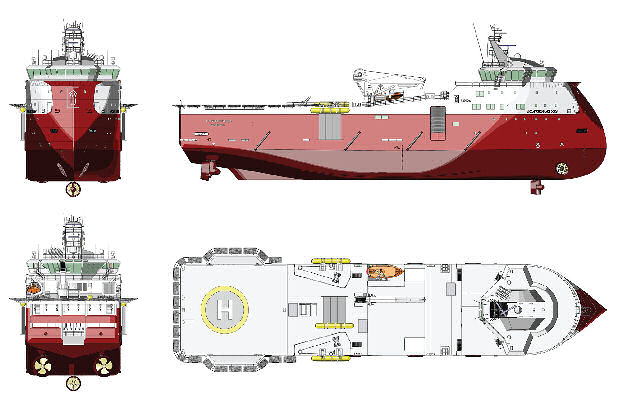
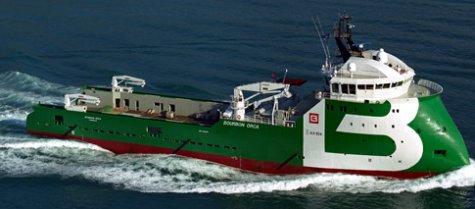
    X-Bow Boat Design (pictures at the bottom)

    For many years boat design has remained constant, most boat designers believe that changing the boat design would defy the laws of
    physics and the boat might not survive on water. The differences between the average boats include the bow of the boat (the front) where there is a “lump” (picture to the side) right below the sea level, this cuts straight through the waves to enhance speed. The X-bow boat does not have this “lump” and still manages to travel more efficiently and faster.
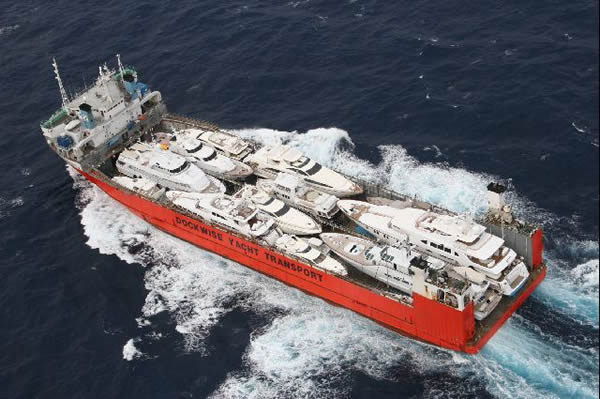
    The information below states the advantages of the new design.

    The unique and environmentally-friendly X-BOW® hull line design offers significantly higher transit speed in adverse weather conditions, as well as enhanced fuel economics. The bow shape ensures soft entry into waves, thus reducing speed loss, pitch and heave accelerations, as well as eliminating slamming and vibration problems associated with conventional bow flare.

    X-BOW® advantages:

     – Higher transit speed in calm water due to low angles of entry and increased waterline length
    – No bow flare, eliminating bow impact and slamming in foreship

    – Lower pitch and heave accelerations due to foreship volume distribution and slender hull water line
    – Reduced noice and vibration levels in foreship due to soft entry into waves
    – Less spray
    – Negligible occurrences of green water on bridge deck
    – Working deck and deck equipment better protected due to hull extended to full beam in accommodation area

    – Higher transit speed in head and following sea, giving reduced power consumption and/or higher fuel efficiency in waves and still waterThe X-BOW® hull line design is patented in Norway (reg. no. 324744), Russia (reg. no. 2374120), Singapore (reg. no. 135279 (WO/2006/096066)), Ukraine (reg. no. 95070), USA (reg. no. 7,658,159) and Vietnam (reg. no. 8437). Patent is pending in Brazil, China, Europe (EPA), Hong Kong and India.

    http://www.ulstein.com/kunder/ulstein/cms66.nsf/doc/3A6662B6DEF379B3C12576C70031E17D


    Pictures:

    http://www.superyachtshipping.com/images/chartered_ship_shipping_boats.jpg

    http://www.tgal.us/section.php?xSec=23

    http://gcaptain.com/a-viking-ship-redesigned-for-modern-use/?190

    http://www.stowmasters.com/xbow.htm

  • Conventional vs. Organic Farming and Products

    The common definition of organic is known to be anything that develops naturally. However in the business world there are rules when naming a product organic. So what is the difference between organic and conventional farming you ask? Well I shall tell you!

    Conventional farming can involve chemical fertilizers, pesticides, herbicides and antibiotics for animals when producing products. Organic farmers prefer to use natural fertilizers (manure or compost), natural pesticides (certain plants produce chemicals which offer the same as chemical pesticides). For herbicides to manage weeds crops are rotated and animals are given organic feed and are allowed access to the outdoors (rotational grazing, a balanced diet and clean housing minimize disease).

    So what are requirements for organic produce?

    1. Ensuring that the soil can be used for many succeeding generations without using the fertilizers that were used in non-organic farming.

    2. Properly caring for the crops by using soil organisms and not by using pesticides.

    3. Recycling livestock manure and organic materials, including crop residue.
    4. Control weeds growth and insect infestation with crop rotation. Also, not using anything that science has used in conventional non-organic farming.
    5. Not tampering with genes of animals, no genetic engineering. Allow animal life to remain as it should.
    6. Lastly, determining the effects of this method on the environment.
    (http://www.organicfoodcorner.com/resources/organic-food-vs.-non-organic-which-is-better.php)

    If these requirements are not met then the product cannot be called “organic”.

    Eating conventional products vs. organic products can have a great influence on your health. Conventional products can contain chemicals which affect the human body; an example is cows that receive antibiotics, they produce milk which is then affected by the antibiotics. When a customer consumes the milk complications can arise, however their beef is fine (http://animalrangeextension.montana.edu/Articles/Beef/Wklynwsltr/12-19.01.htm)

    So the final question which is truly better?

    “Shoppers may choose organic foods for a variety of reasons. There are certainly environmental reasons to go organic. According to USDA guidelines, organic farming practices are designed to reduce pollution and conserve water and soil. They do not release synthetic pesticides, which can harm wildlife, and they also seek to preserve biodiversity and local ecosystems.

    Many people choose organic foods to avoid any risks associated with the pesticides, herbicides, and other chemicals used in conventional farming. Parents may be concerned that exposure to these chemicals might harm the development of their children, and therefore they choose organic. Studies appear to support the fact that organic diets lower children’s exposure to pesticides.

    As for organic food being healthy, some studies, including one at UC Davis, have demonstrated higher amounts of nutrients in some varieties of organic foods. Another studyfrom Newcastle University in England showed organic milk contained 67 percent more vitamins and antioxidants, as well as more Omega-3s and Omega-6s (“healthy” fat) than conventional milk.”

    (http://www.americanprogress.org/issues/2008/09/organic_green.html)

    Bibliography:

    Thanks Dykie for partially stealing my thunder. <3

  • Wake-up Light

    Wake up light

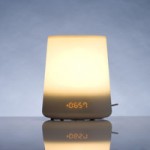
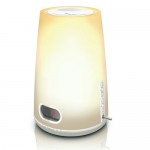
    Philips brought out the wake up light around 2008. This light is a new form of alarm clock.

    The light will simulate a sunrise and give the person a pleasant way of waking up, this is because of a natural reaction the user will have towards the sun rise. Nature’s alarm clock is the sun rise and in the past (before technology) people would rely solely on the sun, they go to bed once the sun sets and wake up when it rises. This lamp uses this natural reaction to wake you up very pleasantly.

    The theory behind it is that when the sun rises your body slowly prepares you to wake up by creating fewer hormones which make you sleep (adenosine and melatonin) and will be breaking down the melatonin and adenosine to wake you up again.

    The product was tested in different parts of the world especially where it is dark such as Norway during the winter. After about 6 weeks 98% of the citizens who tested the product wanted to continue. Links 4 and 5 show the results of 60 days as well as after two, four and six weeks.

    The price can range from 109€ to 129€ this is a lot of money but I believe it will make a large difference when used. There are also models where there is an iPod/ iPhone charger dock attached to the light to play your music while using the light.

    1 http://sleep.health.am/sleep/more/what-makes-you-sleep/

    2 http://blog.onlineclock.net/wake-yourself-up-with-light/

    3 http://www.wakeup.philips.com/#/gb_en/the-town/aurora_borealis

    4 http://www.wakeup.philips.com/#/gb_en/the-results

    5 http://www.wakeup.philips.com/#/gb_en/the-people

  • Kevlar

    Kevlar is a material developed by DuPont in 1965 but it was only used in 1970 for commercial use. Kevlar is used in body armor and armored vehicles, it is also applied in clothing to protect the user from cuts. Sports equipment such as bicycle tires to stop punctures, it is applied to table tennis paddles, motor cycle clothing, and racing sails. Kevlar has even been used in audio equipment since it has acoustic properties, drumheads, woodwind reeds, rope, cable, brakes, electricity generation, construction of buildings, and expansion hoses and joints.

    Kevlar is strong because of the weave which is very similar to small spider webs. It was invented by Stephanie Kwolek and Herbert Blades. The weave consists of a liquid and a solid also known as an aramid weave. These weaves corrode in exposed to chlorine but is resistant to heat.

    There are different types of Kevlar, they are all numbered and have their own use. Kevlar K-29 for example is used industrially for cables and brakes and armor while Kevlar K-49 is used in tires to replace rubber and bicycle frames but also in the hull of a boat because it is incredibly strong.
    The chemical composition of Kevlar is poly para-phenyleneterephthalamide (composite.about.com). Aramids belong in the nylon family.

    Kevlar is also very light and extremely strong of course and the tensile strength is high. However it does absorb moisture which makes it more sensitive to environments it is also harder to cut because you will need special scissors.

    The material is rather expensive to get and can get to about 33 dollars per yard but you have to buy in great amounts.

    This is a table of the three main Kevlar types 29, 49, and 149. (composite.about.com)

    Grade Density
    g/cm^3
    Tensile
    Modulus
    GPa
    Tensile
    Strength
    GPa
    Tensile
    Elongation
    %
    29 1.44 83 3.6 4.0
    49 1.44 131 3.6–4.1 2.8
    149 1.47 186 3.4 2.0

    Sources:

    http://composite.about.com/od/aboutcompositesplastics/l/aa050597.htm

    http://en.wikipedia.org/wiki/Kevlar#Production

    http://www.wisegeek.com/what-is-kevlar.htm

  • Windsurfing Sails

    Windsurfing sails

    In windsurfing there are many types of sails to enhance speed and or maneuverability. These are many types of sails called free style, wave, freeride, stand-up/ paddle board, freemove, beginners, children, slalom, and lastly the race sail.

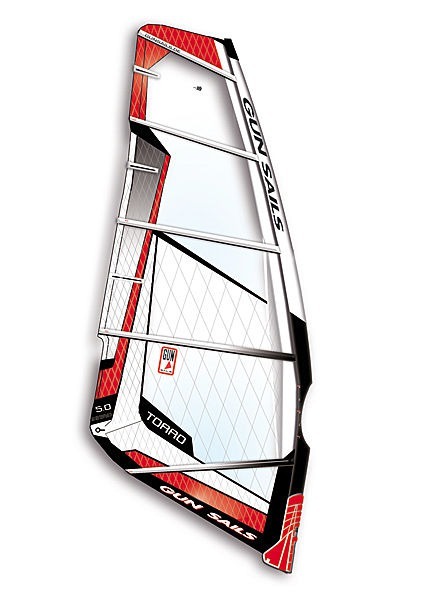
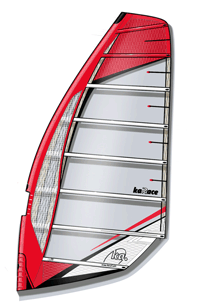
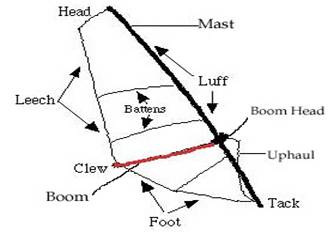
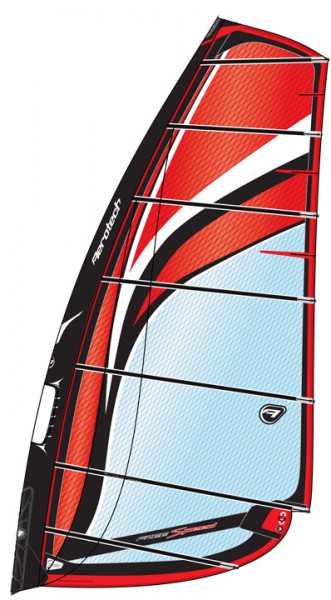
    The difference between these sails all depends on the design. The main aspects of the design are the material, the size, weight, the boom, the chambers, and the leech (see image). The three most common materials used for a windsurfing sail are Dacron (woven polyester), Mylar, and Monofilm. Dacron is used in the beginner’s sails, it is lightweight, cheap, but it can outstretch after over use. Mylar is actually a coated form of Dacron, it holds its shape better but it takes part in delamination overtime.  To strengthen areas of the sail they use Kevlar mesh.


    A freeride (speed) sail
    Camber (the straight lines accross a sail)


     The difference between speed, freestyle and wave sails is the design of course. In a speed sail there are more chambers to maximize the shape of the sail. These cambers lock the shape to increase the amount of wind that can be captured to increase speed.

    A freestyle sail has cambers that are at a greater angle compared to a speed sail. Also there are less cambers since freestyle sails needs maneuverability and quick turns, more cambers will increase the difficulty of the turns which is not needed in a freestyle sail.  

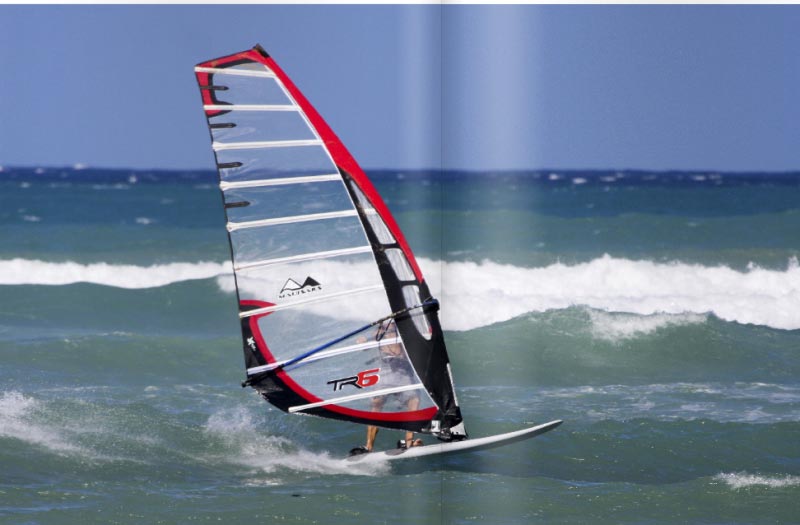
    Wave sails are made of stronger materials that can handle a beating if something goes wrong. Wave sails are made to easily change directions and have a good handling. Also, wave sails have fewer cambers to increase handling, but not loose speed. Another design difference is the end (rear) of a sail, for speed the sails extend out and down further than wave sails, because wave sails cannot get caught in the waves.

    A wave sail

    Notice how the rear is cut higher and shorter than that of the speed sail.

    A freestyle sail

    A combination of both a speed and wave sail.

    Personally I sail with freestyle sails but I do want to try speed and wave sails. There are many different sizes to fit the person who sails them (this affects weight), I can handle a 4.5m^2 which is about twice my size.

     Bibliography:

    http://www.nauticexpo.com/boat-manufacturer/windsurf-sail-891-_2.html

    http://eartheasy.com/windsurfpage.htm

    http://www.seabreeze.com.au/Articles/Windsurfing/Whats-the-difference-between-sails_903109.aspx

    By Vera Butter