The Design Technology Blog

Author: Batawi

  • Green Building

    Green Building

    Sustainable building design

    The process:

    Green building is an environmentally responsible process that efficiently uses resources and lean production in order to minimize carbon emissions and damage towards the environment. This is a socially responsible practice that takes the effects of building into consideration. The common objective is that green buildings are designed to reduce the overall impact of the built environment on human health and the natural environment by; efficiently using energy, water, and other resources, protecting occupant health and improving employee productivity and reducing waste, pollution and environmental degradation. Green building does not specifically address the issue of the retrofitting existing homes.

    Building’s life-cycle:

    The building life-cycle ranges from design, construction, operation, maintenance, renovation, to demolition. This practice expands and complements the classical building design concerns of economy, utility, durability, and comfort.

    Natural building:

    This is a similar concept which is usually on a smaller scale and tends to focus on the use of natural materials that are available locally. Green architecture and sustainable design are other related topics. Sustainability may be defined as meeting the needs of present generations without compromising the ability of future generations to meet their needs.

    Green Building at CAC:

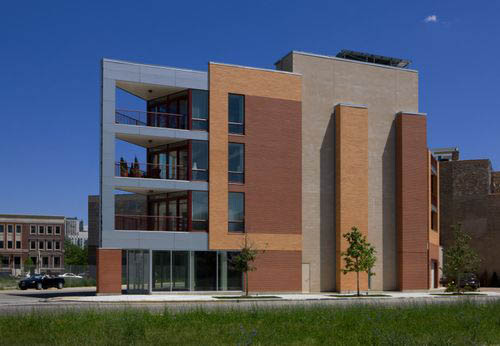
    The new elementary building at the Cairo American College (CAC) in Egypt was designed while meeting the standards of triple bottom line sustainability, “An expanded spectrum of values and criteria for measuring organizational success: economic, environmental and social.” The school also uses appropriate technology and focuses on sustainable development. This is shown through sustainable building.

    Objectives for sustainable buildings:

    • resource efficiency
    • energy efficiency
    • pollution prevention (including indoor air quality and noise abatement)
    • harmonization with the environment (including environmental assessment)
    • Integrated and systemic approaches (including environmental management systems).

    Video on sustainable buildings:

    watch?v=nAMrtHC2Ev0&feature=player_embedded

    Sources:

    http://www.getloans.com/blog/wp-content/uploads/2010/05/sustainable-building-design.jpg

    http://www.youtube.com/watch?v=nAMrtHC2Ev0&feature=player_embedded

    http://www.ruthtrumpold.id.au/designtech/pmwiki.php

    http://en.wikipedia.org/wiki/Green_building

  • Alloys & Their Uses

    Bronze Mask Alloy Used For Jewelry (Image By Martin Lodemore)

    The components of various alloys contain metallic and non-metallic elements. There are a large number of possible combination of different metals and each has its own specific set of properties. The Uses for alloys are limitless depending on the materials involved and the complexity of the alloy. The alloys are used extensively in fields that involve but are not limited to; aircrafts, military, commercial, industrial, medical, residential and manufacturing applications. Alloys like Aluminium, Copper, Nickel, Stainless steel, Titanium all have different uses in various applications.

    Uses of Aluminium Alloys

    Aluminium when combined with other metals gives strength and specific characteristics for a particular use. Aluminium alloys are extensively used in the production of cars and engine parts. The vast range of quality Aluminium is used in various applications like transport, packaging, electrical application, medicine, and construction of homes and furniture. Flight at high altitudes would not be possible without the the strong aluminium alloys used that undergo mass amounts of stress and pressure.

    Uses of Copper Alloys

    Copper alloys have exceptional electrical and thermal performance, good corrosion resistance, high ductility and relatively low cost. Copper alloy is used in airtight seals and copper tin alloys are primarily used for sleeve bearings due to its strength and ductile properties. Copper alloys are also less expensive than gold or platinum. Due to high strength, electrical and thermal conductivity copper alloys are used in the manufacture of all types of electrical equipment.

    Uses of Nickel Alloys

    Nickel materials have made significant contributions to present-day society. Nickel alloys have good corrosion resistance and heat resistance. Nickel alloys are used for a wide variety of applications like aircraft gas turbines, nuclear power systems and widely used in chemical and petrochemical industries. Several nickel alloys are used in control equipments to determine and control electrical characteristics.

    Uses of Stainless steel Alloys

    In order to reduce corrosion losses, there are extensive uses of stainless steels. Stainless steel alloys are used for many commercial applications such as watch straps, cutlery etc. Stainless alloys used for making tubes intended for placement on the bottom of the sea. Stainless Alloys are also widely used in the electronic, agricultural, road and rail industries. Stainless steel grades are used for handling bulk wet materials, tanks, containers, conveyors, chimneys and many others.

    Uses of Titanium Alloys

    Titanium alloys have high melting point than stainless steels. Due to high strength, toughness and stiffness, many titanium alloys are used in aerospace structures and other high-performance applications. Titanium alloys are used for different spacecraft parts, jet engines and airframe to save weight and improve aircraft efficiency. It corrosion resistance allow its uses in chemical, petrochemical and biomaterial applications.

    Shape Memory Alloy

    (SMA, smart metal, memory metal, memory alloy, muscle wire, smart alloy) is an alloy that “remembers” its original, cold-forged shape: returning the pre-deformed shape by heating. This material is a lightweight, solid-state alternative to conventional actuators such as hydraulic, pneumatic, and motor-based systems. Shape memory alloys have applications in industries including medical and aerospace.

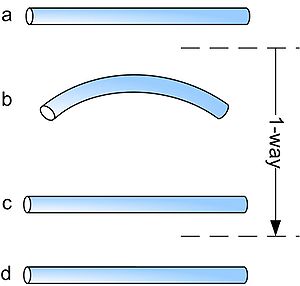
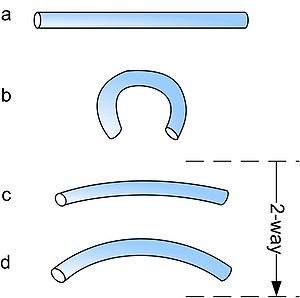
    One-way vs. two-way shape memory

    Shape memory alloys have different shape memory effects. Two common effects are one-way and two-way shape memory

    References:

    http://www.ehow.com/list_6708135_different-types-alloys-use.html

    Educational Electronics USA: Metals and Non-Metals — Part XVI

    Pricescope Diamond Journal: An Overview Of Common Alloys Used In Jewelry

    http://en.wikipedia.org/wiki/Shape_memory_alloy