The Design Technology Blog

Author: Abbie

  • 3D printing to save a babies life.

    DT Y1- Abbie Brash

    3D Printing saved babies life-url

    Brief description- An operation in the US was carried out that included creating a breathing device using a 3D printer to save a babies life. The baby, Kaiba Gionfriddo was six weeks old when his parents begged for help, after he collapsed at a restaurant. For the next few months, he would stop breathing often and would have to be resuscitated practically everyday. The print was necessary because Kaiba was born with the main arteries of his hart and lungs misplaced, and they were blocking his windpipe causing tracheobronchomalacia, a rare condition that most children grow out of, but his was a severe case. Doctors worked with a biomedical engineer at the University of Michigan to create a device that was implanted in Kaiba’s chest, sort of like a vacuum cleaner that acted as a splint that would keep his airway open. Three weeks later, he was taken off the ventilator and has not had any breathing troubles since, meaning this 3D printed splint saved his life.

    A quote from Professor Hollister says “Kaiba’s case is the highlight of my career. To build something that a surgeon can use to save someone’s life – it’s a tremendous feeling.” I think this is an amazing way to use 3D printers, as they can now save lives. By printing this splint, the baby was able to breathe and therefore survive, whereas without it, Kaiba would have certainly died. Though Kaiba’s case was an emergency, being able to produce parts to save one’s life like that is any doctors dream, and there are huge benefits to being able to do that because if you can produce a part like that, soon they’ll figure out how to produce other parts. Who knows, in the future we may be living double what we are now if we can produce another heart, lungs and liver. Having said that, there are also huge ethical issues that go along with the bonuses of 3D printing parts. If we are able to print all of these parts and save people, we are kind of going against what we have always known, and don’t know what effects it may have. People need to die in order for the population to not get any worse, dying is just a part of life. But now being able to 3D print parts means there can be lots more people saved, which for them may be good but in the long run it will be negative for the society.


    “Splint made by 3D printer used to save baby’s life – Health News – Health & Families – The Independent.” The Independent | News | UK and Worldwide News | Newspaper. N.p., n.d. Web. 23 May 2013. <http://www.independent.co.uk/life-style/health-and-families/health-news/splint-made-by-3d-printer-used-to-save-babys-life-8627590.html>.

    ” Baby’s Life Saved with 3D Printing | LiveScience .” Science News – Science Articles and Current Events | LiveScience. N.p., n.d. Web. 23 May 2013. <http://www.livescience.com/34613-3d-printing-airway-splint.html>.
     

  • Reactor light lenses

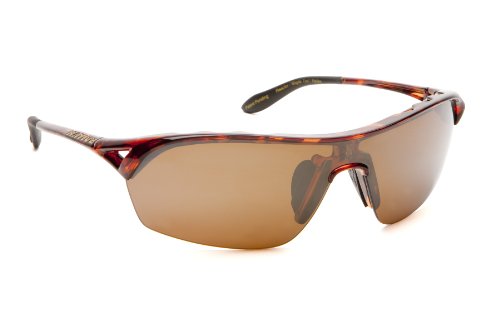
    An Example of a smart material application is with reactor light lenses, also known as photochromic lenses, used in glasses. There are two types of lenses that are used, the glass version and the plastic. The glass version of these lenses uses microcrystalline silver halides, for example silver chloride in the glass. The plastic version of these lenses use organic photochromic molecules, for example oxazines and naphthopyrans. The reason both of these lenses only darken when they are used outside is because they need UV exposure from the sun. When indoors, they are like normal glasses, but when outside, they turn into sunglasses and protect your eyes by sensing the UV rays.


  • Innovative Work- Earphone Alarm

    Earphone Alarm

    The Earphone Alarm, also known as a Anshinkun-2 is a new Japanese gadget that works as a small timer, worn just like an earphone. It’s very light, so it does not cause discomfort, and small so it’s not unattractive, nor does it get in the way. Its’ portable, and runs on batteries so it does not need to be plugged in or charged. This gadget is very useful for multiple things, such as if you’re on a train for example and fall asleep, the timer will go off to wake you up so you don’t miss your stop. Another bonus about the Anshinkun-2 is because it’s in your ear, it won’t disrupt other people, and only you can hear it. Other situations it would be useful in would be if you need to work for a certain amount of time, just set it to go off when you need to stop. It’s handy when cooking because you can time your food and walk around the house or go out and not miss the alarm on the cooker, for example. Another big selling point about it is its waterproof, so you can use in when showering or skiing. It’s manufactured by the Japanese company Honda Tsushin Kogyo, and sells on the market for 11 dollars.

    Though it is a great product, there are also environmental factors to take into consideration. An example of this would be the manufacturing that takes place, the use of the product and the disposal of the packaging and batteries that it needs to function, which are bad for the environment while being made, and if they are not recycled properly. Also, the actual making of the gadget is not environmentally friendly, because like many, if not all factories, the smoke and chemicals released while the product is being made are bad for the atmosphere. When the earphone alarm is actually made, it then has to be shipped to other various countries which will be selling the product. The shipping not only costs money, but the shipment also has to be disposed of once the product is in its designated area, or should be recycled properly which is no guarantee. Then once it has actually reached the destination in which it will be sold, its packaging has to be taken care of properly, or it’ll just be thrown away and regarded as waste. We also should take into consideration what will happen with the actual product or earphone alarm when the buyer has finished with it. It could be recycled for parts, but will most likely just be thrown away.


    Citations-

    – “i-store guide: 10/23/09.” i-store guide. N.p., n.d. Web. 9 Dec. 2012. <http://i-storeguide.blogspot.com/2009_10_23_archive

    – “Coolest New Inventions from Japan: Earphone Alarm – BusinessWeek.” BusinessWeek Slide Shows and Multimedia. N.p., n.d. Web. 9 Dec. 2012. <http://images.businessweek.com/ss/09/09